BRUSSELS (Realist English). The European Union is considering the possibility of an emergency release of strategic diesel reserves following a US demand backed by the threat of banning exports of American fuel to Europe. The negotiations are taking place amid record diesel prices in the EU and the approaching US midterm elections.
The essence of the US demand: 120 million barrels and the threat of an embargo
The Trump administration demanded that Germany and France release emergency diesel reserves, threatening otherwise to ban exports of American diesel fuel to Europe.
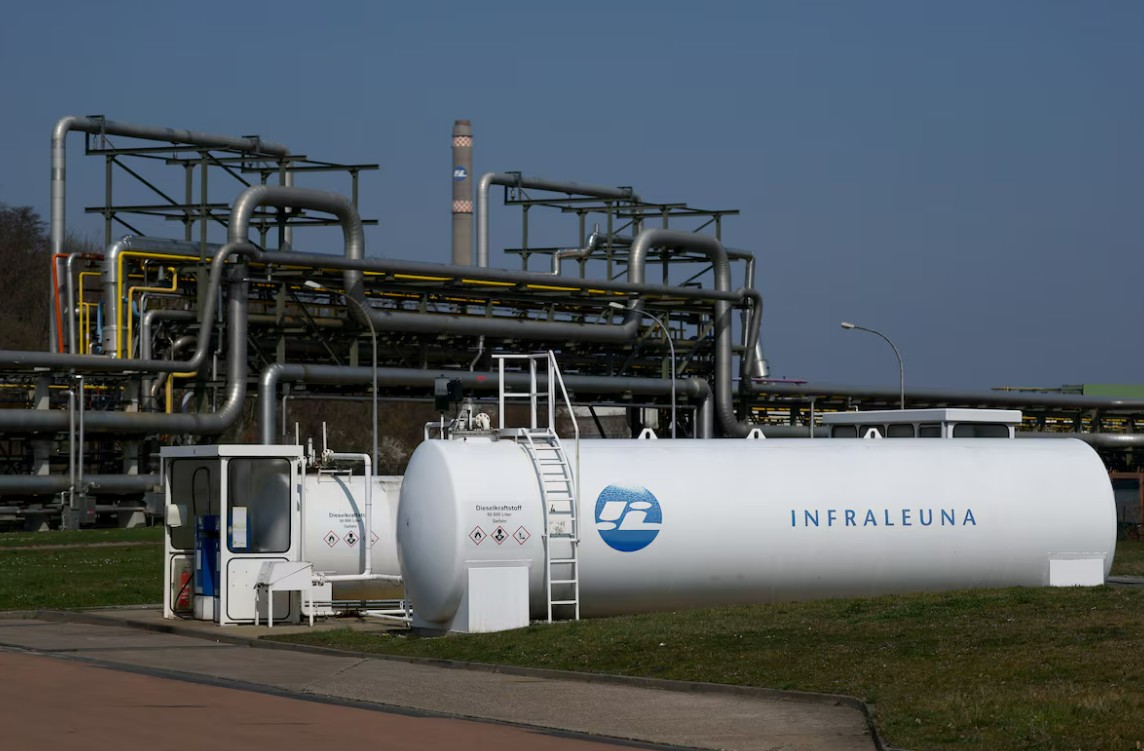
According to sources, Washington requested 120 million barrels of diesel from the EU over six months. This constitutes more than 40% of the EU’s current strategic reserves, estimated at approximately 39 million tonnes according to Eurostat data as of May 2025.
Particular pressure is being applied to France and Germany: together they hold about 35% of the EU’s strategic reserves — Germany 5.6 million tonnes, France 8.2 million tonnes. Later information emerged that the US demanded that major European countries release 100 million barrels within 20 days.
Reasons for the pressure: elections, prices, and deficit
Washington’s motive is the upcoming midterm elections to Congress on November 3 and rising fuel prices in the US. Diesel is critical for freight transport, agriculture, and industry, and its rising cost has become a political problem for Trump.
Global diesel supplies have been disrupted by several factors at once: the war with Iran, restrictions on exports from Russia, the suspension of October supplies by Chinese refineries, and the EU ban on imports of Russian petroleum products.
After refusing Russian diesel, Europe became critically dependent on American supplies: in January 2026, US diesel exports to Europe reached 396,000 barrels per day — more than double the level a year earlier.
Europe’s response: crisis talks and the French compromise
On October 1, the European Commission, Germany, France, Italy, Ireland, and the UK held a crisis teleconference to develop a unified position. On Friday, October 2, the EU discussed the French proposal: Europe releases 50 million barrels of diesel, and IEA countries additionally provide 50 million barrels of crude oil.
The key condition of the French plan: any agreement must include a US commitment not to impose a unilateral ban on diesel exports. Europe fears that after releasing reserves, it will be left without American supplies if Washington nevertheless imposes an embargo.
According to FT, the US oil industry also warned the administration: an export embargo would undermine the US reputation as a reliable energy supplier and could lead to higher gasoline prices domestically.
Background: unfulfilled obligations of March 2026
The current crisis is compounded by the fact that in March 2026, the IEA agreed to the largest coordinated release of 400 million barrels from strategic reserves in history in response to disruptions caused by the war with Iran.
The US fulfilled its part, but according to American officials, several European countries released only part of the promised volumes. This became an additional irritant for Washington.
US Energy Secretary Chris Wright stated he is “highly confident” that Europe will release reserves, emphasizing: “now is the moment” — before the start of the winter heating season and peak consumption.
Risks for Europe
European countries find themselves before a difficult choice. On the one hand, releasing reserves could temporarily cool the market: oil prices have already responded with a decline — WTI fell more than 3% to $88, Brent lost almost 3%, dropping below $100. On the other hand, rapid depletion of strategic reserves reduces the buffer in case of new disruptions.
Energy Aspects analysts noted: “Governments are unlikely to release all promised volumes hastily or at once, given the uncertainty surrounding conflicts in the Middle East and between Russia and Ukraine. They know that releasing strategic reserves is the last bullet in the chamber.”
The price of diesel in the EU has already reached a historic record — 2.24 euros per liter (average weekly price). Further delay in a decision increases pressure on the European economy and the transport sector.
Will France be able to persuade the US to abandon the embargo in exchange for releasing reserves? Or will Europe be forced to open strategic reserves without guarantees, risking being left without American diesel?