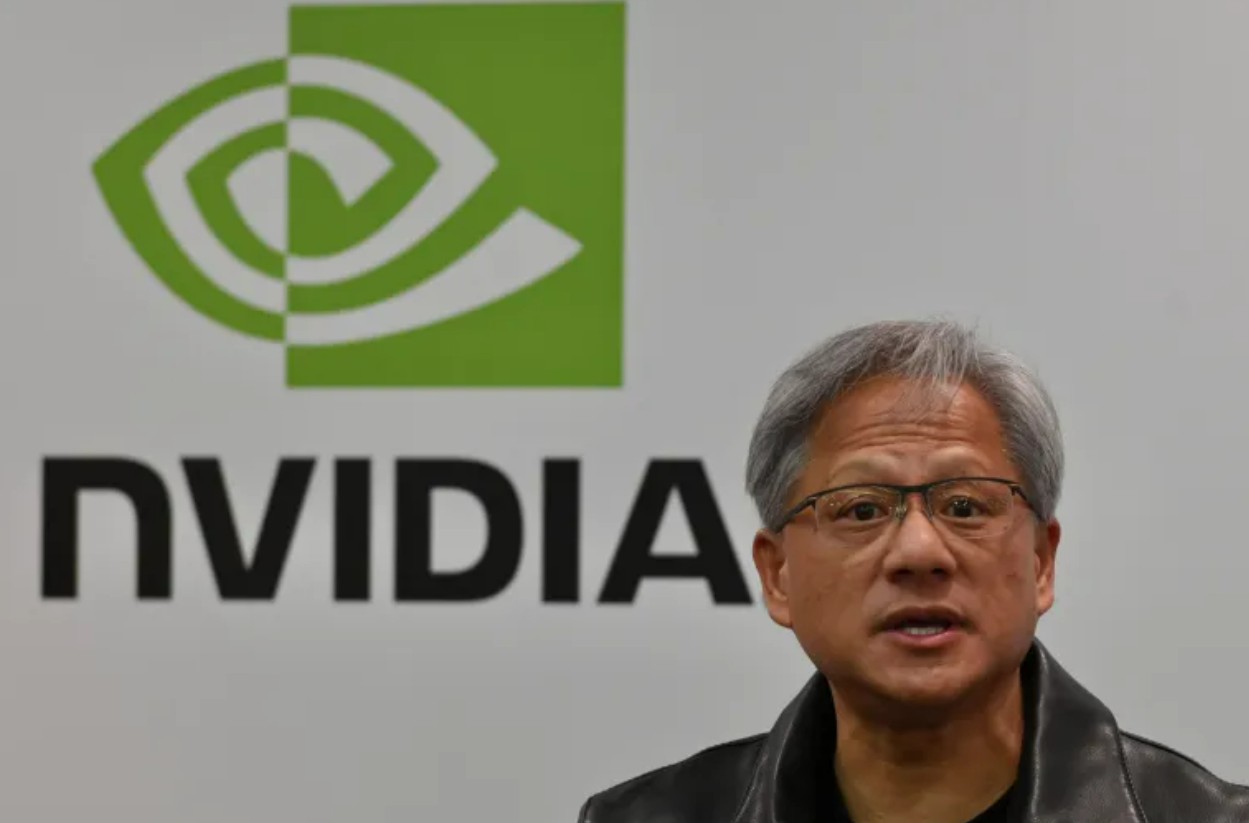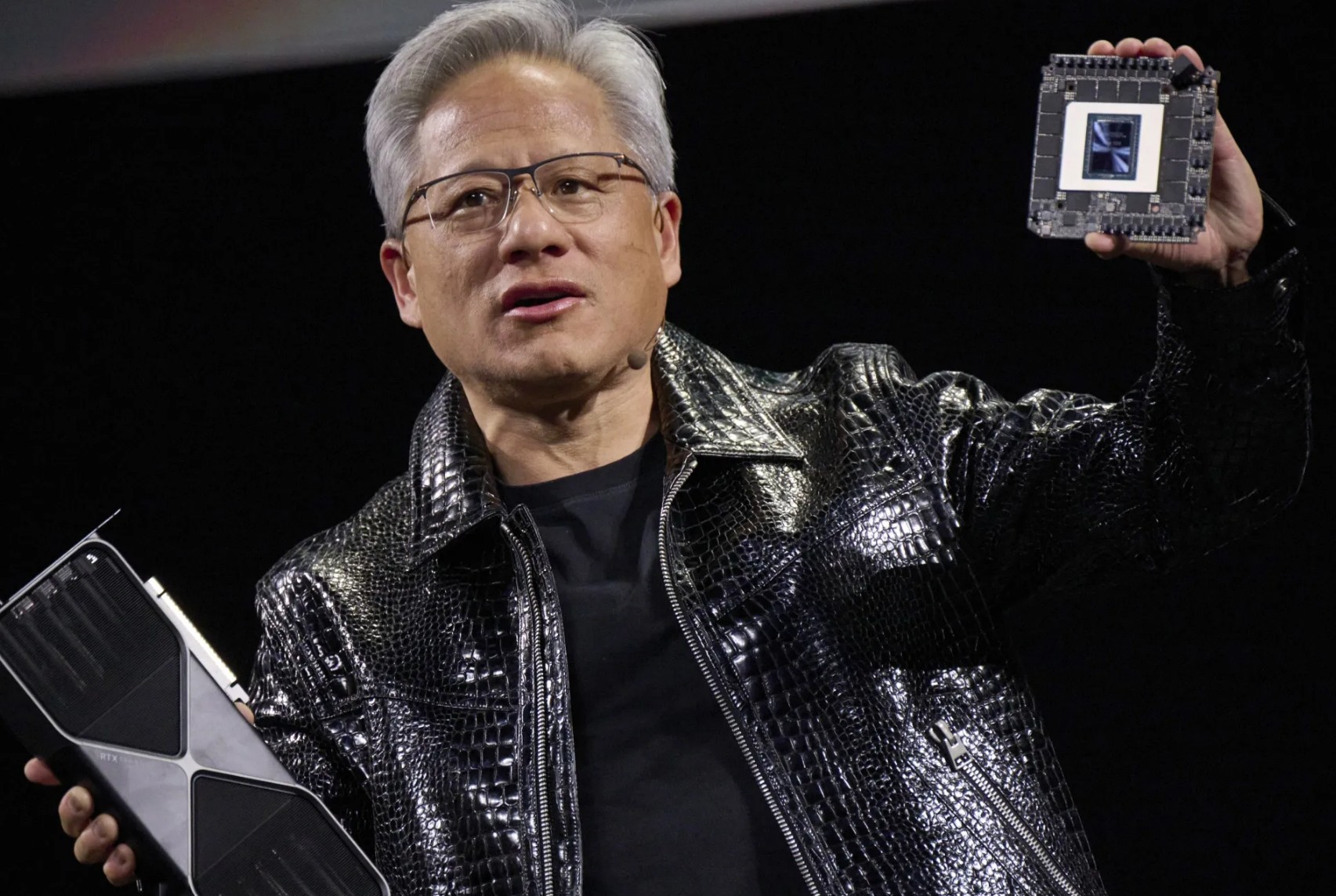
SAN FRANCISCO (Realist English). On 8 November, Jensen Huang admitted to employees an affair with a woman whom US intelligence agencies suspect of cooperating with Chinese intelligence.
Nvidia’s board of directors initiated an independent investigation to establish whether the CEO had become a “target of foreign intelligence.” Against the backdrop of the scandal, the company’s shares lost about 22% from their October peak, and market capitalization shrank by roughly $600 billion. Huang himself said he intends to continue leading the company, and the board expressed its support for him. However, the issue of succession became a subject of public discussion for the first time.
Dependence on a single leader: key man risk
The situation around Nvidia has become an illustration of the risk associated with a company’s excessive dependence on a single leader. Huang is not just a CEO: he is a co-founder, the company’s chief public representative in the field of AI, and the person who personally built relationships with suppliers, persuaded clients to reserve capacity, and represented Nvidia in negotiations with governments around the world.
Bernstein analyst Stacy Rasgon put it bluntly: “Nvidia is not a normal company, and Jensen is not a normal CEO; he is Nvidia.” According to Wedbush analyst Dan Ives, if Huang were removed, the company could lose 25–30% of its value, since a significant part of Nvidia’s capitalization is tied to the personal influence and image of its leader.
The succession problem: no public heir
The problem is compounded by the fact that Nvidia has never publicly appointed a “number two.” Huang runs the company through an extremely flat structure, with about 60 executives reporting directly to him. This model worked while he was at the helm, but it means that none of the top managers has been publicly tested in the role of heir.
“It works great while he’s in the chair, but it means no one has been prepared, tested, or publicly positioned as a successor,” noted Daniel Newman, head of The Futurum Group.
Shin Jae-young, a professor at Seoul University, adds: “Even though Nvidia is the most valuable company in the world, no one has emerged as a potential successor. Having a reliable Plan B is the main uncertainty.” Notably, in Nvidia’s financial reports, Huang is not named as a key person risk: the company limits itself to a statement about “high dependence on the services of its long-standing management team.”
Who could lead Nvidia: main candidates
Analysts and investors name several figures, but none of them is indisputable.
Colette Kress, Chief Financial Officer (acting CEO). She has been responsible for Nvidia’s finances since 2013, is well known to Wall Street through quarterly reports, and is considered the optimal figure for stabilizing the company during a transition period. However, her lack of an engineering background makes her an unlikely long-term choice for a company whose advantage is built on technology.
Ian Buck, Vice President of Hyperscale and High-Performance Computing. He is considered the creator of the CUDA platform — the software ecosystem that keeps developers in Nvidia’s orbit and is a key element of its market dominance. He heads the data center division and enjoys the trust of engineers and clients. Tae Kim, author of “The Nvidia Way,” names Buck as one of the two strongest candidates capable of “leading the chip giant into its next chapter.”
Rene Haas, CEO of Arm. The second candidate according to Tae Kim: he knows the technology industry well, has experience managing a public company, and previously worked at Nvidia, which makes him familiar to the old team. However, his move from Arm, whose architecture underpins Nvidia’s chips, would involve a conflict of interest.
Internal and family candidates. Huang’s children are mentioned — Madison (senior director of product marketing in the physical AI division) and Spencer (product line manager in the robotics division), as well as son-in-law Nico Capres.
It is reported that Huang told a close friend about his dream that one of his children would eventually lead Nvidia, but there is no official family succession plan. Among external figures, Eric Schmidt (former CEO of Google), Thomas Kurian (CEO of Google Cloud), and Matt Garman (CEO of AWS) are also named.
Technological leadership and vulnerable areas
The consensus of experts interviewed by CNN, Reuters, and Korean publications is as follows: demand for Nvidia chips will not disappear in the short term, and the company’s technological leadership does not rest solely on one person. The analogy with Apple after Steve Jobs’ departure suggests that the product line and market positions can be preserved.
Nevertheless, three vulnerable areas are identified that were personally tied to Huang:
Contract and supply network. Huang personally persuaded heads of small suppliers of critical components to reserve capacity for Nvidia, which provided it with a large part of the supply chain. Without him, competitors may try to redistribute this capacity in their favor.
Corporate culture. Nvidia is known for its principle of “intellectual honesty” and an extremely hands-on management style: Huang personally read employee newsletters “Top 5 Things” and tracked the smallest changes in the company. Whether this culture will survive without its main bearer is an open question.
AI investment ecosystem. A complex network of “circular financing” has been built around Nvidia: the company invests in AI startups and guarantees payments that they direct toward purchasing its own chips. If financial partners, who rely on trust in management, begin to grow cautious, vendor financing could shrink.
As analysts note, the current crisis is primarily a matter of corporate governance and succession, not of Nvidia’s technological superiority.
Short-term uncertainty has already led to a revision of ratings: Bernstein downgraded the stock, and the market predicts with 83% probability that Huang will leave his post before the end of the year. The key question is whether the board of directors can find a leader who will not only maintain operational efficiency but also reproduce Huang’s strategic vision, his ability to “see around corners,” and maintain a balance between Silicon Valley, Asia, and Washington.
So far, none of the candidates has demonstrated that they possess this combination of qualities to the full extent. For Nvidia, the immediate effect of a change in leadership will be most noticeable primarily in relations with suppliers and in market capitalization dynamics — and that is precisely where it is most sensitive for the entire AI ecosystem.