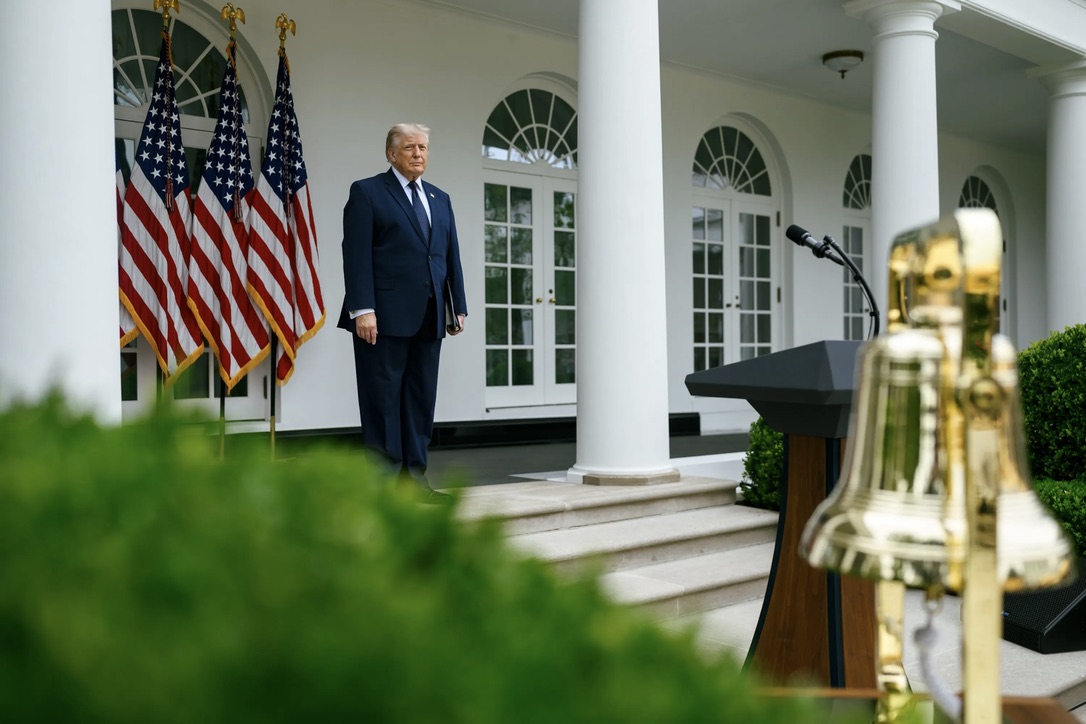
WASHINGTON (Realist English). President Donald Trump surprised allies in the Persian Gulf and even many of his own advisers when he announced on July 13 plans to impose a 20% levy on all cargo passing through the Strait of Hormuz.
However, within 24 hours he reversed the decision — following intense international lobbying, during which leaders of Saudi Arabia, the UAE, Qatar, Bahrain, and Kuwait convinced him to replace the levy with trade and investment agreements.
Trump announced the reversal on July 14 on his Truth Social platform: “Based on very productive conversations with Middle Eastern leaders, I have decided to replace the 20% US levy with trade and investment deals that various Gulf states will enter into with the United States.” The investments, he said, would be “huge.”
July 13: Announcement and Chaos in the Administration
On the morning of July 13, Trump posted on Truth Social that the US would henceforth be known as the “Guardian of the Strait of Hormuz” and would impose a 20% levy on all cargo passing through the strait to compensate for the costs of ensuring security.
The announcement caused chaos within the administration. Trump’s aides at the White House immediately began urgently developing a mechanism to collect the unprecedented levy: determining who would pay and how to collect the funds. Initially, it was assumed that shipping companies would pay, but Trump later stated that US allies in the region should pay instead.
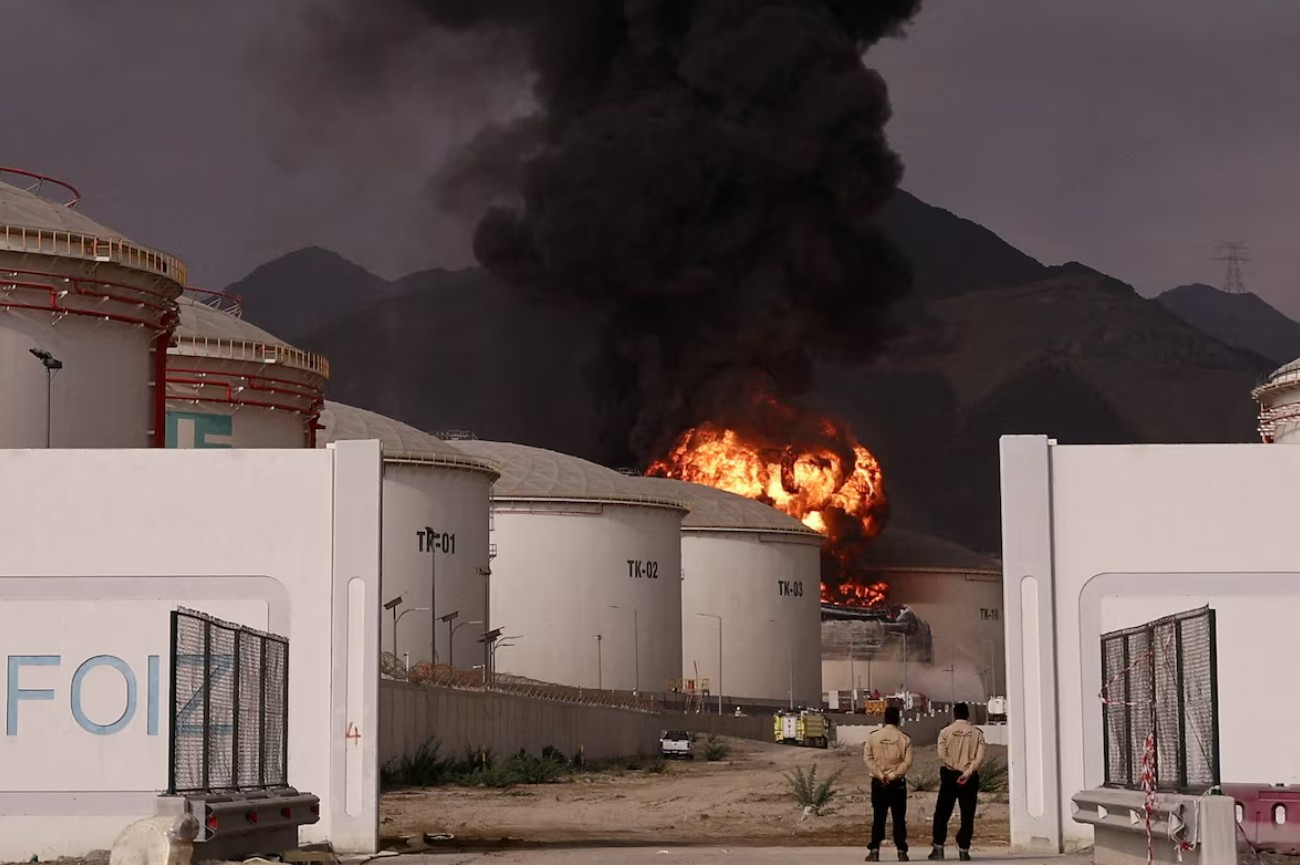
The announcement came amid the reimposition of a naval blockade on Iranian ports and a third night of US airstrikes on Iranian targets.
Contradiction with Administration Position
Trump’s plan directly contradicted statements made by his own senior aides. Just a month earlier, Secretary of State Marco Rubio, speaking in the Middle East, had stated: “No country has the right to impose fees or tariffs in international waters. This is existing international law.” At a meeting of the Gulf Cooperation Council, the US signed a joint statement that “rejected any duties, fees, or attempts to establish control over the strait.”
Vice President JD Vance took a similar position on June 18, stating that “international waters should be free of tariffs.”
As The New York Times notes, Trump’s statement contradicted weeks of public declarations by his closest aides that no country could charge for passage through this vital waterway.
July 14: 24‑Hour Lobbying Campaign
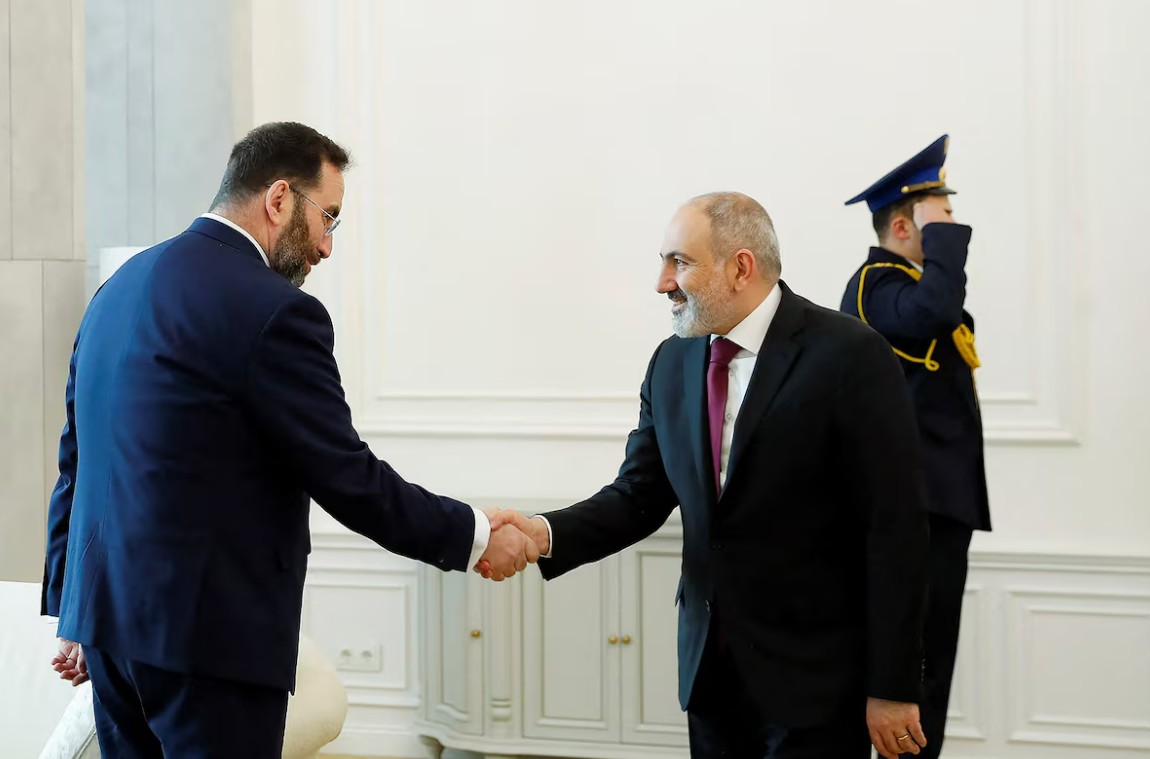
Trump’s decision alarmed US allies in the Persian Gulf. The leaders of Saudi Arabia, the UAE, Qatar, Bahrain, and Kuwait made urgent efforts to reach Trump directly and persuade him to abandon the idea.
By the morning of July 14, a series of lobbying efforts bore fruit. As Trump told reporters in the Oval Office during a meeting with Iraq’s new prime minister: “I received calls from various people, from different countries — kings, emirs, and all those we know and love. They said, ‘We would like to do this differently. We would like to invest billions and billions of dollars in the United States.'”
Instead of allowing the US to collect fees, Trump announced that these countries had pledged to invest undisclosed amounts in the American economy.
Market and Expert Reaction
The announcement of the 20% levy on July 13 caused a spike in oil prices. However, after the plan was cancelled on July 14, WTI crude fell by $0.55 to $78.36 a barrel within five minutes.
Experts had warned that Trump’s plan could have serious consequences. As CBS News noted, “the immediate imposition of a 20% levy on cargo ships already en route could have extended the negative impact on global supply chains.” According to estimates by The National, such a levy could have added more than $32 million to each supertanker voyage.
The International Maritime Organization stated that “there is no legal basis for imposing mandatory fees simply for transit through the strait.”
Although Trump cancelled the plan to collect the levy, he confirmed that he would maintain a “full blockade” of vessels heading to Iranian ports or carrying Iranian cargo.
Trump’s U‑turn, according to the BBC, demonstrates that the president is “looking for unconventional ways out of a difficult situation” in the protracted war with Iran. As Rosemary Kelanic, director of the Middle East program at Defense Priorities, noted: “This has turned into a war of attrition, and wars of attrition tend to last a very long time.”
It remains unclear whether the promised investments represent new commitments or are a repackaging of agreements reached during Trump’s Middle East visit last year.
As traders ironically noted, dubbing such reversals “TACO” — an acronym for “Trump Always Chickens Out.”