ERBIL (Realist English). While global media focus on the escalation in the Strait of Hormuz, a parallel conflict is unfolding in northern Iraq that threatens to undermine any peace initiatives between the United States and Iran.
Attacks on Iranian Kurdish opposition groups based in Iraqi Kurdistan have not ceased for a single day — even during periods of formal ceasefire between Washington and Tehran.
Memorandum of Understanding: Kurdish Question “Bracketed Out”
On June 16, 2026, two days after US President Donald Trump announced the achievement of a framework agreement with Iran to end the four-month war, an Iranian drone struck a camp of the Democratic Party of Iranian Kurdistan (PDKI) in Iraqi Kurdistan.
The attack, which hit part of the complex where families of civilians were residing, was a “clear violation of international humanitarian principles and demonstrates the ongoing threat to Kurdish opposition groups,” PDKI stated.
As Foreign Policy notes, Iraqi Kurdistan appears to have fallen outside the scope of the Memorandum of Understanding between the US and Iran, which stipulated an “immediate and permanent cessation of military operations.”
The memorandum, according to US officials, establishes a phased structure for future negotiations on Iran’s nuclear program, sanctions relief, regional security, and shipping in the Strait of Hormuz — but does not address the fate of the Kurdish population.
Chronicle of Attacks: Not a Day Without Strikes
Since the war began on February 28, 2026, Iran and its proxy forces in Iraq have carried out more than 810 attacks on Iraqi Kurdistan. From late February to May 2026 alone, Iranian forces launched more than 76 missile and drone strikes on Kurdish group positions.
Here are just some of the episodes of recent weeks:
- June 16 — Iranian drone struck a PDKI camp.
- June 27 — A member of the Kurdistan Freedom Party (PAK) was found dead in a hotel in Erbil. The party claims he was killed by Iran.
- July 1–2 — IRGC struck PDKI camps in the Degala and Balisan areas.
- July 1 — Six PDKI fighters were killed in clashes with the IRGC inside Iranian territory.
- July 13 — Three Iranian drones struck a PAK base north of Erbil. The attack came shortly after the US launched a new wave of strikes on Iran’s Persian Gulf coast.
- July 14 — Missile strike on facilities of Iranian Kurdish opposition groups east of Erbil.
According to Kurdish Rudaw, since the start of the war, Iranian forces have launched 79 missile and drone strikes on Kurdish group bases.
The Role of Kurds in the War: Pawns in a Great Game?
In early 2026, the Trump administration actively explored the possibility of using Iranian Kurdish armed groups to pressure Tehran. The CIA, according to CNN, was developing plans to arm Kurdish forces to organize an uprising in Iran.
Trump, according to sources, offered Kurdish leaders “massive air cover” and other support to seize parts of western Iran. However, at the last moment, the president changed his mind and did not approve the offensive.
On June 11, 2026, Trump said in a Fox News interview that Kurdish allies had “let down” the US: weapons intended for operations in the Middle East were not delivered as intended and effectively remained with the Kurdish side.
Divided Opposition and Pressure from Baghdad
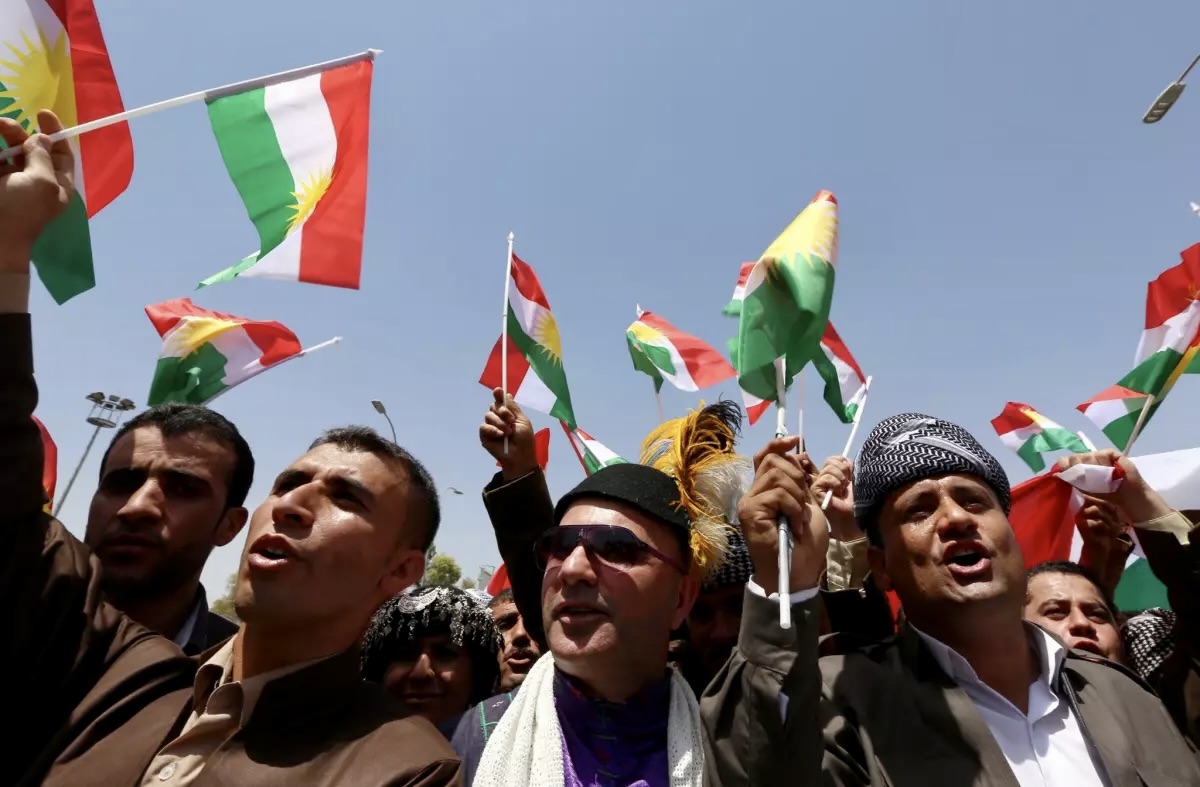
Iranian Kurdish opposition groups — primarily represented by seven parties, including PDKI, PAK, Khabat, PJAK, and three Komala branches — remain fragmented. In February–March 2026, they formed a coalition to coordinate actions, and on February 22, five groups announced the formation of the “Coalition of Political Forces of Iranian Kurdistan” in Erbil.
However, Tehran is intensively pressuring the central government of Iraq to implement the March 2023 security agreement, which obligates Baghdad to disarm Kurdish groups along the border. The complexity lies in the administrative division between Baghdad and the autonomous Kurdistan Regional Government.
Meanwhile, Iran has filed formal requests with Interpol for “red notices” against the leaders of seven Kurdish opposition parties.
Regional Reaction
Kurdistan Regional Government Prime Minister Masrour Barzani and President Nechirvan Barzani welcomed the US-Iran agreement, expressing hope that it would contribute to peace and stability.
However, Kurdish leaders fear that the deal may not cover Iraq and will not stop Iran’s attacks on Kurdish groups. As the Jerusalem Post notes, “there are concerns that a possible US-Iran deal may not cover Iraq and will not stop Iran’s attacks on Kurdish groups.”
British Ambassador to Iraq Irfan Siddiq met with Kurdish leaders in Erbil to discuss the implications of the US-Iran deal. However, London, like Washington, remains within the framework of security rather than political settlement of the Kurdish issue.
The 60-day deadline for final negotiations between the US and Iran expires on August 18, 2026. The Kurdish question is not mentioned in the memorandum, and as the Washington Examiner notes, “the memorandum is state-centric and security-focused. It prioritizes bilateral relations and excludes internal conditions in Iran.”
Iran, taking advantage of Washington’s inattention to the northern front, continues to systematically “cleanse” Kurdish opposition groups. The IRGC has long threatened to “crush” these groups, claiming they threaten Iran’s territorial integrity.
As Foreign Policy assesses, “these attacks signal that Iraqi Kurdistan appears to be outside the scope of the Memorandum of Understanding between the United States and Iran.” The Kurds, who were pawns in the great game between Washington and Tehran, have once again been betrayed — just as has happened repeatedly in their modern history.