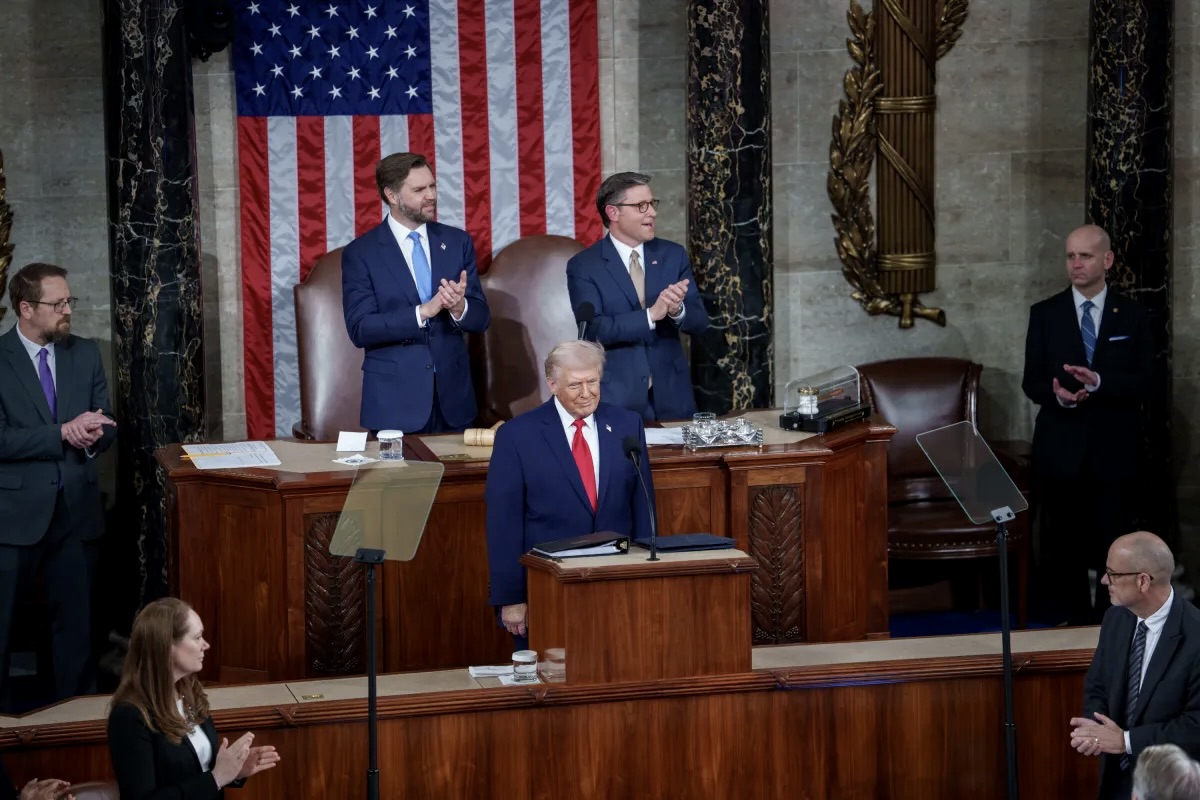
WASHINGTON (Realist English). — President Donald Trump has formally notified Congress of the resumption of military action against Iran, ending a multi-month ceasefire that lasted less than a month. In a letter dated July 10 and addressed to Senate President Pro Tempore Chuck Grassley, Trump stated that US forces had “conducted defensive strikes against targets inside Iran” on July 7.
The notification, submitted under the 1973 War Powers Resolution, gives the Pentagon an additional 60 days to conduct operations in the region without congressional approval. Trump said the strikes were “limited, calibrated” and carried out in a manner that “minimizes civilian casualties.”
Third Night of Strikes: Scale of Escalation
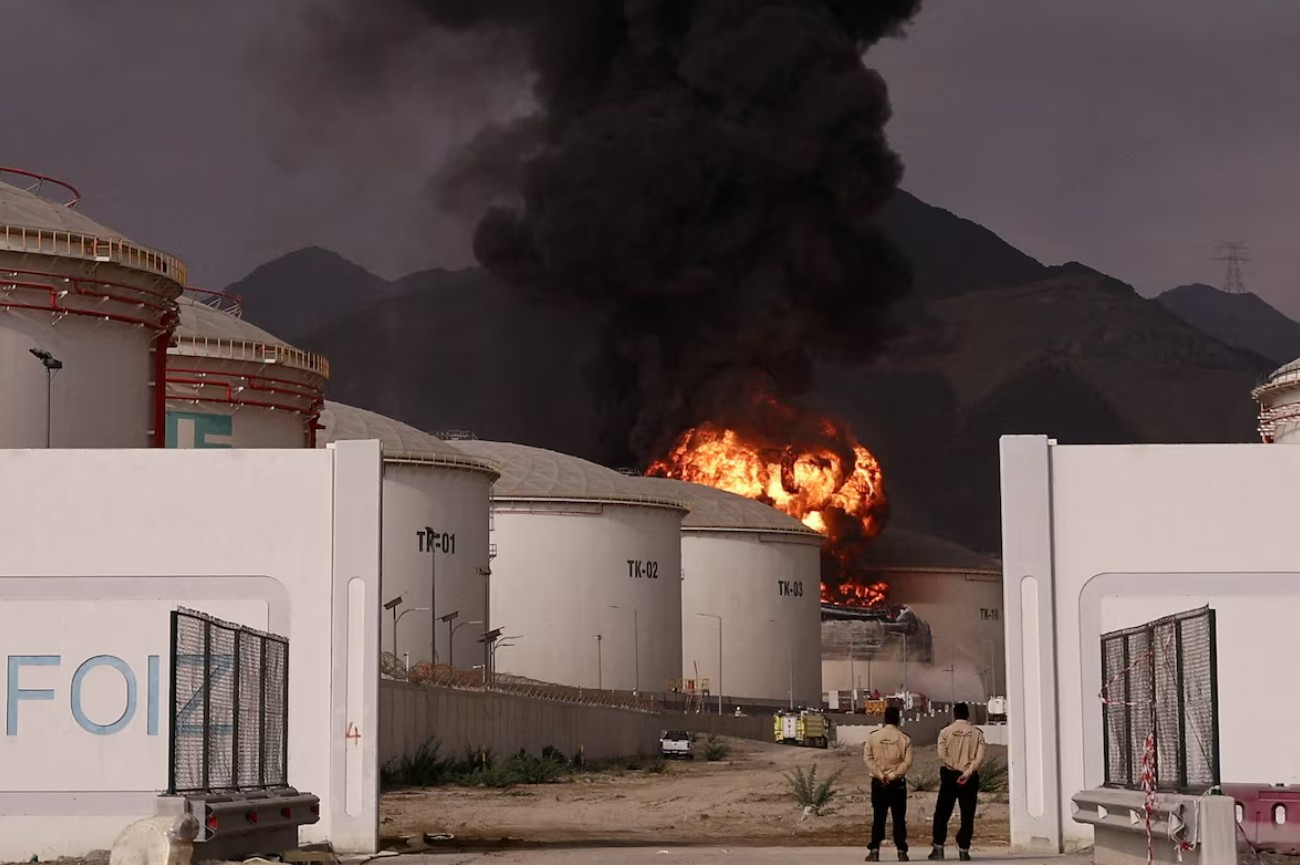
US Central Command (CENTCOM) carried out a third consecutive night of airstrikes on Iranian targets. The operation, which began at 20:45 GMT on July 13, lasted five hours and targeted military facilities in the port cities of Bandar Abbas, Bushehr, Jask, Konarak, and Chabahar, as well as the islands of Kish, Qeshm, and Abu Musa.
According to CENTCOM, strikes were directed at air defense systems, coastal radar stations, missile and drone capabilities, and small vessels. “These strikes will continue to impose heavy damage on Iranian forces and degrade their ability to attack innocent civilians and commercial shipping in the Strait of Hormuz,” the command said in a statement.
Blockade and 20% Levy: “Guardian of the Strait”
Simultaneously with the strikes, Trump announced the reimposition of a naval blockade on Iranian ports, effective from 20:00 GMT on July 14. In a post on Truth Social, the president declared that henceforth the US would be known as the “GUARDIAN OF THE STRAIT OF HORMUZ” and would impose a 20% levy on the value of cargo on all vessels passing through the strait as compensation for ensuring security.
“The Strait of Hormuz is OPEN and will remain OPEN — with or without Iran,” Trump said. He clarified that the blockade applies only to Iran, while “all other countries will have fair and open access to the strait.”
Iran Plays Trump at His Own Game: Sarcasm and Counteroffer
Tehran’s response was immediate and — more importantly — tactically shrewd. Iranian Foreign Minister Abbas Araghchi, in a post on X, not only rejected US claims but also, with biting irony, turned Trump’s initiative on its head.
“The US President is absolutely right. Whoever ensures safe and secure passage for commercial ships through the Strait of Hormuz should be compensated for this service. Iran has always been the GUARDIAN of the strait and will remain so FOREVER. 20% is, of course, too much. We will be fair,” Araghchi wrote.
As CNN notes in its analysis, Iran appears to be playing Trump at his own game. The US president, accusing Tehran of violating the memorandum of understanding, failed to notice the irony of his own criticism — given his habit of withdrawing from numerous international agreements. Moreover, Araghchi effectively legitimized Tehran’s position by agreeing with the very principle of charging a fee for passage — but offering a “fairer” price, thereby seizing the initiative from Washington.
Iranian Strikes on US Allies
Iran did not limit itself to diplomatic mockery. The Islamic Revolutionary Guard Corps (IRGC) carried out missile and drone strikes on US facilities in Jordan, Bahrain, and Kuwait. Jordanian military officials reported intercepting four Iranian missiles.
Particularly damaging was the strike on two UAE-flagged tankers — Mombasa and Al Bahiyah — in Omani territorial waters south of the Strait of Hormuz. The attack by Iranian cruise missiles resulted in one crew member killed and eight wounded.
Memorandum in Crisis: What Went Wrong?
The June memorandum of understanding on which the talks were built has effectively collapsed. As Iranian Foreign Ministry spokesman Esmaeil Baghaei stated, the document is “in crisis.”
At the heart of the dispute is paragraph 5 of the memorandum, which required Iran to “take all possible measures for the safe passage of commercial vessels” through the strait. Tehran insists this gives it operational control over all shipping, while Washington interprets it merely as an obligation for Iran to ensure safety, not as a right of control.
As Asia Times notes, beneath this surface dispute lies a deeper strategic problem: the US seeks to establish an alternative southern shipping corridor through Omani waters that would gradually strip Iran of control over the strait. This is precisely why Tehran insists that all vessels, regardless of route, must coordinate their passage with Iran.
Despite the escalation, Trump stated that a deal with Tehran is “still possible.” However, analysts doubt its feasibility. As expert Bader Al-Saif noted, “both sides want to end the stalemate on their own terms, and it’s becoming increasingly difficult for them to do so. Hence the return to attacks and the increase in their scale.”
The central question remains open: can Washington find a way to deprive Iran of control over the Strait of Hormuz, or will Tehran continue to use geography and tactical flexibility to outplay its more powerful but less consistent adversary?