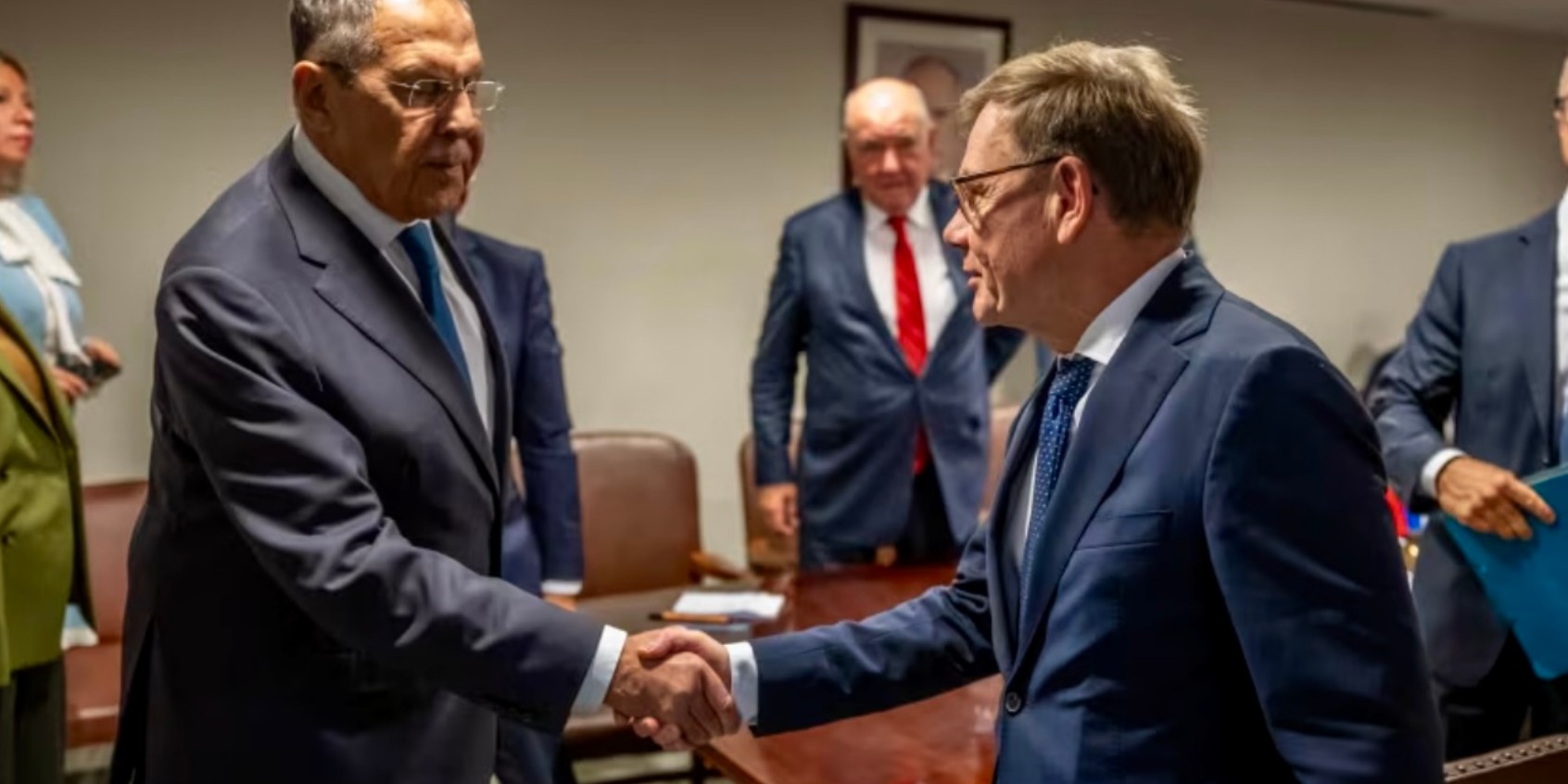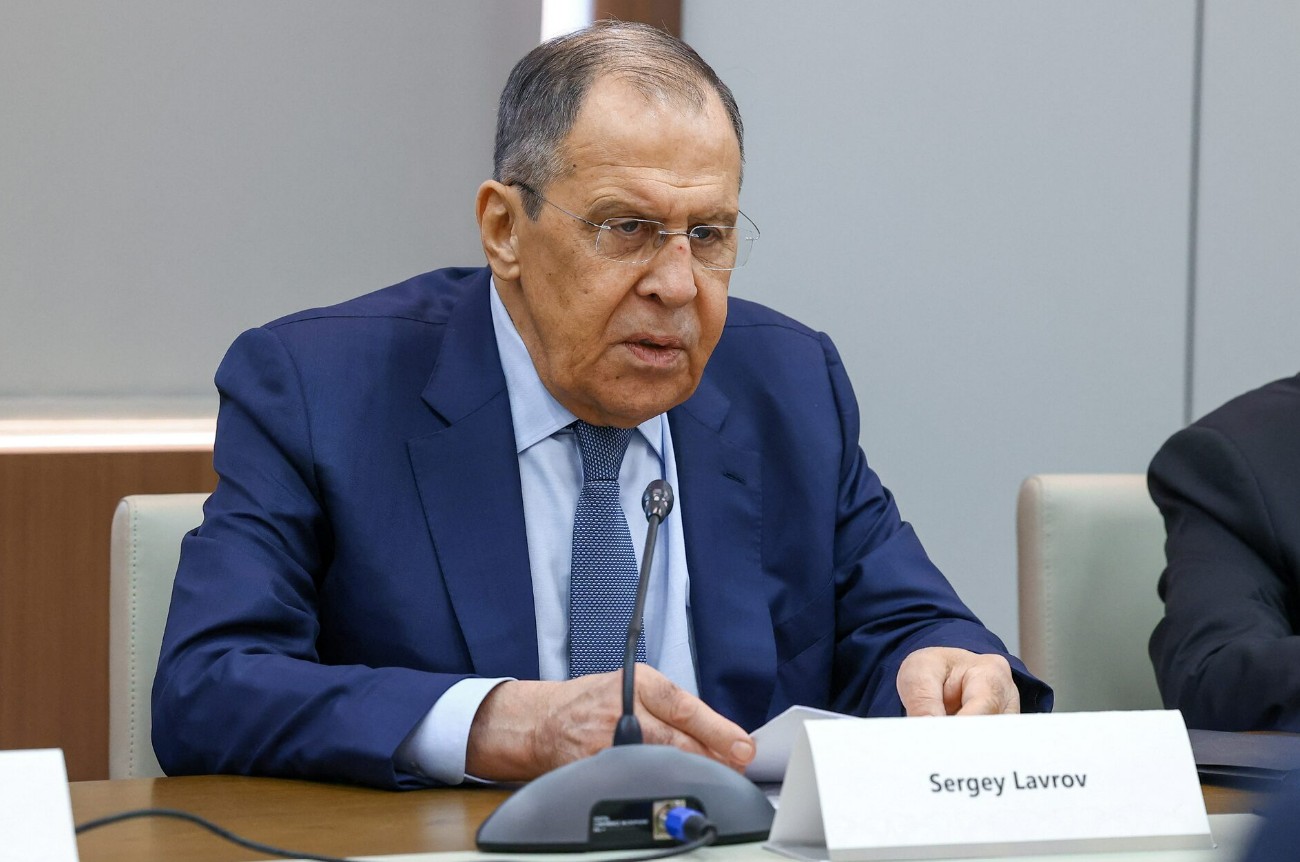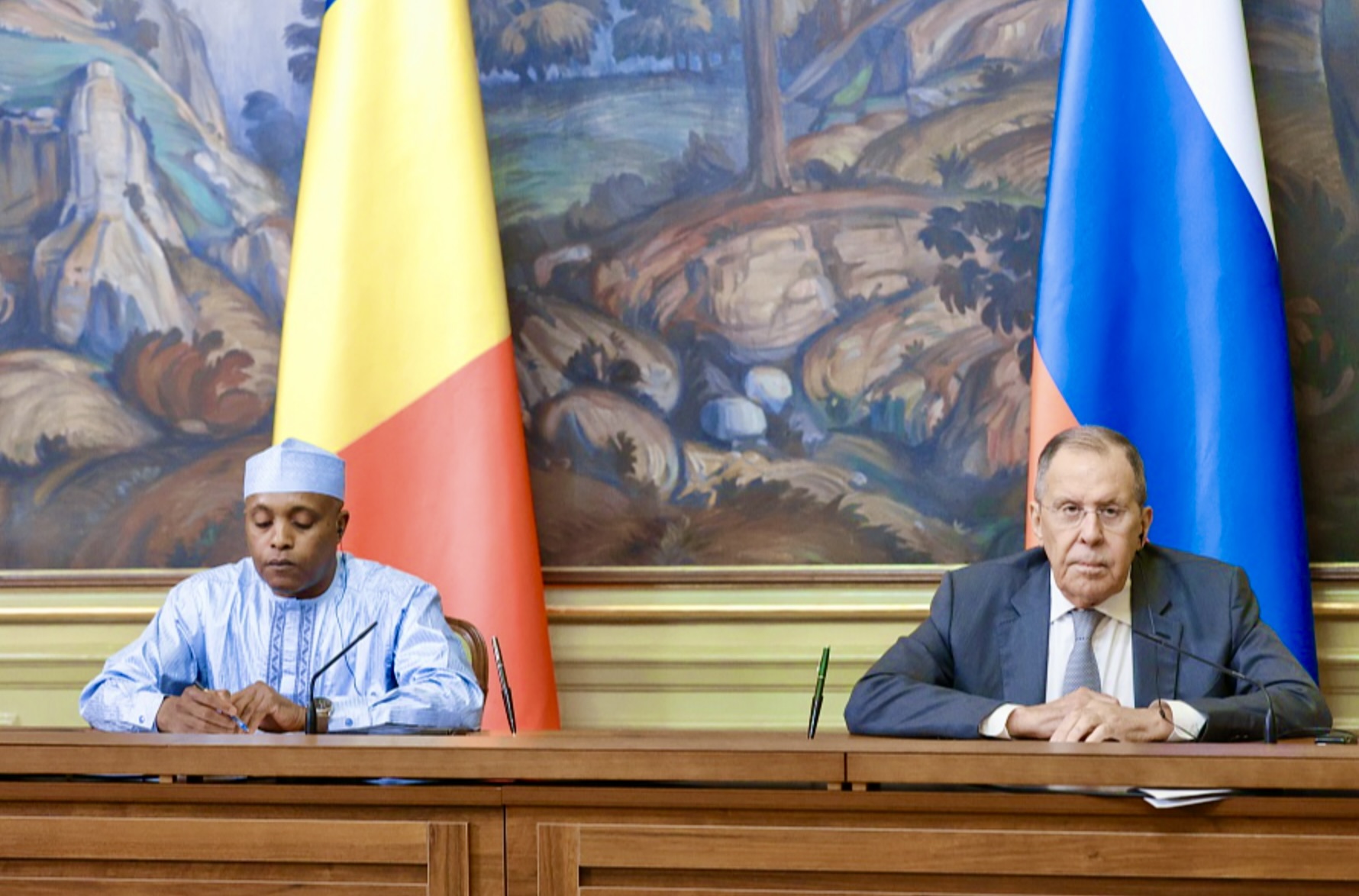
MOSCOW (Realist English). On July 14, Russian Foreign Minister Sergey Lavrov held talks in Moscow with Abdoulaye Sabre Fadoul, State Minister, Minister of Foreign Affairs, African Integration, and Chadians Abroad of the Republic of Chad.
The sides confirmed their mutual commitment to strengthening traditionally friendly bilateral relations, discussed key areas of cooperation, and signed an agreement on visa-free travel for diplomats.
Visa-Free Regime for Diplomats
Following the talks, Lavrov and Fadoul signed an intergovernmental agreement introducing a visa-free regime for holders of diplomatic and service passports.
The document is designed to facilitate contacts between the two countries’ agencies and give new impetus to political dialogue.
Economy and Investment: From Geological Exploration to Healthcare
The foreign ministers discussed trade, economic, and investment cooperation, which, by Lavrov’s admission, “lags significantly behind the good level of our friendly political dialogue.” Among promising areas, the sides highlighted:
- Geological exploration and energy — Russia and Chad see good prospects for joint projects in these fields.
- Fertilizer production — Lavrov noted that there are “good prospects” here.
- Healthcare — Russia has already accumulated experience in cooperation not only in Chad itself but also in neighboring states.
Education: 300 Scholarships Annually
Cooperation in the humanitarian sphere, especially education, was highly praised. More than 3,500 Chadian citizens have received education in Russia.
Currently, 300 state scholarships are provided annually — one of the highest figures among sub-Saharan African countries. Starting from the next academic year, the number of scholarships is planned to increase to 360.
Counterterrorism in the Sahel: Russia Will Assist the Region’s Countries
Special attention was paid to the situation in the Sahara-Sahel region, including the activities of the Confederation of Sahel States (Mali, Burkina Faso, Niger). Lavrov shared with his colleague the results of the third ministerial meeting between Russia and the foreign ministers of the three Confederation countries, held in Niamey.
The ministers expressed serious concern over the growing terrorist threats and the spread of groups affiliated with ISIS and Boko Haram into the region’s countries. Lavrov stated that Russia would assist Sahel countries in enhancing the combat capability of their national armed forces and training military personnel.
“Russia firmly stands for Africans to reach agreements themselves, while external players should provide the most favorable conditions,” the Russian foreign minister emphasized.
The Ukrainian Trail in Africa and Maritime Terrorism
Lavrov stated that some former colonial powers are trying to undermine Russia’s relations with Sahel countries and are using not only terrorist groups but also Ukrainian militants in their provocations.
The Russian foreign minister separately addressed the situation in the Sea of Azov and the Black Sea, where attacks by Ukrainian unmanned surface vessels on civilian ships, including Turkish vessels, have become more frequent.
“What the Ukrainian regime is doing is not even piracy. Pirates at least rob and keep what they take. Here — neither for themselves nor for others. Just to cause damage and intimidate. Sheer terrorism,” Lavrov said. He also recalled that the Blue Stream pipeline infrastructure regularly comes under attack and called on Turkey to give a public assessment of these events.
Food Security: Obligations Will Be Met
Responding to a question about rising wheat prices due to Ukrainian strikes on Russian ships, Lavrov assured that Russia will continue to fulfill all its obligations on food supplies to African friends — both under commercial contracts and through humanitarian aid.
The minister recalled that at the beginning of the special military operation, 200,000 tons of Russian wheat were arrested in EU ports. Russia offered to transfer it free of charge to needy African countries, but the European Union obstructed this for more than a year.
US, Iran, and the “Alaska Agreements”
Lavrov called the resumption of US military strikes on Iran a “violation of the memorandum of understanding” and stated that this “closes the door that the memorandum seemed to have opened slightly.”
Speaking about the Ukrainian settlement, the Russian foreign minister noted that Europeans are trying to undermine the agreements reached between Russia and the US in Alaska. At the same time, according to Lavrov, US President Donald Trump does not deny these agreements, while Europe and Kyiv have publicly declared them “dead.”
“US President D. Trump does not comment on these attempts and does not say that ‘Alaska’ no longer exists,” Lavrov stated.
Third Russia-Africa Summit
The sides discussed preparations for the third Russia-Africa Summit, which will be held in Moscow in October 2026.
Lavrov expressed gratitude for the information that Chadian President Mahamat Idriss Déby plans to personally participate in the event.
African Tour
The visit of Chad’s foreign minister to Moscow marked the logical conclusion of Sergey Lavrov’s extensive African tour, which he undertook in the first half of July 2026.
The minister’s route covered four countries: Ethiopia, Niger, Mozambique, and Burundi.
Ethiopia — First Stop
The tour began on July 6 with a visit to Addis Ababa. Lavrov held talks with Ethiopian Foreign Minister Gedion Timotheos, Prime Minister Abiy Ahmed, and African Union Commission Chairperson Moussa Faki Mahamat.
Key discussion topics:
- Trade — in 2025, bilateral trade volume almost tripled, exceeding $435 million. Ethiopia became Russia’s tenth-largest trading partner in Africa.
- Nuclear energy — Russia and Ethiopia agreed on a plan of action for the construction of a nuclear power plant, including a large-scale personnel training program.
- BRICS — following Ethiopia’s accession to the group, ties between the countries have become even stronger.
- Preparations for the Russia-Africa Summit, to be held in Moscow in October 2026.
At the press conference following the talks in Addis Ababa, Lavrov clearly outlined Moscow’s position on the Middle East crisis, including the situation around the Strait of Hormuz.
Niger — Historic Visit and Meeting with the Sahel States Alliance
On July 8, Lavrov visited Niger for the first time in history — this was the second stop of his tour. In the capital Niamey, the second ministerial meeting in the Russia — Sahel States Alliance (SSA) format was held, which includes Mali, Burkina Faso, and Niger.
Lavrov held both joint talks with the foreign ministers of the three countries and separate bilateral meetings. Key outcomes:
- The sides confirmed their commitment to forming a multipolar world order.
- Lavrov conveyed to the leaders of the three countries an invitation from Russian President Vladimir Putin to attend the third Russia-Africa Summit in Moscow in October.
- The main focus was on counterterrorism in the Sahara-Sahel region. SSA representatives have repeatedly stated that militants receive external support, including from Ukraine and Western countries.
- Russia confirmed its readiness to assist Sahel countries in enhancing the combat capability of their national armed forces.
Lavrov emphasized that Russia and the SSA countries are “united by a common understanding of the need to form a fair multipolar world order” and expressed hope that cooperation “will give additional impetus to strengthening the sovereignty of our countries.”
Mozambique and Burundi — Cementing Partnership
The final stops of the tour were Mozambique and Burundi. In Maputo, the capital of Mozambique, Lavrov was received as an honored guest: the country’s foreign minister noted that Mozambique could be considered a “second home” for the Russian minister — so frequent have his visits become.
During the talks, the sides reached broad consensus on further strengthening ties at both the bilateral and multilateral levels.
Overall Results of the Tour
Lavrov’s four-country tour demonstrated Russia’s consistent strengthening of its presence in Africa.
As analysts note, this aligns with Moscow’s broader strategy of expanding its network of partners to counter Western attempts to isolate Russia, create new supply chains, and maintain a balanced position in global affairs.
In 2025, Russia opened embassies in Niger, Sierra Leone, and South Sudan, and over the next two years plans to open diplomatic missions in Gambia, Liberia, Togo, and the Comoros Islands.