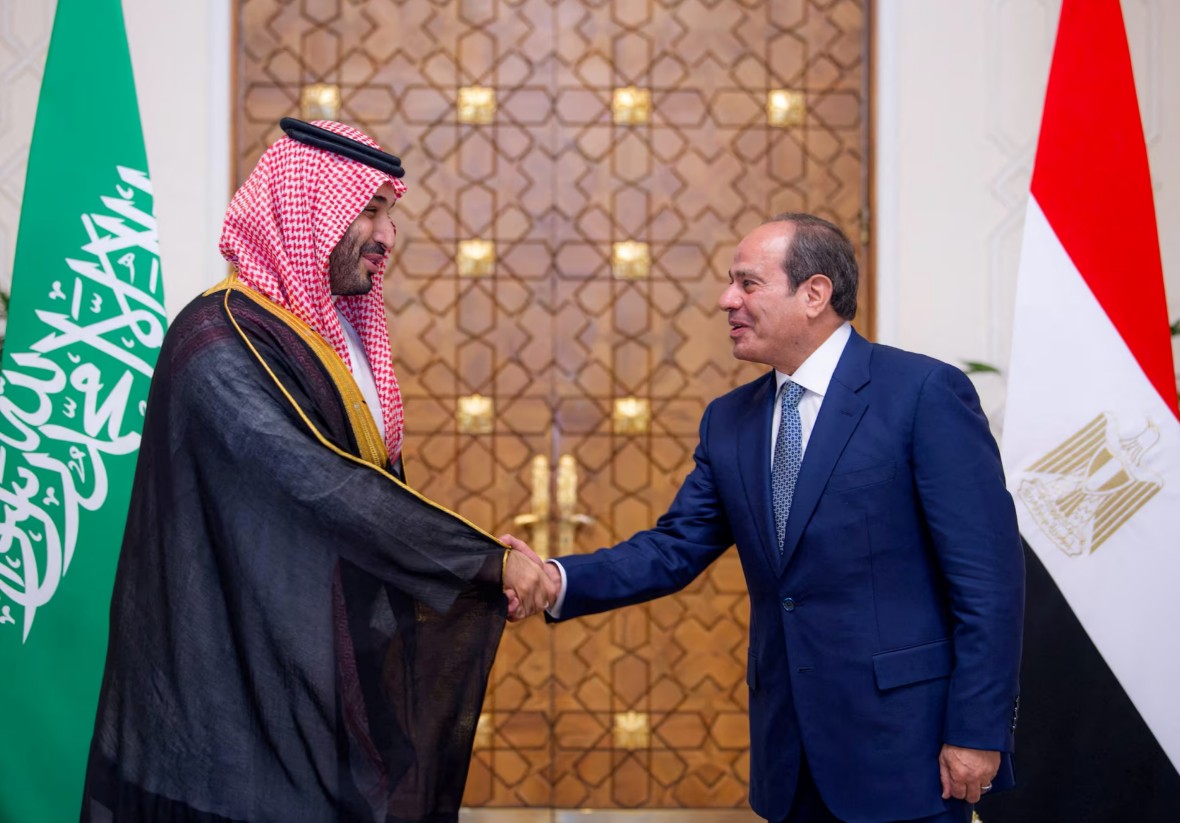
CAIRO (Realist English). Egypt has moved close to direct military involvement in the conflict between Saudi Arabia and Yemen’s Houthis. The country’s parliament is due to vote this week on granting the army powers to protect Saudi Arabia in the event of a corresponding request from Riyadh.
What happened
On October 17, Egyptian President Abdel Fattah el-Sisi made an unexpected address, stating that Egypt was ready to come to Saudi Arabia’s aid if it asked. “I ask parliament to hold an emergency session to approve this step if we are asked,” he said, stressing that this was exclusively about defense, not aggression.
The next day, October 18, Egypt’s National Defense Council, chaired by el-Sisi, announced “full solidarity” with Saudi Arabia and a decision to provide it with “all necessary and possible forms of support” to protect security, stability, territorial integrity, and Islamic holy sites. The same day, parliament opened an emergency session, but the vote was postponed.
Why Egypt is doing this
Cairo’s decision is driven by two intertwined factors — economic and security. Egypt’s economic stability has long been tied to the oil-producing Gulf states. Remittances from Egyptian workers in Saudi Arabia and the UAE are an important source of foreign currency for families amid double-digit inflation. Saudi Arabia, the UAE, and other Gulf states have provided Egypt with tens of billions of dollars in aid, central bank deposits, and investments since 2013. A Saudi deposit of $5.3 billion alone is due this month.
The second reason is security. In July, a drone attacked two gas tankers at Egypt’s Damietta port, showing that Cairo cannot remain on the sidelines of the conflict. In addition, Egypt and Saudi Arabia share an interest in ensuring freedom of navigation through the Red Sea and the Bab el-Mandeb Strait — a route critical for Saudi oil and Egyptian revenue from the Suez Canal.
“I think they understand they cannot stay on the sidelines indefinitely,” noted H. A. Hellyer, a researcher at the Royal United Services Institute.
Context: Houthi escalation
Egypt’s decision followed a sharp escalation of Houthi attacks on Saudi Arabia. In recent weeks, the Houthis struck Riyadh International Airport and Saudi Aramco facilities, causing casualties and destruction. According to Reuters, after the collapse of the truce in Yemen, the Houthis also threaten the strategic shipping route through the Bab el-Mandeb Strait.
Saudi Arabia has responded by intensifying airstrikes on Houthi-controlled areas, including Sanaa.
Procedure and limitations
Under Article 152 of Egypt’s constitution, the president cannot declare war or send troops on a combat mission abroad without a conclusion from the National Defense Council and approval by two-thirds of parliament. That is why el-Sisi requested the emergency session. The vote is expected this week.
The president himself stressed that the mandate concerns only defense: “I am talking about protection, not about fighting or attacking anyone.”
Egypt is the largest Arab country by population and one of the most militarily powerful. Its participation, even limited to defensive functions, could change the balance of power in a conflict that has already become one of the fronts of the broader US-Israeli war against Iran.
However, a parliamentary decision is not automatic entry into war. The mandate will take effect only if Saudi Arabia requests it. Riyadh has not publicly made such a request, although it has welcomed Cairo’s readiness. For Egypt, this is a way to strengthen ties with a key financial donor without taking on immediate combat obligations. For the Houthis, it is a signal that the conflict could expand beyond the Yemeni-Saudi theater. For the region, it is another step toward escalation, where Egypt’s economic and security interests are inextricably linked.