PARIS (Realist English). Rising fuel prices caused by the US-Iran war have become a catalyst for political shift in Europe. According to France 24, the cost of living has become “the main driver of populist politics” on the continent, and far-right parties are using the energy crisis to strengthen their positions ahead of 2027 elections in France, Italy, and Poland.
Scale of the economic blow
The European Commission estimates Europe’s losses from the Iran conflict at approximately €100 billion due to trade and energy market disruptions. Gas prices have risen by about 140%, and diesel fuel has doubled in price. In France, which consumes about 600,000 barrels of diesel per day and imports half of it, Macron warned of the risk of disruptions due to damage to a Saudi pipeline.
France: from schools to fuel
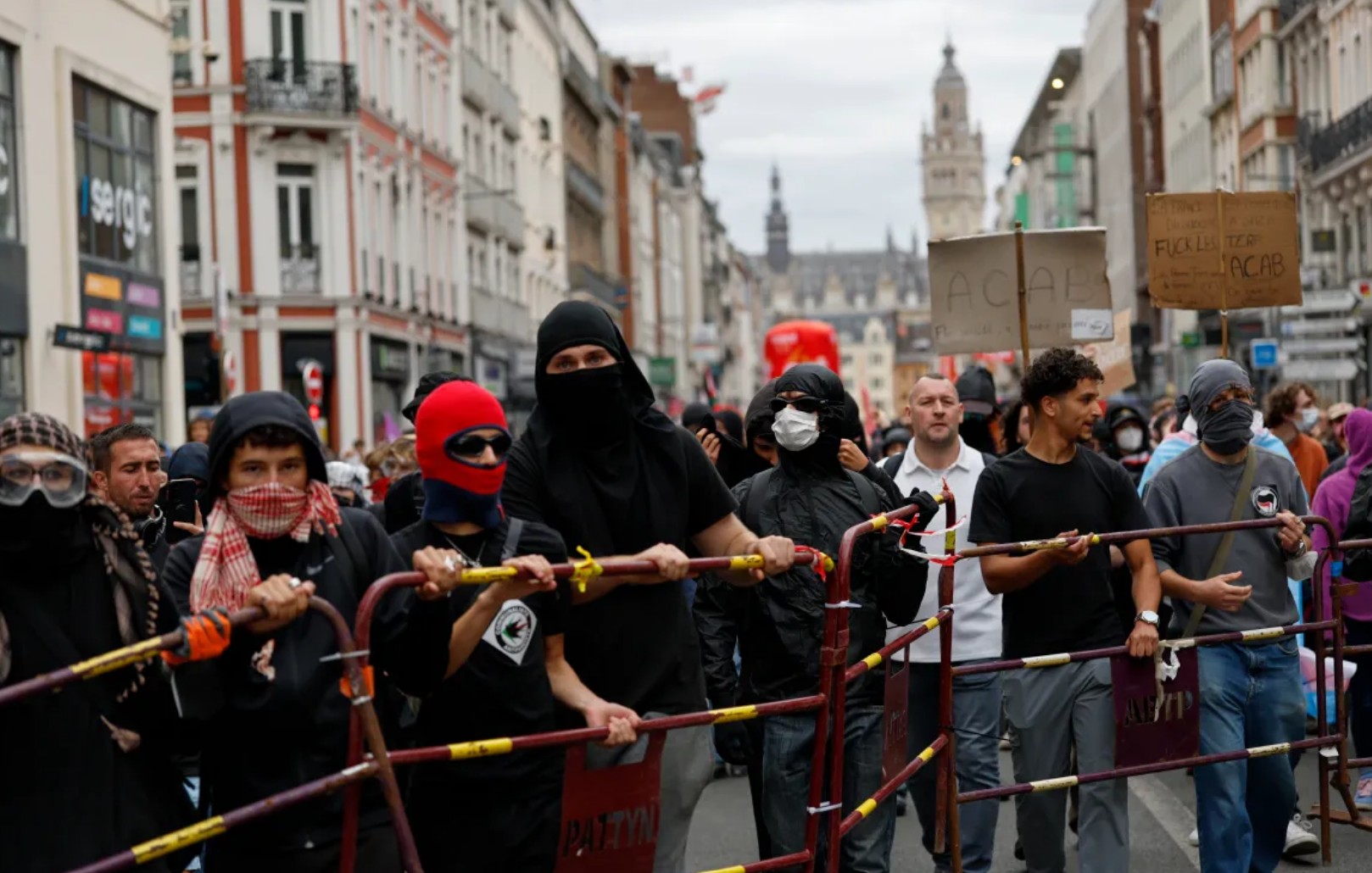
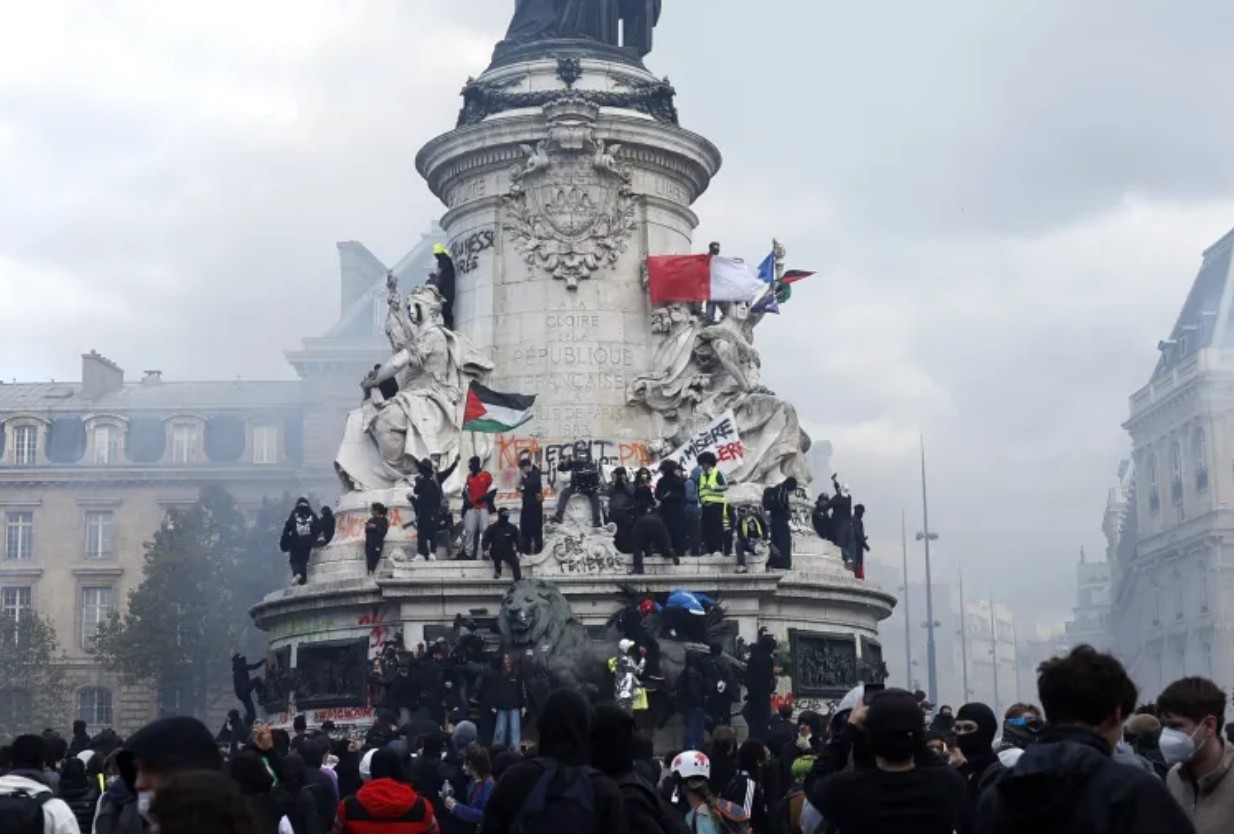
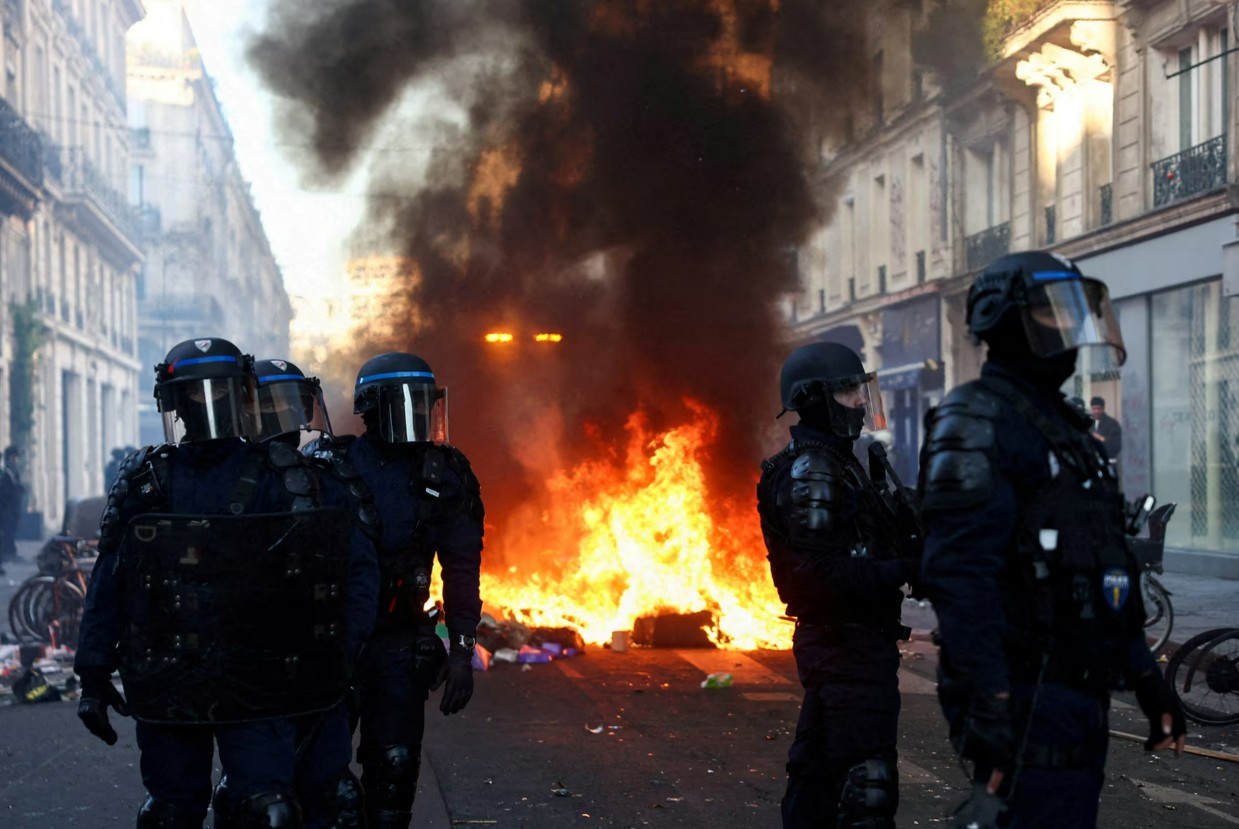
Protests that began in late September with demands for improved school infrastructure in Paris suburbs have escalated into some of the most serious unrest in decades. In Limoges, the historic 19th-century city hall burned down, stores were looted, and buildings set on fire. According to the Interior Ministry, about 2,400 people were detained, and nearly 1,000 police officers and gendarmes were injured.
Macron acknowledged the “legitimate demands” of protesters but condemned the violence: “We must not confuse them with those who destroyed, vandalized, and looted.”
Le Pen bets on fuel
National Rally leader Marine Le Pen, who leads in polls ahead of the April 2027 presidential election, has made fuel prices the centerpiece of her campaign.
She proposes reducing VAT on fuel from 20% to 5.5% — a measure with broad support, especially in rural areas where cars are essential. According to Elabe, since the war with Iran began, Le Pen’s ratings have risen while Macron’s have fallen.
“Rising fuel prices clearly strengthen Marine Le Pen. I think she has owned this issue for quite some time,” said Sciences Po political scientist Gilles Ivaldi.
Germany: AfD and Russian gas
In Germany, Alternative for Germany (AfD) leads in national polls after success in regional elections in Mecklenburg-Vorpommern. The party demands the return of cheap Russian gas and the lifting of sanctions on Russian energy, calling Berlin and Brussels policy the cause of economic problems.
Chancellor Friedrich Merz, two days before the elections, announced a fuel tax cut of about 17 cents per liter from October 1 to the end of 2026, but the result showed that emergency measures were insufficient.
Italy and other countries
In Italy, Prime Minister Giorgia Meloni plans to abolish the road tax for 14.5 million cars and motorcycles from 2027 at a cost of more than €2 billion, in addition to a €2.8 billion diesel excise cut. In Milan, protests against the cost of living and poor services escalated into clashes: 271 detained over two days.
In Portugal, tens of thousands took to the streets in Lisbon against low wages and rising living costs. In Spain, the eviction of an 87-year-old woman sparked nationwide demonstrations and early elections.
The energy crisis has exposed the structural vulnerability of the European model: households depend on fossil fuels, and governments cannot quickly lower prices without budget costs.
The far right offers a simple solution — cut taxes or return Russian gas — which resonates with voters weary of inflation. For Macron, whose term expires in 2027, this means the street is once again setting the agenda, and his rating is falling as Le Pen rises. For Europe as a whole, it means that energy policy is becoming not a technical issue but a field of political struggle where moderate forces are losing the initiative.