PARIS (Realist English). Footage of the riots, spread across global media, has tarnished France’s reputation as one of the world’s most popular tourist destinations. Tour operators, hoteliers, and industry experts fear that if the violence repeats, the consequences for tourism could be catastrophic.
What happened
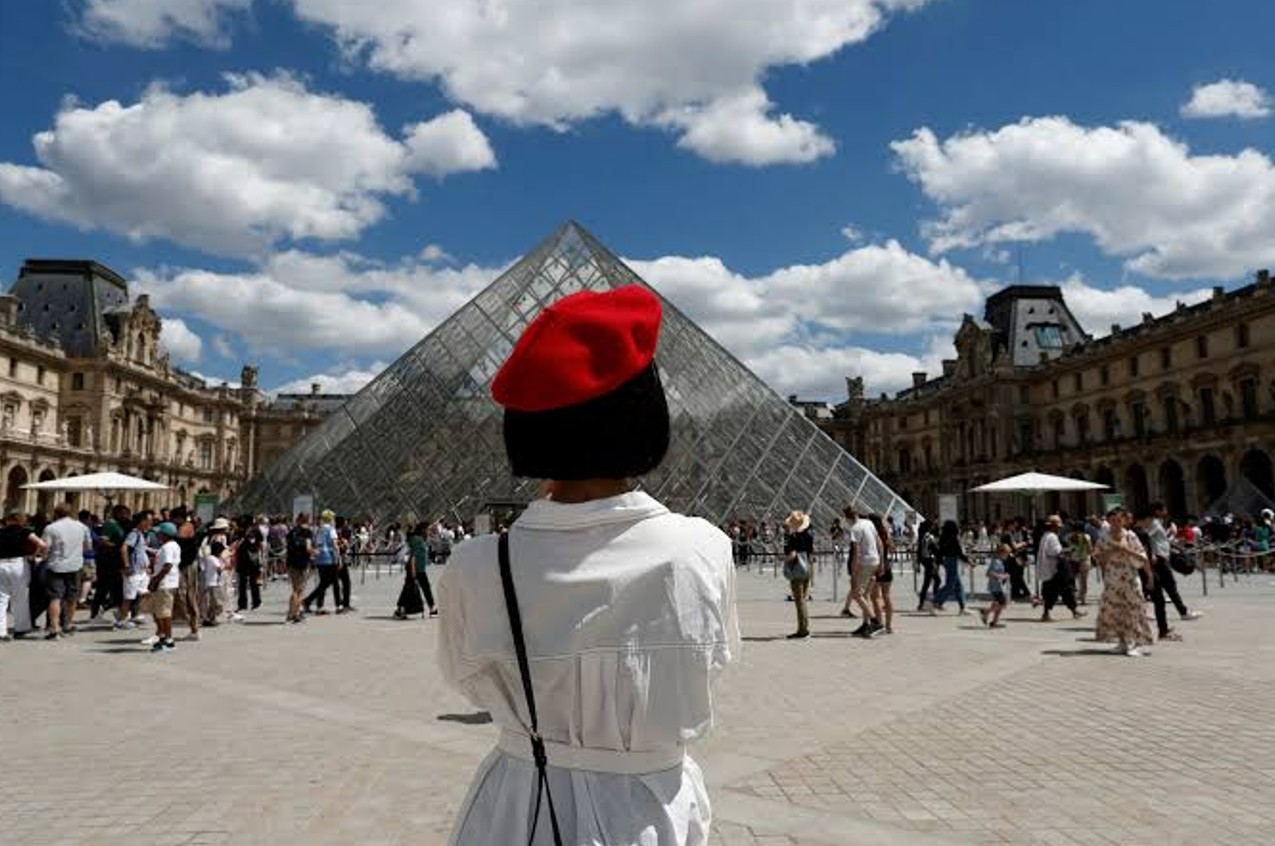
On October 17–18, a wave of violence swept across France, triggered by protests against the rising cost of living. According to the Interior Ministry, about 2,400 people were detained, and nearly 1,000 police officers and gendarmes were injured. In Lyon, a tourism office burned down; in Paris and Marseille, there were clashes, arson, and looting. On October 19, protesters blocked the entrance to the Louvre — the world’s most visited museum.
Reaction of the tourism sector
Christelle Cassagne, head of ADN Tourisme, which unites the country’s tourism institutes, called the situation “catastrophic.” “When you book a hotel for a week, it’s not to sit locked inside it,” she said.
According to consulting company Protourisme, hotel bookings are already weakening in Paris, Lyon, and Marseille. Analysts at MKG Consulting recorded a sharp drop: the share of booked rooms for the period from October 20 to 29, which had previously exceeded last year’s level by 1 percentage point, fell to 0.2 points.
For shorter-term bookings (October 20–25), growth slowed from 3.5 to 1.9 percentage points. “This slowdown is especially noticeable for near-term and high-budget trips,” MKG notes, drawing parallels with the “Yellow Vests” protests in December 2018.
Market scale
France receives about 100 million tourists annually, who spend more than €70 billion ($80 billion). For 2026, 42 million hotel nights are forecast. According to Protourisme, one-day riots in central Paris led to the cancellation of about 1% of bookings for the month — “for 42 million nights this is not critical, but the effect of recurring incidents cannot be underestimated.”
Impact on different markets
The impact is uneven. Russian tourists, according to the Association of Tour Operators of Russia (ATOR), are not canceling trips: organized groups continue to arrive as planned, and cancellations are isolated. However, for distant markets such as China and the US, sensitivity is higher. “The farther the clients, the more strongly they react to security risks,” explained Protourisme head Didier Arino.
Hong Kong tour operators have altered routes to avoid protest areas, and several school groups canceled trips after Hong Kong authorities issued an “amber” warning. Several countries, including the US, China, and Germany, have advised their citizens to exercise caution.
For French tourism, the key question is not current cancellations but the long-term effect. If the riots are limited to a few days, losses will be manageable. If the violence becomes regular, as in the case of the “Yellow Vests,” damage could be measured in billions. Head of Selectour Laurent Abitbol put it bluntly: “If it lasts two weeks, it’s not scary. If it lasts several months, it will be a catastrophe.”
For Russia, whose tourists are so far ignoring the riots, the situation creates a window of opportunity: if European markets start canceling trips, vacated hotel rooms and flights could go to those willing to take the risk. However, for France this is cold comfort: the reputation of a safe destination, which took years to restore after the pandemic and the 2018–2019 protests, is again under threat.