
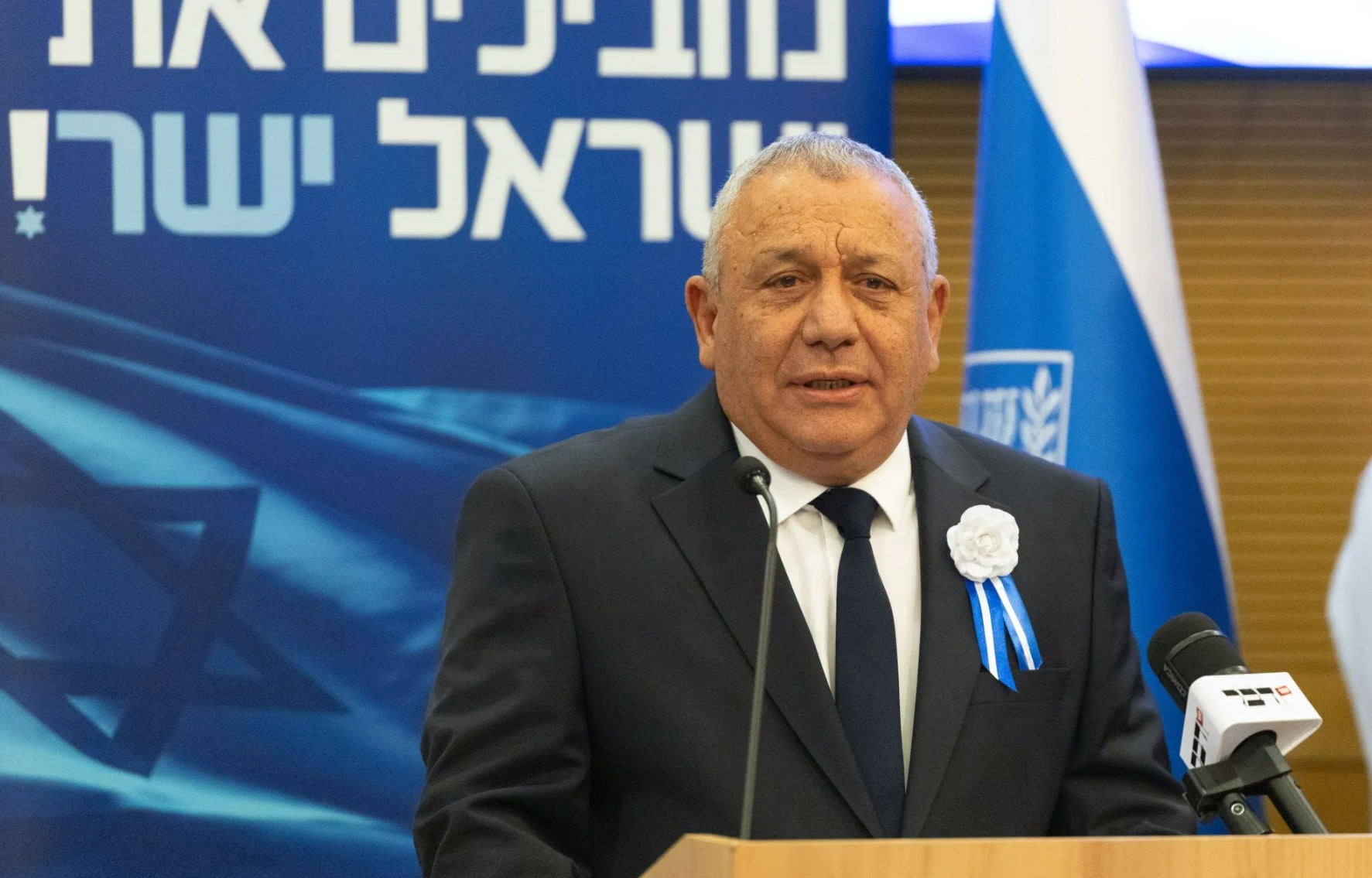
JERUSALEM (Realist English). Yashar party leader Gadi Eisenkot, who has been tasked with forming Israel’s government, is closing in on creating a ruling coalition. According to Reuters, on 26 November his party reached a coalition agreement with the left-wing Democrats faction, which had previously suspended talks over dissatisfaction with Yashar’s contacts with Likud.
Coalition agreements and portfolio allocation
In addition to the Democrats, Yashar signed an agreement with Avigdor Liberman’s Yisrael Beiteinu party. Under the agreements reached, the Democrats will receive the portfolios of public security, labour and social affairs, communications, and culture and sport. Liberman, according to Channel 12, will become defence minister, and his party colleague Oded Forer will serve as justice minister.
It is expected that Yesh Atid leader Yair Lapid will become foreign minister, while New Hope’s Gideon Sa’ar is expected to receive the finance portfolio. The Democrats’ leader, Yair Golan, will receive the public security portfolio.
Talks with the ultra-Orthodox
Talks with ultra-Orthodox parties remain the key factor in securing a parliamentary majority. According to Ynet, Eisenkot is holding intensive informal consultations with United Torah Judaism (UTJ), which holds seven seats and was previously part of Netanyahu’s coalition. The sides are reportedly already discussing the distribution of ministerial posts, although UTJ denies this.
According to media reports, Eisenkot has reserved the health and construction portfolios for UTJ, and the interior and religious services portfolios for Shas, expecting it to join later. However, including the ultra-Orthodox will require a compromise on the conscription of yeshiva students: Eisenkot promised during the campaign to end mass exemptions, but UTJ insists on preserving them.
Deadlock with Likud
Talks with Benjamin Netanyahu’s party have made no progress. According to Eisenkot, five meetings were held over two weeks, but Likud “did not demonstrate readiness to make progress on substantive issues,” limiting discussion to the distribution of power and a possible rotation of the premiership. Netanyahu, for his part, called on Eisenkot to form a “national unity government,” but Eisenkot called this a “bluff.”
According to KAN, Netanyahu told close associates that a “miracle” would be needed to prevent Eisenkot from forming a government. Pessimism is growing in Likud: ministers and lawmakers in closed discussions assess that the talks are effectively over and that a new government could be sworn in soon.
As observers note, the key feature of the situation is the gap between Eisenkot’s stated determination and the procedural complexity of the coalition. His bloc holds 48 seats out of 120, while a majority requires 61. Even with UTJ (7 seats), Eisenkot reaches only 55 — not enough without outside support, for example from the Arab Ra’am party (8 seats), which may abstain in a confidence vote.
Eisenkot’s mandate expires on 6 December with a possible 14-day extension. If he fails to form a government in time, President Isaac Herzog may transfer the mandate to Netanyahu or call new elections.
For Israeli politics, the immediate effect will be most noticeable primarily in whether Eisenkot manages to close the agreement with UTJ before the deadline — and that is precisely where it is most sensitive for the prospects of a change of power in the country.