
LONDON (Realist English). Oil prices ended the week mixed: Brent posted its first weekly gain in November, while the US benchmark WTI remained in negative territory. According to Reuters, Brent futures fell by $1.13 (1.2%) to $95.44 a barrel in Friday’s trading on 27 November, but gained about 3% over the week, ending a streak of three weekly declines. WTI closed at $83.08, losing 0.9% over the week; there was no trading on Thursday due to Thanksgiving in the US.
Geopolitical trigger: Hormuz and Saudi Arabia
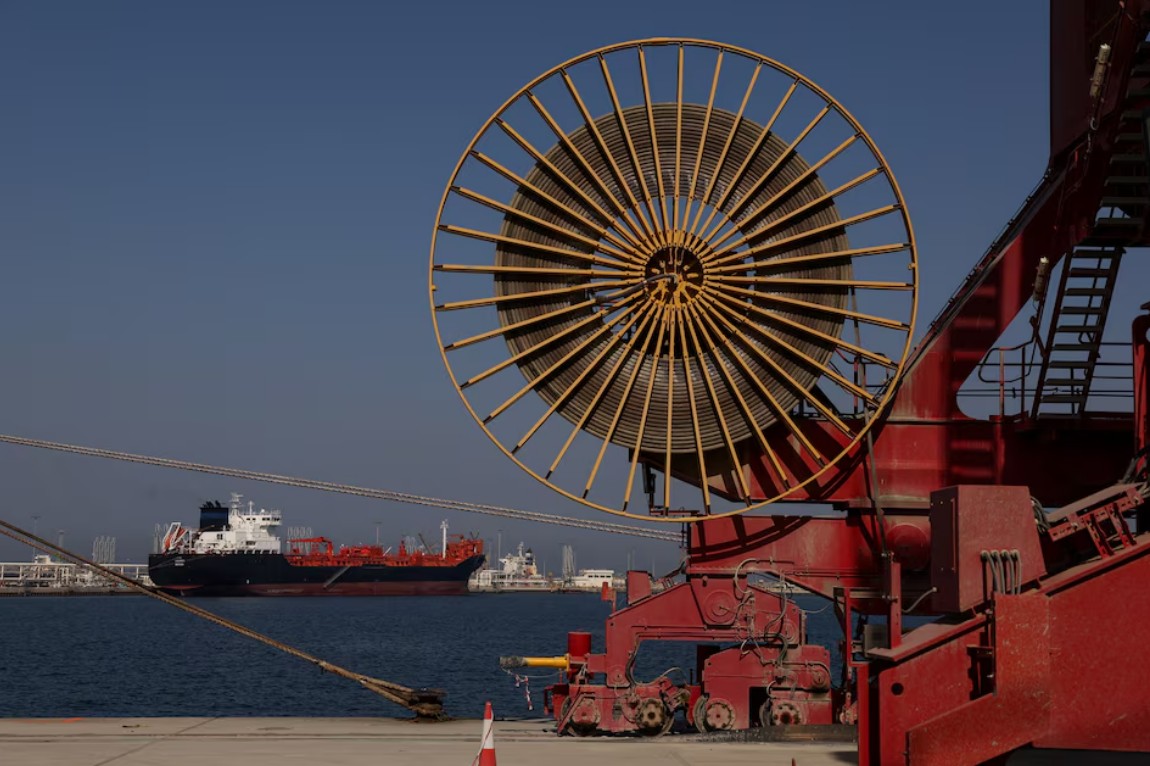
The market reversal was driven by renewed attacks on vessels and energy facilities. Iran continued to strike ships passing through the Strait of Hormuz, and Yemen’s Houthis attacked Saudi Arabia’s infrastructure. On Thursday, 26 November, a worker was killed when a projectile hit Saudi Aramco’s Jazan refinery, and part of operations was temporarily suspended; a day earlier, the Houthis claimed an attack on Ras Tanura — the kingdom’s largest oil refinery and a key export terminal.
As Mark Schaefer, director of brokerage Liquidity Energy, noted, “attacks on energy facilities and tankers in the Middle East have once again brought the risk of supply disruptions to the fore.”
Positions of the parties and the risk of escalation
An Iranian adviser said Tehran would keep the Strait of Hormuz closed and intended to “break the embargo.” US forces, for their part, reported that on Thursday they disabled a commercial vessel attempting to violate the American blockade of Iran.
ANZ analysts Brian Martin and Daniel Hynes noted that Brent could exceed $100 a barrel even without further escalation, but this would require “evidence of limited supply available for delivery.”
OPEC+ expectations and bank forecasts
The market is also awaiting the OPEC+ decision at its 29 November meeting. According to three sources, the alliance is likely to keep its production targets for the first quarter of 2027 unchanged. Iraq, for its part, is negotiating an increase in its quota.
Goldman Sachs earlier raised its forecasts, suggesting that if disruptions to Gulf supplies persist, Brent could reach $140 a barrel in 2027.
As observers note, the key feature of the current environment is the combination of a short-term geopolitical impulse with continued uncertainty about the durability of supplies. Brent’s rise came after prices had been under pressure earlier in November following the US midterm elections, when investors expected de-escalation. However, the attacks in the Strait of Hormuz and on Saudi refineries showed that the risks of disruption have not been eliminated.
For the oil market, the immediate effect will be most noticeable primarily in the OPEC+ decisions on 29 November and in the dynamics of supplies through the Strait of Hormuz — and that is precisely where it is most sensitive for the prospects of price stability in the first quarter of 2027.