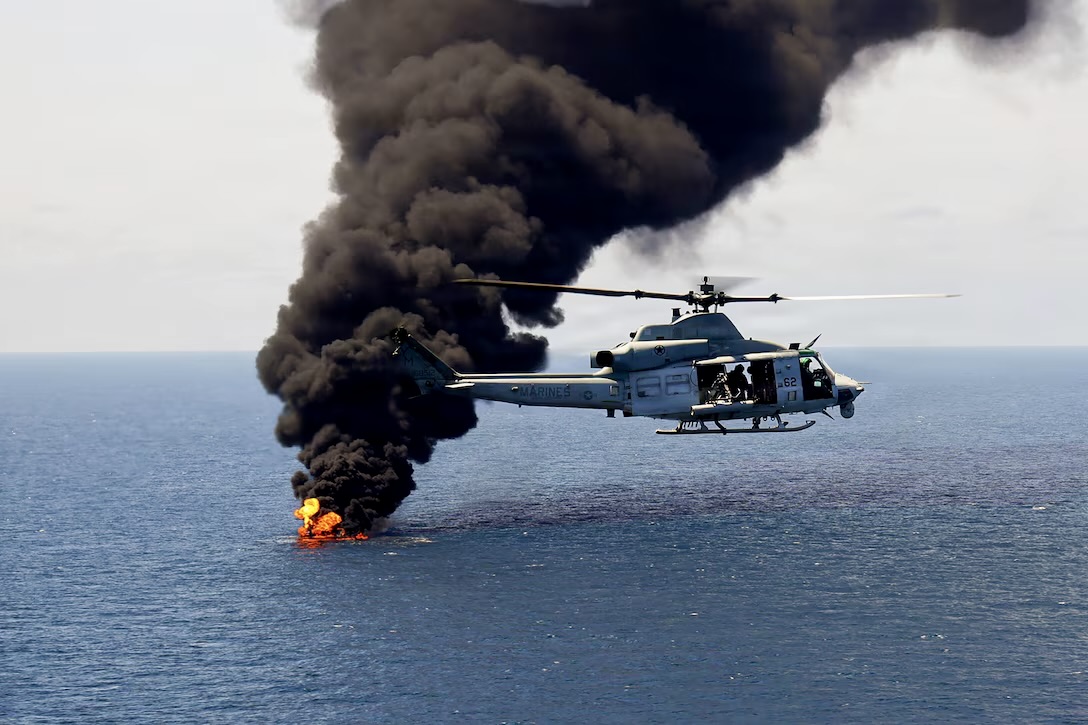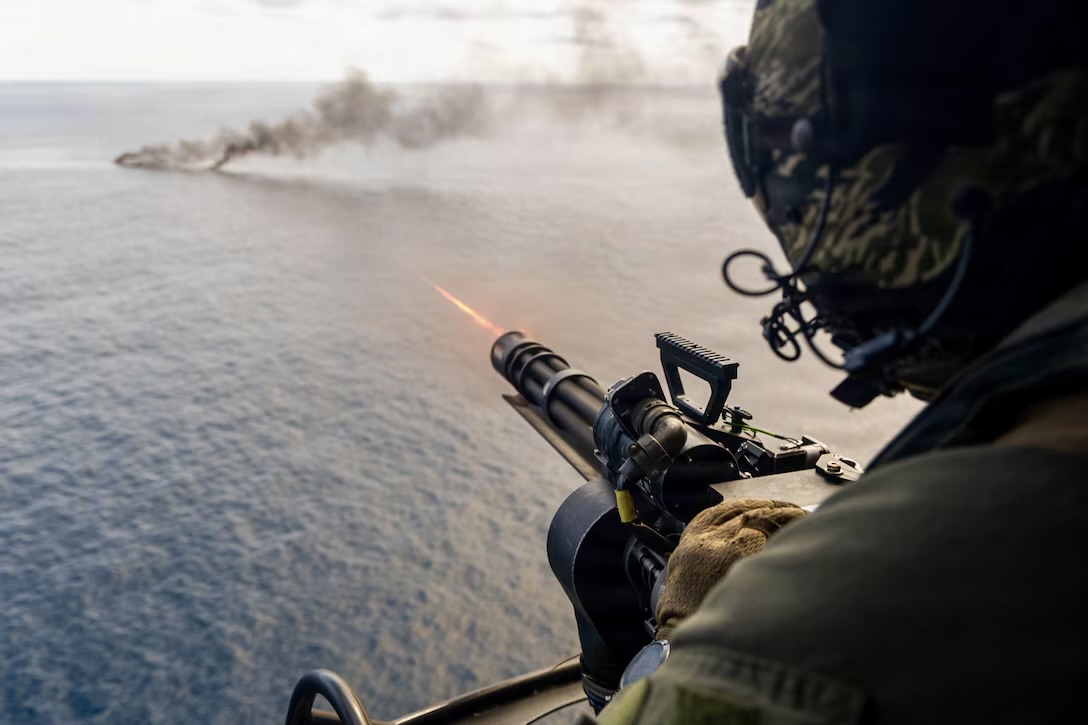
DUBAI (Realist English). On September 5, US Central Command forces struck three Iranian crude oil carriers after the Islamic Revolutionary Guard Corps launched ballistic missiles at two US Navy warships patrolling regional waters. The strikes “permanently disabled” the IRGC tankers M/T Downy off Kharg Island and M/T Stark 1 near Jask, while the unladen M/T Kylo was “completely destroyed” in the Gulf of Oman.
A US aircraft carrier and guided‑missile destroyer successfully evaded multiple Iranian attacks without American casualties. CENTCOM commander Admiral Brad Cooper delivered a blunt message: “Let the message to the IRGC be clear: If you shoot at two of our ships, we will impose an even higher economic cost — taking out three of yours”.
The Shadow Fleet and the Economic War
CENTCOM characterised the targeted vessels as part of a “multibillion‑dollar shadow network” that funds the IRGC and its regional proxies. Defence Secretary Pete Hegseth amplified the threat on social media: “It’s simple: if Iran shoots at U.S. ships, we will destroy (and sink) their oil tankers”. He added that Iran’s oil tanker fleet is “defenceless” and that Washington could strike Iranian vessels anywhere — in the Middle East or the Indo‑Pacific.
The US naval blockade, imposed after Iran effectively shut the Strait of Hormuz, has already disrupted oil flows through the strategic waterway. Brent crude futures closed at $96.28 a barrel on Friday, their highest level since July 24.
The Context: Escalation and Collapse
The tanker strikes followed the collapse of a sixty‑day ceasefire and a week of renewed escalation. On August 31, President Trump posted an AI‑generated video warning that Kharg Island — through which 90% of Iran’s crude exports passed before the war — was being “blown to smithereens”.
The latest cycle began when the IRGC launched ballistic missiles at a US aircraft carrier and destroyer. Neither ship was hit, but the targeting of a carrier was considered a notable provocation.
Iran’s Response and the New Phase
Iran’s foreign ministry condemned the US strikes as “illegal and aggressive,” calling them a “clear violation” of the UN Charter and a “war crime”. Hours after the American attacks, the IRGC claimed to have targeted six vessels — three oil tankers using what Tehran called an “unauthorised route” through the Strait of Hormuz and three US‑affiliated vessels. Iranian military command warned that any continued US attacks could lead to “more severe” retaliation against American warships.
The confrontation is rapidly becoming a cycle of ship‑for‑ship retaliation. Iran seeks to prevent vessels from passing through Hormuz without its consent, while Washington has signalled that attacks on its navy will cost Tehran more of its oil fleet.
Oil Flows at Risk
The escalation comes at a sensitive moment for Hormuz. Oil flows through the strait have recovered to around two‑thirds of pre‑war levels as the US escorts commercial vessels. That recovery remains fragile.
If Tehran follows through on its threat to intensify attacks on US naval escorts, the consequences could extend well beyond the military confrontation. Repeated attacks could increase risks for commercial shipping, unsettle shipowners and insurers, and slow the recovery in oil traffic.
A New Phase, Not a Resolution
The tanker strikes mark a deliberate escalation by Washington — shifting from targeting military infrastructure to striking Iran’s economic lifeline. Hegseth’s willingness to sink Iranian tankers anywhere signals an expansion of the conflict beyond the Persian Gulf.
Yet the fundamental stalemate remains. Iran retains the ability to harass shipping and threaten US warships. Washington cannot fully restore oil flows without naval escorts. Both sides are locked in a cycle of retaliation that risks drawing commercial shipping into the line of fire.
Open questions remain. Will Iran’s threat of “more severe” attacks materialise, and what form would they take? Can Washington sustain its economic war against Iran’s shadow fleet without triggering a wider confrontation? And how much more disruption can global oil markets absorb before prices spiral beyond $100 a barrel?
For now, the battle for Hormuz has entered a new phase — one in which oil tankers, not just missiles, are the primary targets.