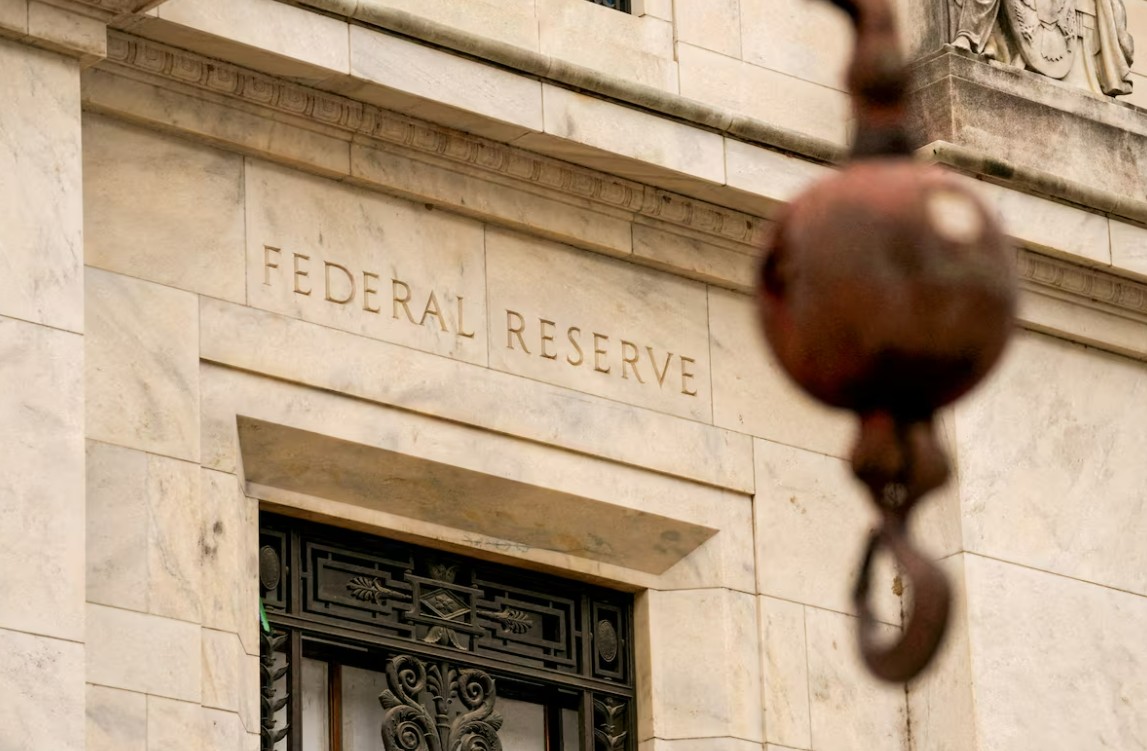
WASHINGTON (Realist English). The Federal Reserve is advancing a plan to raise the asset thresholds at which large banks come under stricter oversight. According to four informed sources who spoke to Reuters, the Fed is expected to soon propose reindexing these thresholds to reflect inflation and growth in the overall size of the economy. Three of these sources said the Fed will likely formally propose these changes later this year.
Current Thresholds and Direction of Adjustment
Under current rules, when a bank reaches $100 billion in assets, stricter regulatory requirements are triggered; at $250 billion they intensify; and at $700 billion the strictest supervisory regime applies, including some new capital rules and a requirement for daily reporting to regulators.
Lending institutions have long argued that these thresholds, set in 2019, have not kept pace with economic growth, subjecting banks to increasingly strict oversight that does not correspond to their actual level of risk.
Banks note that crossing the $100 billion threshold typically requires significant investments in compliance staff, risk management systems, stress-testing capabilities, and regulatory reporting infrastructure, with annual costs that can reach tens of millions of dollars.
According to sources, the Fed plans to reindex the top threshold to nearly $1 trillion, and some of the requirements triggered at the lower threshold to approximately $150 billion. Indexation based on nominal GDP would account for both inflation and economic growth, which could raise the top threshold to approximately $960 billion and the lower one to approximately $150 billion.
Potential Beneficiary Banks
A number of banks will directly benefit from this adjustment. U.S. Bancorp, Capital One, PNC Financial Services Group, and Truist Financial are closest to the $700 billion threshold; after the adjustment, they will have more room to grow without triggering the Fed’s strictest oversight, including some new capital rules and the daily reporting requirement.
Western Alliance, Zions Bancorp, and other banks will be able to continue growing without triggering all the current requirements of the $100 billion level. Banks between $100 billion and $150 billion, such as Pinnacle Financial Partners, may even shed some existing requirements.
A U.S. Bancorp representative told Reuters: “The American economy has grown significantly over the past seven years, and it is reasonable to set rules for all banks that help serve consumers and small businesses by increasing lending capacity and competition.” Other banks either declined to comment or did not respond to requests.
Possible Wave of Mergers Among Mid-Sized Banks
This plan is part of the broader efforts of the Trump administration to reform bank regulation. Officials say current rules are stifling lending and the economy. Fed Vice Chair for Supervision Michelle Bowman is also reviewing capital rules and other aspects of the Fed’s supervisory system.
Sources note that the threshold adjustment could lead to a wave of consolidation among mid-sized lending institutions that had previously postponed deals out of fear of exceeding the thresholds. According to S&P Global Market Intelligence, over the past decade, banks with assets between $50 billion and $700 billion announced only 33 deals to acquire banks and savings institutions, and last year there were only 7 such deals.
James Stevens, a partner at the law firm Troutman Pepper Locke, stated: “We expect this to unlock M&A activity among mid-sized and regional banks that have so far taken a wait-and-see approach.” He added that bank boards will be able to evaluate deals “on their own merits, rather than on regulatory arithmetic.”
One banking executive said that raising the $700 billion threshold will allow large lending institutions to compete more effectively with the four largest US consumer banks. However, critics of bank mergers argue that consolidations harm consumers by reducing competition and service while increasing systemic risks.
Background and Disagreements
The oversight thresholds were established by the Dodd-Frank Act of 2010 after the financial crisis, and Congress eased them in 2018. The law established some requirements that only Congress can change, including stress tests for banks with assets of $100 billion or more and “enhanced prudential standards” for banks of $250 billion or more.
However, the law also granted the Fed broad discretionary powers: the central bank introduced additional requirements for capital planning, liquidity, and reporting for the $100 billion level and created the $700 billion level to ensure sufficient oversight of large banks not designated as globally systemically important.
Banks have long considered these thresholds arbitrary and capable of distorting business decisions, incentivizing banks to keep assets below certain levels. Democrats say Congress already weakened the rules in 2018, and while asset thresholds are imperfect, they provide a simple way to calibrate requirements.
A Fed spokesperson declined to comment. Bowman stated in January that the central bank would consider reindexing the thresholds and proposed using nominal GDP, but since then the Fed has not commented further on the matter.