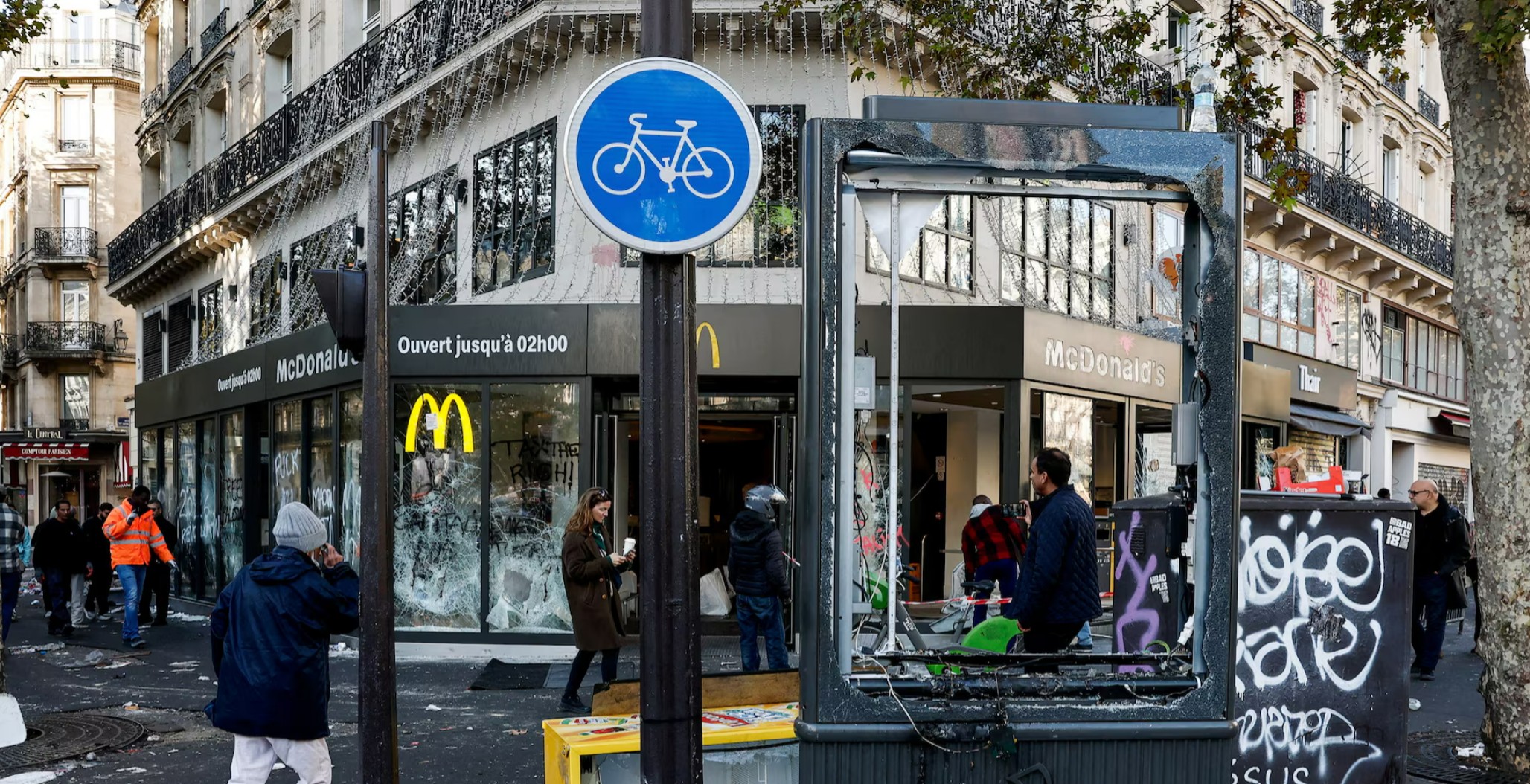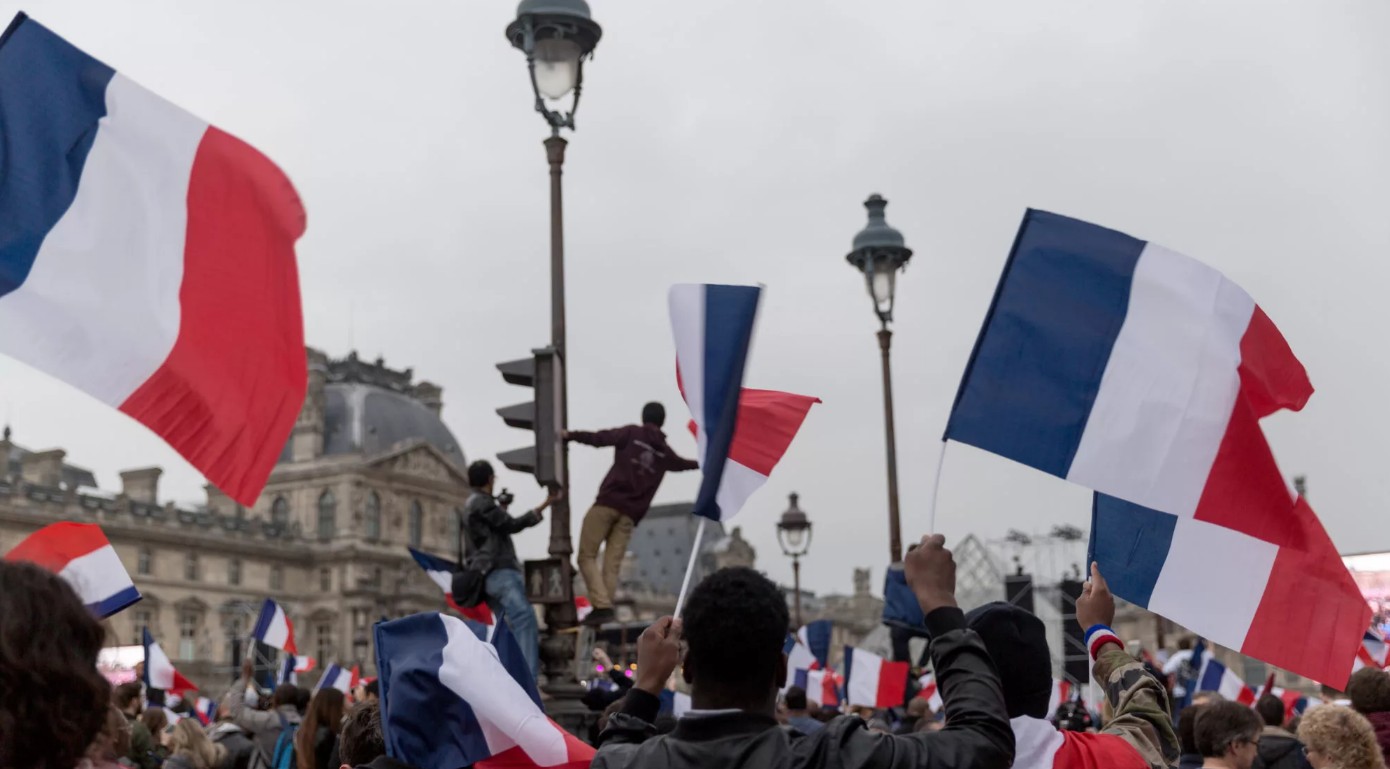
PARIS (Realist English). France is experiencing another day of nationwide mobilisation: public-sector unions have called for strikes and demonstrations across the country, demanding higher wages and an unfreezing of civil servants’ salary indexation. The action is the third since September and comes amid protests against the rising cost of living that have continued since last month.
Scale and geography of the protests
According to the CGT, 179–180 rallies and marches are planned across France. In Paris, police estimate 40,000 to 80,000 demonstrators, and 220,000 to 300,000 nationwide. Railway workers, education and healthcare workers, as well as student organisations and “yellow vest” activists, have joined the public-sector strike.
The route of the Paris demonstration was adjusted by the police prefecture: instead of the originally announced path from Les Invalides to Place d’Italie, the march will start from Place de la Nation at 14:00.
In Marseille, the gathering is scheduled for 10:30 at the Reformed Church; in Lyon, for 11:00 at the Tobacco Factory; in Toulouse, at Place Jean Jaurès. In a number of cities, including Marseille, school canteens are expected to close: in that city alone, 47 canteens have been announced as closed.
Demands: wages and indexation
The unions’ key demand is an “immediate and significant” revaluation of the index point used to calculate civil servants’ base salaries, which has not changed since 2023.
According to estimates by the inter-union coalition, public-sector workers’ purchasing power has fallen by more than 16% since 2017. In 2026, 862,000 civil servants receive a base salary below the minimum wage.
In the 2027 budget draft, the government is excluding a general pay increase for civil servants for the fourth consecutive year. As compensation, it announced a 1.6% increase in the SMIC from 1 December (to about €1,502 net) and a revaluation of the lowest public-sector salaries, but the CGT called these measures “crumbs.”
Prime Minister Sébastien Lecornu held talks with the unions on Friday, but they ended without the demands being met, after which additional organisations, including the public-sector CFDT, joined the strike.
The fifth Saturday of protests and the political backdrop
The current strike continues a series of mobilisations that began in September with high-school blockades and expanded into demands against the rising cost of living. On Saturday, 14 November, according to the Interior Ministry, 106,000 people took to the streets (unions claim 200,000), including 24,000 in Paris; 121 people were detained. The previous major action on 5 November drew, by various estimates, between 575,000 and 1.6 million people.
The protests are unfolding as France seeks to adopt its 2027 budget under pressure to reduce the deficit, with less than a year and a half until the presidential election. Law enforcement has imposed restrictions on unauthorised gatherings near schools and universities and temporarily banned the sale of firecrackers.
As observers note, the key feature of the current mobilisation is the combination of sectoral demands with a broader social agenda. The public-sector strike coincides with the ongoing movement against the rising cost of living and a bill expanding police powers in the use of firearms, which critics call a “licence to kill.”
This merging of demands broadens the social base of the protest but at the same time complicates negotiations: the government may make concessions on civil servants’ pay without being able to satisfy broader political demands.
The second risk is linked to transport and social infrastructure. Disruptions are expected on the SNCF and the Paris metro; school canteens are closed in Marseille. For the French economy, the immediate effect will be most noticeable primarily in disruptions to transport and public services, and in whether the current action is followed by new mobilisations before the budget is adopted — and that is precisely where they are most sensitive for the stability of the Lecornu government.