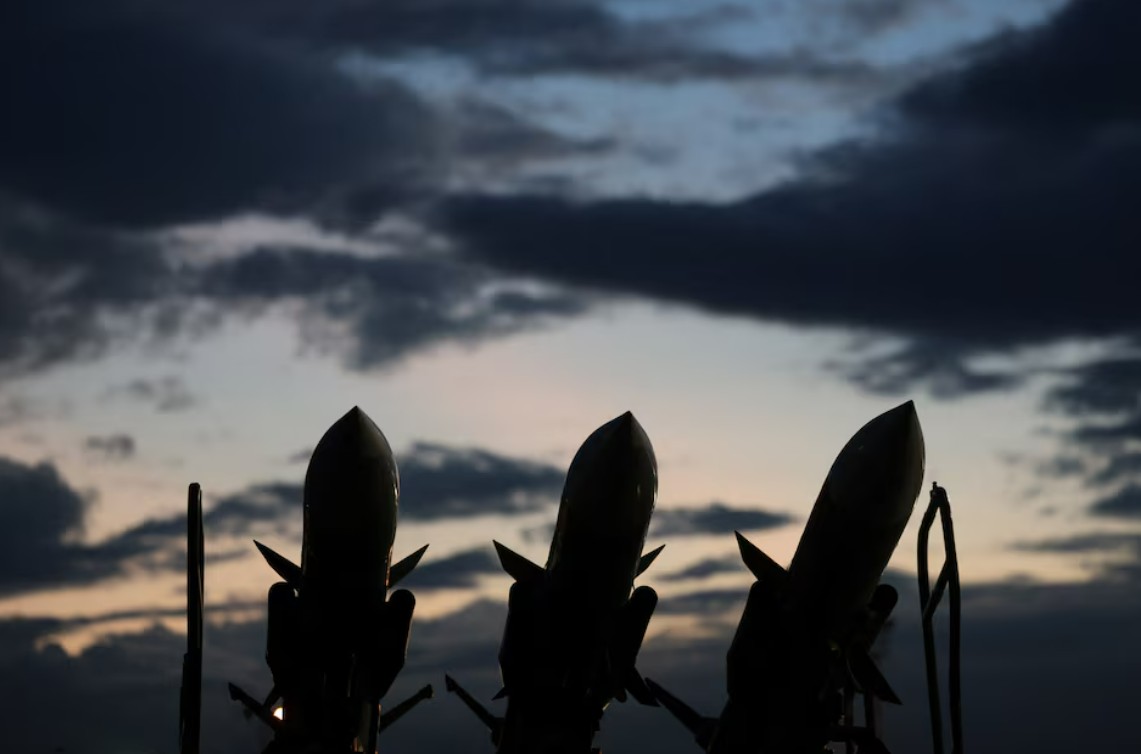
MANAMA (Realist English). Iran’s Islamic Revolutionary Guard Corps (IRGC) said on 15 November that it had struck the radar system of US air defenses at Al-Riffa helicopter base in Bahrain with six drones. In a statement broadcast by state television, the attack was described as a response to “blatant aggression by US forces.” Bahrain’s Interior Ministry issued a warning urging the population to move to shelters; the kingdom’s air defense reported intercepting several aerial targets. This is the first such incident in Bahrain since early September and the first direct strike on a US facility in the region in several weeks.
Timeline of escalation
The current attack capped a series of mutual strikes that resumed last week. On 13 November, the IRGC had already claimed the destruction of a US early-warning radar in Bahrain, describing it as a response to a US strike on a telecommunications tower in the Iranian port of Sirik.
CENTCOM rejected the claim at the time, saying US forces had shot down two drones heading toward Bahrain and that there were “no casualties or damage.” Bahrain also denies the 15 November strike was effective: according to the kingdom, air defenses destroyed the munitions before they reached their targets, while the IRGC insists on a “successful hit.”
Positions: “no deal needed” versus “path open”
The incident is unfolding against the backdrop of a sharp divergence in public signals from Washington and Tehran. On 12 November, US President Donald Trump said on Truth Social: “We don’t need a deal with Iran. Those days are long gone!”
He also said he had instructed Vice President JD Vance, who had previously overseen negotiations with Tehran, to shift focus to domestic issues. The White House did not clarify whether this means a complete halt to the diplomatic track, limiting itself to stating that the naval blockade and economic pressure would continue.
Iran, by contrast, signals that the diplomatic option remains open. As Bloomberg reported, Tehran “repeated that the path to ending the conflict with the US remains open.” Iranian President Masoud Pezeshkian said on 9 November that Supreme Leader Mojtaba Khamenei had instructed the government to “end the state of neither war nor peace” and that the Islamic Republic “can negotiate with dignity.” Thus, military action and the diplomatic signal are presented by Tehran as complementary rather than mutually exclusive instruments.
Nine-month war and its costs
The conflict, which began on 28 February with joint US-Israeli strikes on Iran, had by November entered a protracted phase. Despite the signing of a memorandum of understanding in June, the sides have not moved closer to a sustainable settlement: diplomatic efforts “have not yet produced a breakthrough.”
Against this backdrop, record activity is being recorded in the Strait of Hormuz: 37 attacks on vessels were recorded in October — the highest monthly figure since the conflict began — with at least 14 more confirmed in November. According to the International Energy Agency, the oil market “is showing preliminary signs of rebalancing”: global supply has exceeded demand for the first time since the war began.
Limits and risks
As analysts note, the key feature of the current episode is the combination of military escalation with the preservation of a diplomatic channel, which makes assessing the parties’ intentions particularly difficult. On the one hand, the strike on the base in Bahrain demonstrates Tehran’s ability to continue threatening US facilities in the Gulf, even if claims of success are not confirmed.
On the other, Iranian officials consistently emphasize readiness for talks, which may be an attempt to preserve room for maneuver under economic pressure and a naval blockade.
For Washington, the situation also contains uncertainty: a public rejection of a deal is combined with the continuation of the blockade and a restrained response to Iranian claims of strikes, which the US side denies.
The key question is whether this gap between rhetoric and actual actions will persist, or whether new escalation will lead to a return to full-scale hostilities. For regional security in the Gulf, the immediate effect will be most noticeable primarily in the dynamics of attacks on shipping in the Strait of Hormuz and in the durability of the ceasefire — and that is precisely where it is most sensitive for the global energy market.