NEW YORK (Realist English). On September 3, global markets finally caught a reprieve: oil plunged, bond yields fell and equities rallied worldwide.
The catalyst was an unexpected signal from President Donald Trump that the new wave of airstrikes on Iran was unlikely to be prolonged.
A single remark, made at the White House in response to a journalist’s question, reversed oil’s three‑day rally and eased the inflation fears that had gripped markets since the start of the week.
“I Don’t Think Too Long”: How One Statement Reversed Markets
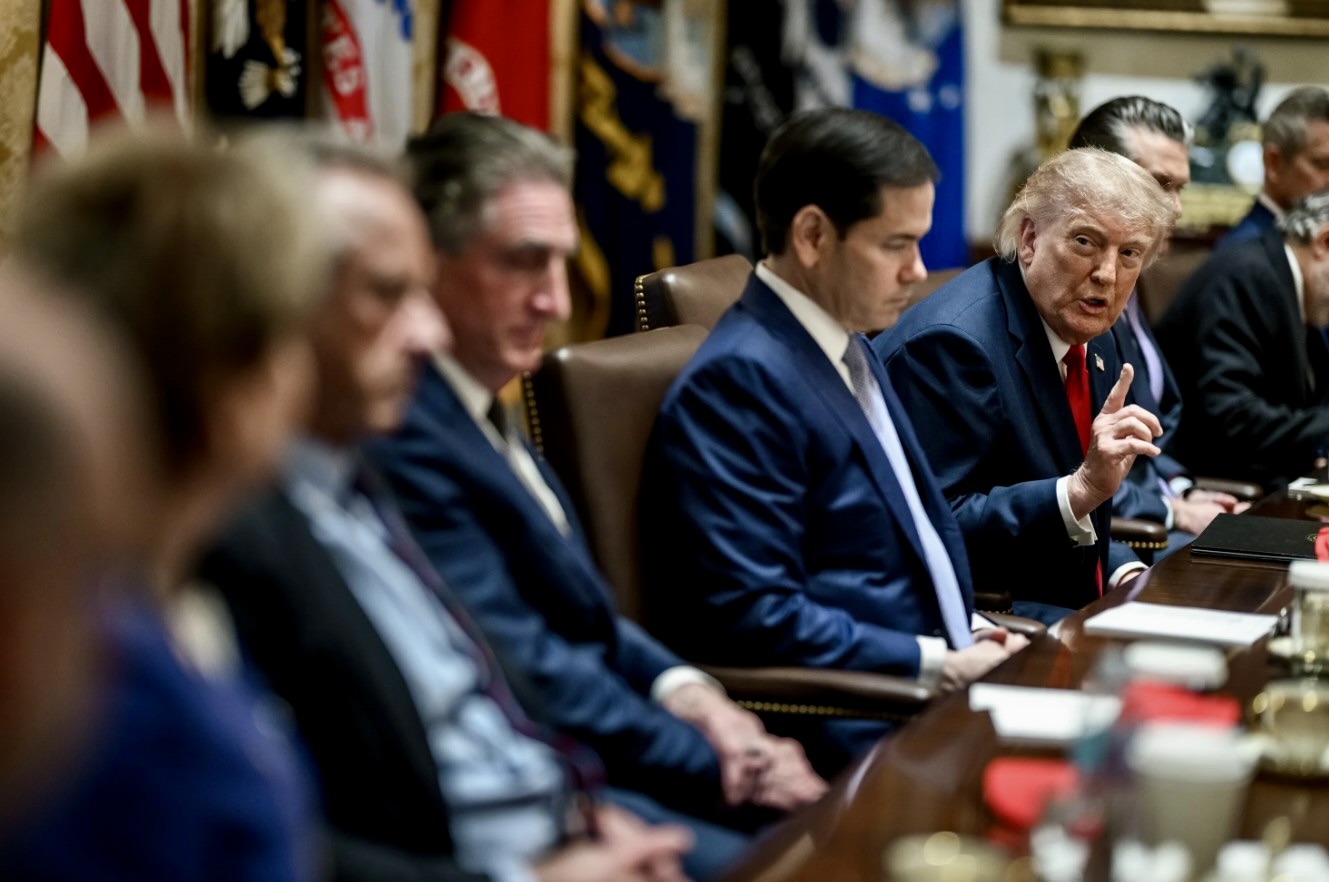
On September 2, Trump met with representatives of the US travel industry at the White House. When asked how long the new wave of airstrikes on Iran would last, the president replied: “I don’t think too long.”
At the same time, he stressed that the US was ready to launch further strikes at any moment, and on Truth Social he once again called on the Iranian people to rise up against the regime.
That was enough. After three days of escalation, during which oil surged 10% and Treasury yields hit multi‑year highs, markets took Trump’s words as a signal that the worst‑case scenario — a prolonged war — was, for now, off the table.
The Day’s Numbers: Oil Loses Over 1%
Brent and WTI, which had exceeded $95 and $90 respectively the previous day, corrected more than 1% lower on September 3. WTI pulled back to $90.91, though it later dipped towards $90. Major contracts lost ground for two consecutive days after the record surge.
Yields on 10‑year Treasuries and Japanese JGBs fell in tandem, providing relief to bond markets that had been experiencing sell‑offs. Weak US employment data — private payrolls for August came in below forecasts — only reinforced this effect, relieving the Fed of pressure to tighten immediately.
Equities responded with gains: all three major US indices closed higher, and Asia followed suit. Seoul, Sydney, Singapore, Manila, Mumbai, Bangkok and Jakarta all rose, while Europe opened mixed.
“The Geopolitical Cauldron Is Still Boiling”
Trump’s remark, according to analyst Stephen Innes of Quintex Intel, “took some of the sting out of the worst inflation fears,” but “the geopolitical cauldron is still boiling.”
“The market is not celebrating a weakening of growth,” Innes explained. “It is simply rediscovering that slightly bad news is precisely what it needs right now — especially if the alternative is a Fed forced to keep tightening against an oil shock.”
A Reprieve, Not a Victory
A single Trump remark reversed oil’s three‑day rally and eased pressure on markets — but the fundamental risks have not disappeared. The Strait of Hormuz remains effectively closed, Iran and the US continue to exchange strikes, and energy markets are still pricing in a geopolitical premium.
Investors have already turned their attention to Friday’s US labour market data, which could prove decisive for the Fed ahead of its September 16 meeting. As one analyst put it, “slightly bad news” is good for markets right now — but too bad could spell recession.
For now, Trump has given markets what they were waiting for — a signal that the war with Iran will not be endless. The question is how long this effect will last if another round of strikes follows tomorrow.