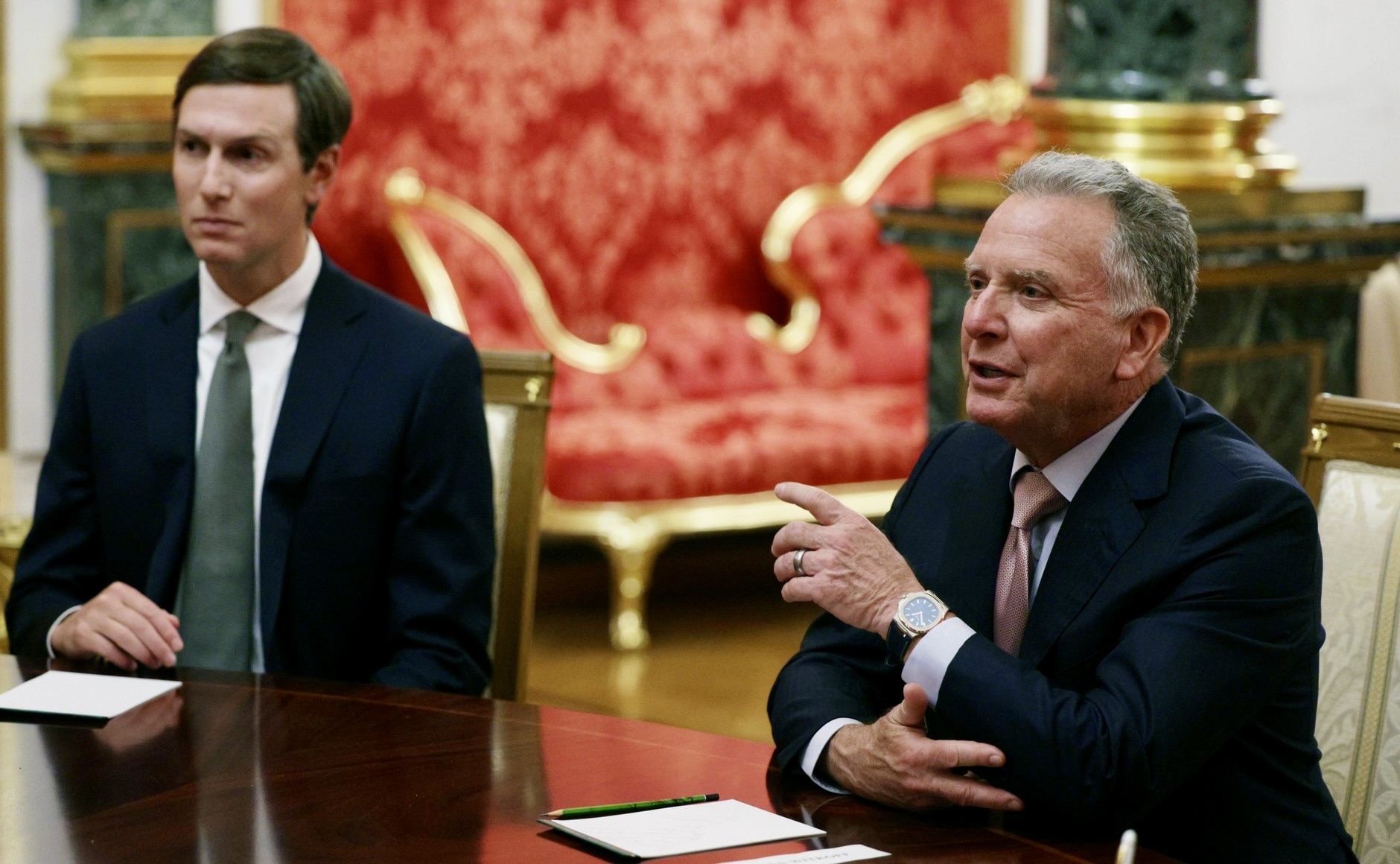
KYIV (Realist English). US special envoy Steve Witkoff and Jared Kushner, President Donald Trump’s son‑in‑law, held talks with Ukrainian President Volodymyr Zelenskyy in Kyiv on September 6, concluding a two‑day diplomatic mission that also included more than three hours of discussions with Russian President Vladimir Putin in Moscow.
After the Kyiv meetings, Witkoff told reporters he was “confident that there’ll be a good resolution here.” The visit marked the envoys’ first trip to the Ukrainian capital since the war began.
Substantive Discussions in Kyiv
The US‑Ukraine talks took place in two rounds on Sunday, followed by a third session that included European representatives from the United Kingdom, France and Germany. Witkoff described the discussions as “substantive.”
“We had a very meaningful and important discussion and are very encouraged and look forward to continuing this as long as necessary,” Witkoff said.
Zelenskyy said the talks covered security and economic guarantees for Ukraine, air defence requirements – including Patriot systems – and a winter support package for energy infrastructure.
Push for Trilateral Talks
A key focus of the US envoys’ mission was reviving the trilateral format involving Russia, Ukraine and the United States. The last round of such negotiations took place in Geneva on February 17‑18, 2026.
“One thing Steve and I really thought would be productive is to go back to the trilateral format, which we were able to do about six months ago,” Kushner said. He added that the US had consulted both sides and hoped for progress “very soon.”
Zelenskyy expressed support for the idea, stating: “We must do everything possible to ensure that trilateral meetings take place – or trilateral meetings plus our European partners. We’ll see what Russia agrees to.”
Moscow Talks: “Constructive” but No Breakthrough
The envoys met Putin in Moscow on September 5, in a session that lasted over three hours behind closed doors. Kremlin foreign policy adviser Yuri Ushakov described the talks as “constructive, frank and useful,” but announced no specific outcomes.
Witkoff said the US team had “good, concrete conversation” with Putin and heard “new ideas” that were subsequently presented in Kyiv. He emphasised the importance of maintaining communication with both sides: “If you don’t have relationships with both sides, and you have poor communication, then you probably have very, very little chance of getting to a peaceful resolution.”
Positions and Obstacles
Despite the envoys’ optimism, fundamental disagreements remain. Zelenskyy acknowledged that the main unresolved issue is territory, stating that questions of that magnitude “can only be settled at the level of leaders.”
Witkoff called on both Moscow and Kyiv to make compromises, saying that “both parties need to narrow the differences” and that the US believes “we have the ingredients to get to that place.”
Zelenskyy also said he does not currently expect the war to end before winter and warned that the conflict is likely to continue through the cold months.
Fighting Continues
Despite an understanding to suspend strikes on each other’s capitals during the diplomatic meetings, hostilities continued elsewhere. Ukrainian authorities reported Russian attacks across several regions killed one person and wounded at least ten. Ukraine’s air force said it intercepted 82 of 108 Russian drones. Russia reported downing 258 Ukrainian drones over 14 regions, Crimea and surrounding waters.
Cautious Optimism, No Breakthrough
The two‑day shuttle diplomacy by Witkoff and Kushner produced no immediate breakthrough, but both sides acknowledged progress in re‑establishing communication channels. The US has pushed for reviving trilateral negotiations, with a follow‑up meeting involving Ukraine, the United States and European countries already agreed in principle.
Yet the core obstacles – territorial disputes, security guarantees and the scale of military commitments – remain unresolved. Zelenskyy’s warning that the war is likely to continue through winter underscores the gap between diplomatic momentum and battlefield reality.
For now, the envoys have succeeded in restarting a dialogue that had been stalled for months. Whether that dialogue translates into tangible progress will depend on whether both sides are willing to make the compromises Witkoff has called for – and whether the trilateral format can be revived before winter deepens the conflict further.