LONDON(Realist English). Saudi Aramco CEO Amin Nasser warned that the global oil stock buffer has become “scarily thin.” Even after the conflict ends, it could take up to two years to restore reserves.
Key warning: the stock buffer is “scarily thin”
Speaking at the Energy Intelligence forum in London, Nasser stated that seven months of war in the Middle East led to the loss of nearly 3 billion barrels of oil supplies from the region — half the volume of crude oil and refined products that should have passed through the Strait of Hormuz during the same period.
By his estimate, less than 6 billion barrels of commercial stocks remain in the world, with the vast majority “effectively unavailable.” Nasser stated: “The system’s safety margin is already very limited, and the market has almost no tools left.”
Multiple paths of buffer depletion
Stocks are being consumed at a frightening pace. Since the conflict began, observed global oil stocks have declined by 507 million barrels, in August alone by 95 million barrels — equivalent to about five days of global consumption. Axis Capital estimates that at current consumption rates, stocks will last another 6–9 months.
Strategic reserves have already been extensively used. Governments have released more than 300 million barrels from strategic reserves; the IEA-coordinated release has reached more than 80% of the promised 400 million barrels. The US Strategic Petroleum Reserve has fallen to 286.6 million barrels, approaching a 44-year low.
The main burden has fallen on corporate stocks. Nasser noted that most of the buffer comes from commercial stocks, which is “the last major tool.”
The bottleneck is refined products, not crude oil
The key contradiction of the current crisis is concentrated in diesel fuel and other refined products, not crude oil itself.
Refining capacity is severely lacking. In August, global refinery utilization fell by about 4.2 million barrels per day compared to last year. S&P Global forecasts global refinery utilization in the fourth quarter at 79.4 million barrels per day — more than 2 million barrels below the previous forecast.
Diesel supplies have suffered a double blow. Net exports of diesel and gasoil from Persian Gulf countries are only slightly more than a quarter of the pre-war level, while drone strikes on Russian refineries have further reduced supplies. Russia, as the world’s second-largest diesel exporter, has banned its export, removing about 10% of supply from the global seaborne market.
Diesel spreads have soared. S&P Global forecasts that for the remainder of 2026, global diesel spreads will average $84 per barrel — $31 above the previous forecast.
Infrastructure faces new threats
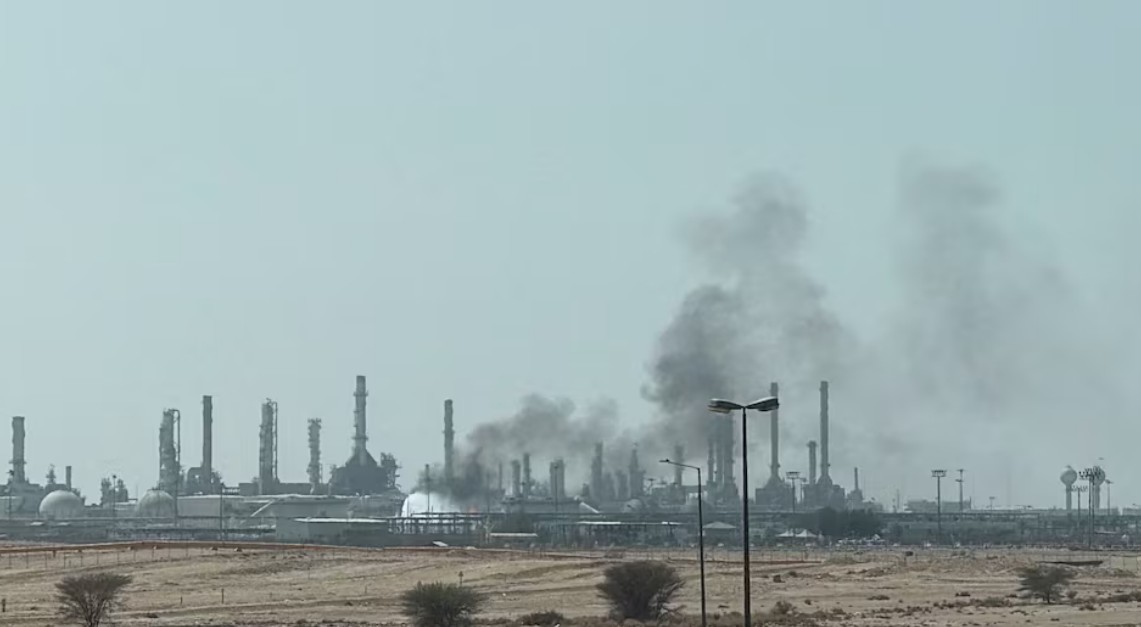
Nasser also warned that modern technologies are increasingly being used as weapons to attack energy infrastructure. Satellite imagery and ship-tracking data are being used to target tankers and pipelines. Iran attacked vessels passing through the Strait of Hormuz, and its proxies in Iraq and Yemen struck pipelines, refineries, and ports of Saudi Aramco.
Recovery prospects: a two-year period
Nasser stated directly that even with the full reopening of the Strait of Hormuz and restored confidence, “replenishing stocks while simultaneously meeting demand could take up to two years.”
Exports from Persian Gulf countries have partially recovered. According to Kpler, last month exports from the region rose to 15.5 million barrels per day — the highest level since the war began, exceeding 80% of the pre-war volume. However, Nasser emphasized that these supplies are extremely costly, and the market remains “extremely tight”: spot prices for North Sea crude have reached their highest since April.
Political consequences
Nasser’s warning came as the G7 had just agreed through the IEA to release 100 million barrels of diesel and crude oil from emergency reserves. Wood Mackenzie estimates that a large-scale diesel release could reduce wholesale prices by $20–30 per barrel, but analysts agree this is only “buying time” and does not solve the fundamental supply-demand imbalance.
S&P Global analyst Karim Fawaz put it most directly: “Winter has come for the diesel market. The industry spent six months managing an unprecedented disruption, but the next challenge is adapting to a world where supply constraints will last longer than expected.”