MITZPE RAMON (Realist English). Two weeks before Israel’s parliamentary elections, scheduled for October 27, the small desert town of Mitzpe Ramon has found itself at the center of a national dispute over the character of Israeli society. Here, parents defended the last state secular kindergarten, which the municipality planned to close due to a shortage of children.
Behind this local story lie the demographic pressure of the ultra-Orthodox sector, the crisis over the conscription law, and Prime Minister Benjamin Netanyahu’s attempts to stay in power.
What happened in Mitzpe Ramon
In recent years, residents of Mitzpe Ramon (about 6,000 people) have felt that the town is changing: religious-Zionist circles are growing stronger, and new religious educational institutions are opening. The state kindergarten “Gan Yaelim” remained the only secular kindergarten in the town — against the backdrop of four religious and four “forest” kindergartens.
When the previous teacher announced her departure, the Ministry of Education failed to appoint a replacement in time. Parents, still reeling from a abuse scandal at another kindergarten, did not manage to enroll their children — and the municipality announced closure due to underenrollment (five children instead of the required twelve).
One of the fathers, Yordan Nahon, whose son was affected in that same scandal-hit kindergarten, began the fight. He called dozens of families, citing the State Education Law, which guarantees parents the right to choose a secular track. In the end, the required twelve children were found, and the head of the local council authorized the kindergarten’s reopening. Now parents are demanding the appointment of a teacher who will continue the secular tradition.
The conscription crisis
This local episode reflects a far larger conflict. For two years, a Supreme Court ruling has been in effect in Israel canceling mass draft deferrals for ultra-Orthodox (Haredi) young men studying in yeshivas.
The Israel Defense Forces is experiencing an acute shortage of personnel — by various estimates, from 12,000 to 20,000 soldiers. At the same time, about 72,000–80,000 Haredi men of conscription age do not serve.
In July 2026, in the final days before the Knesset dissolved, Netanyahu’s coalition pushed through two laws: one declares Torah study a “fundamental value” of the state (effectively a constitutional barrier against forced conscription), the second freezes for four months the arrests of draft evaders. The Supreme Court immediately froze the second law following petitions from the opposition.
IDF Chief of Staff Eyal Zamir issued an unprecedented public warning, calling the legislation “incomprehensible” and incompatible with the army’s needs.
Why Mitzpe Ramon became the frontline
Mitzpe Ramon is not a random point on the map. It is one of the few towns in the south where a secular majority still persists, while religious presence is simultaneously growing. In the 2000s, a community of “national Haredim” arrived here from the Dimona area, and the opening of the “Kivunim” yeshiva accelerated the change in the demographic balance.
The financial factor adds to the tension. The town is in a deep budget crisis: a deficit of 15 million shekels, which is 16% of the annual budget. At the same time, the criteria for distributing funds from the Gap Reduction Fund are such that Mitzpe Ramon receives only 1.5 million shekels, while Beit Shemesh, with a predominantly Haredi population, receives 20.1 million, and Beitar Illit — 15.7 million. The head of the local council, Eliya Winter, stated directly in the Knesset that in two months he will not be able to pay salaries or remove trash.
Netanyahu’s political calculation
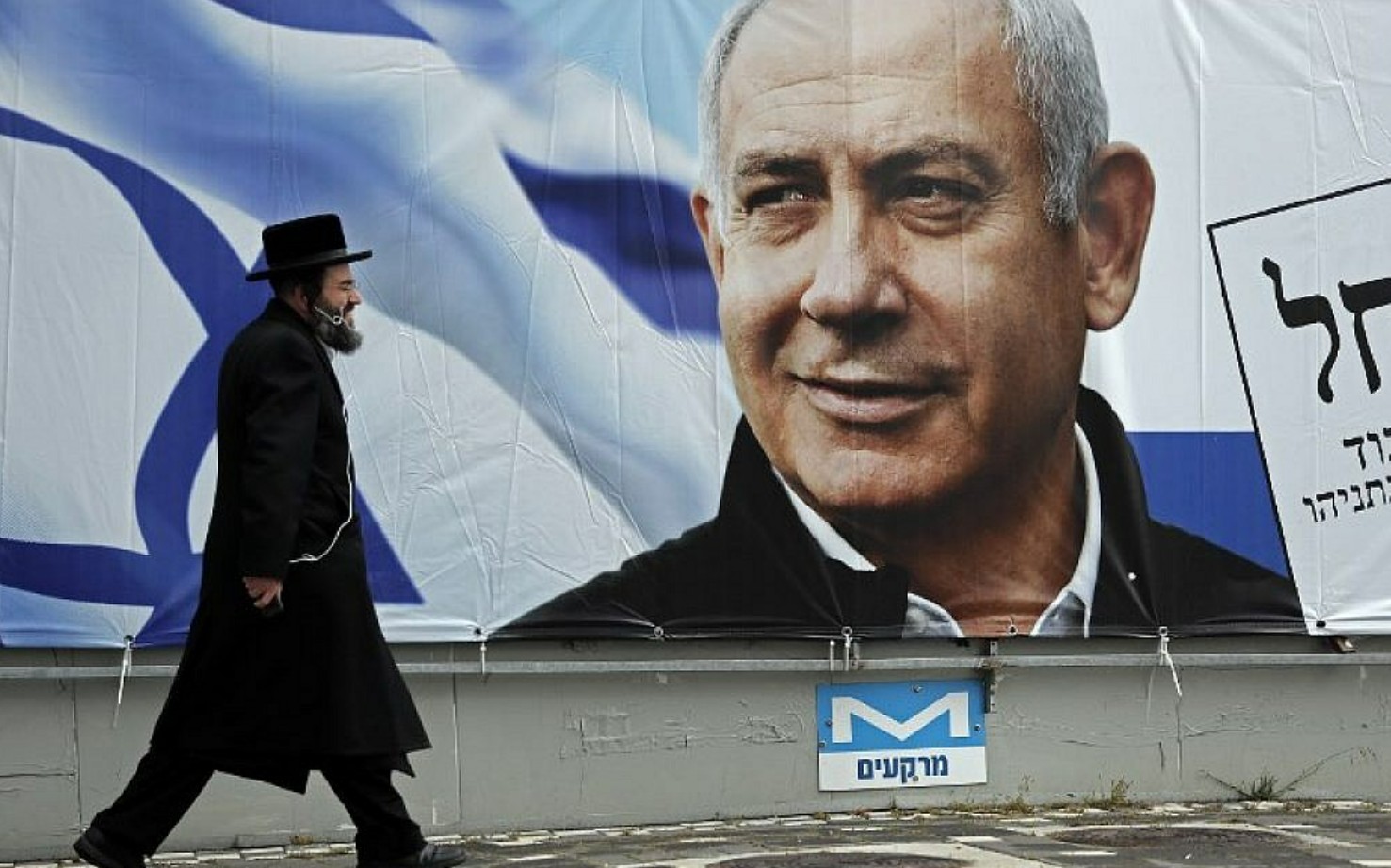
For Netanyahu, maintaining the coalition with ultra-Orthodox parties (“Shas” and “United Torah Judaism”) is a matter of political survival. Analysts say outright: the prime minister is “buying loyalty” with legislation that is inherently unpopular with the general public.
Polls show that 66% of Israelis oppose the law on Torah study as a fundamental value, and 61% would prefer that the next government be formed without ultra-Orthodox parties.
Netanyahu himself has already backtracked: at a closed meeting, he allegedly admitted that the law freezing arrests “failed” and promised that under the next government, draft evaders would either be conscripted or imprisoned. However, this statement came after he personally voted for the law in the Knesset.
What this means
Mitzpe Ramon is not just a story about a kindergarten. It is a test of whether space for a secular, non-religious identity will survive in Israel’s small peripheral towns. For now, parents have won a local battle.
But at the national level, the outcome depends on the October 27 elections: if Netanyahu retains power with the support of ultra-Orthodox parties, pressure on towns like Mitzpe Ramon will only intensify.
If the opposition led by Gadi Eisenkot can form a government without the Haredim, secular communities in the periphery will have a chance for respite. For now, Israel is heading toward an electoral deadlock in which, according to analysts, Netanyahu may remain in the prime minister’s seat as “acting” — and continue his previous course.