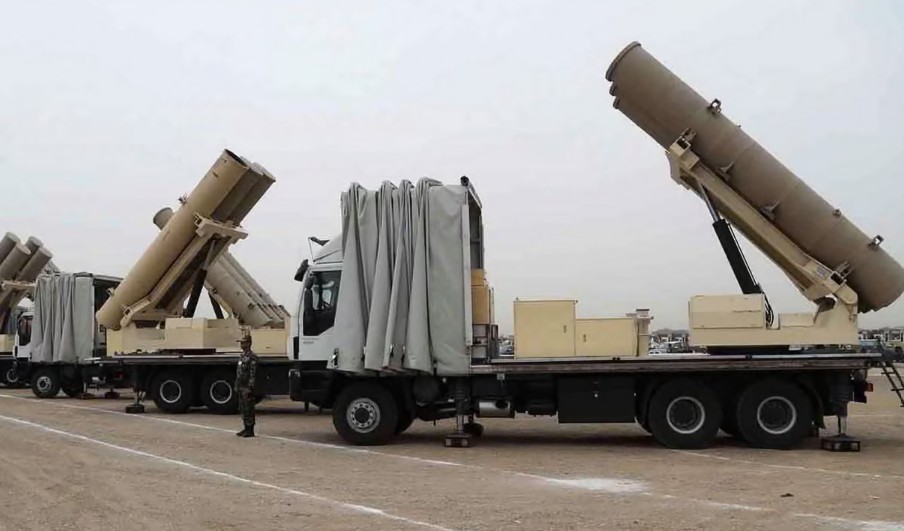
TEHRAN (Realist English). The 2,000-kilometre range limit on Iranian missiles, which Tehran had imposed on itself several years ago, has been officially lifted. “The range restriction on Iran’s missiles has been lifted,” IRGC spokesman Mohabbi was quoted as saying by the Iranian agency ISNA. The decision followed a statement by Supreme Leader Mojtaba Khamenei on the need for an “effective response to threats at any level without geographic restrictions.”
“Asymmetric warfare” and “unexpected places”
Mohabbi described the new strategy as “asymmetric warfare,” under which Iran will be able to strike the enemy in places where they are not expected. “The enemy has resources, both material and intangible, that we must use.
Our war is asymmetric, and we can strike the enemy in a place where he would never expect it, thereby paralysing his actions,” the IRGC representative said. According to him, Iran already possesses the necessary means, but “these capabilities still have to be demonstrated in practice.”
Missile potential: statements and confirmations
Earlier, in February 2026, Iranian Foreign Minister Abbas Araghchi said that Tehran had deliberately limited the range of its missiles to 2,000 kilometres so that they would be “used exclusively for defensive and deterrent purposes” and would not pose a global threat. However, this voluntary ceiling has now been lifted.
At the same time, as Associated Press notes, there is no confirmation yet that the Iranian arsenal already includes ballistic missiles with a range exceeding 2,000 kilometres; US officials have previously indicated that the technologies of Iran’s space programme could be used to create intercontinental missiles.
Escalation and negotiations
The statement came amid a sharp deterioration in US-Iranian tensions. A few days earlier, Supreme Leader Khamenei ordered the military to prepare for an “immediate, powerful and geographically unrestricted” response to any threat from the United States or Israel.
In turn, US President Donald Trump, according to NBC News, retains the option of a new military operation against Iran, although the window for such a decision is narrowing: in January control of both chambers of Congress will pass to the Democratic Party, which could complicate escalation.
At the same time, according to Iranian sources, Tehran has asked Russia to supply S-400 air defence systems to strengthen its air defences, which were seriously damaged during US and Israeli strikes.
The lifting of the range restriction is primarily a political and psychological signal rather than a confirmed military-technical revolution. Iran is removing a voluntary ceiling that it itself introduced to demonstrate “responsibility” to European countries and is shifting its missile programme into a mode of “strategic uncertainty.”
However, a significant time lag may lie between the statement and the actual deployment of missiles with a range exceeding 2,000 km. The key question is whether rhetoric will be followed by a practical demonstration, and how the US and Israel will react in conditions where the window for military pressure on Tehran is narrowing due to the change in control of Congress.