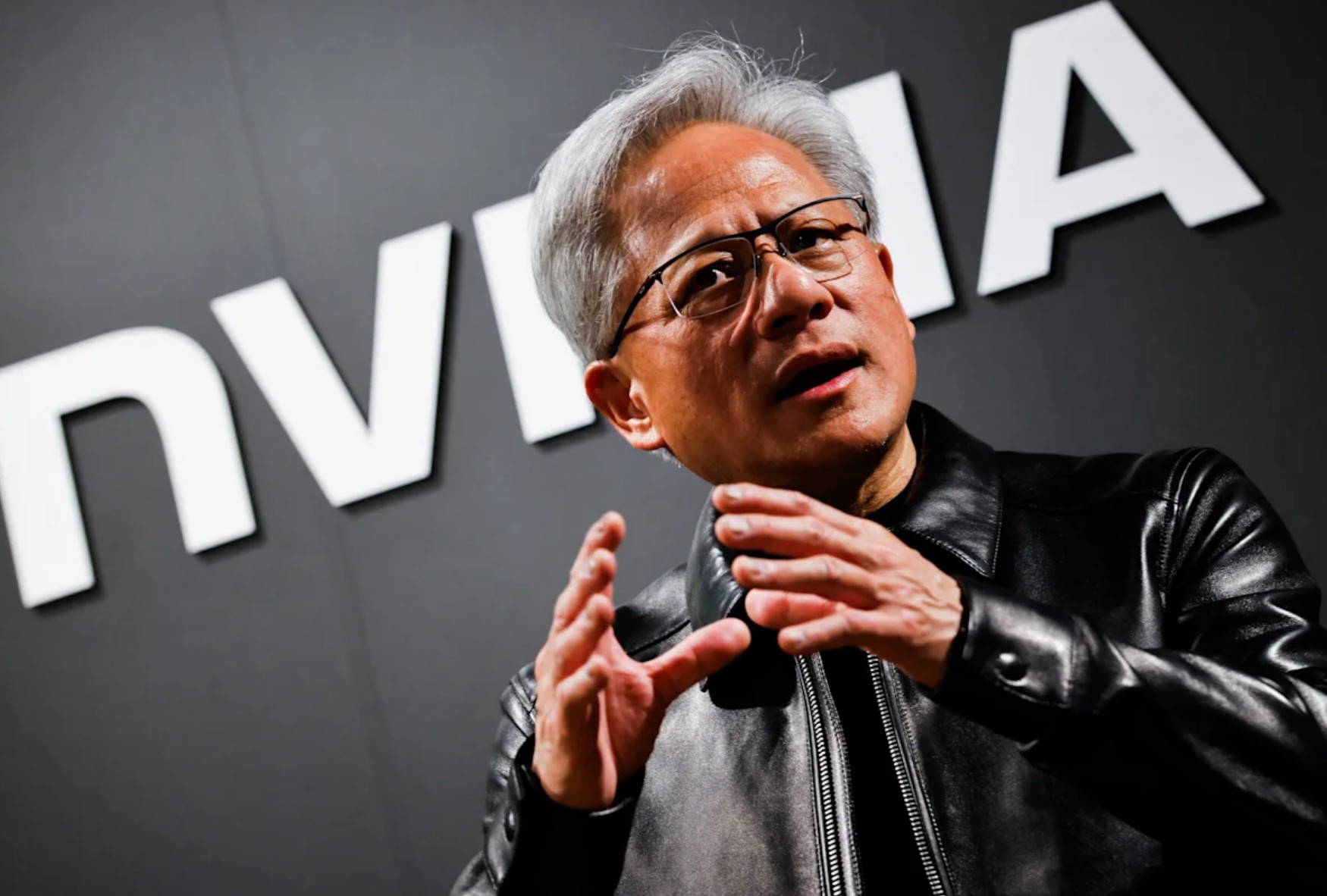
SAN FRANCISCO (Realist English). The scandal developed rapidly. In early November, Nvidia’s board of directors initiated an independent investigation following reports of Huang’s relationship with Alice Huang (a namesake, not a relative), who heads the Singapore-based data center company Megaspeed. US intelligence suspects her of involvement with Chinese intelligence. Huang himself admitted the affair but denied knowing about Alice Huang’s possible work for intelligence services.
Second relationship and board decision
The situation worsened on 11 November when The New York Times reported a second extramarital affair — with Kimberly Powell, president of Nvidia’s healthcare division, who reported directly to Huang. According to the publication, they were captured on video at a conference in March 2026 in a hotel in an intimate setting. It was after this that the board of directors, meeting on Wednesday evening, decided on his resignation.
Market reaction: capitalization below $4 trillion
The news crashed Nvidia shares. In premarket trading on 12 November, the stock fell 10–14%, and the company’s market capitalization dropped below $4 trillion for the first time since June 2025. According to Bloomberg estimates, if the decline holds by the end of the day, it will be the largest single-day wipeout of market value for any stock in history — up to $601 billion. The pressure spread to the broader market: Nasdaq futures fell 1.4%, S&P 500 — 0.7%.
Management situation: no successor
The resignation exposed the weakness of Nvidia’s corporate governance. Huang ran the company for 33 years and built a structure in which dozens of executives reported directly to him. The board of directors, according to CNN, has been criticized for the lack of a succession plan: the company appointed an independent board chairman for the first time in its history — Harvey Jones, former CEO of Synopsys. Gary Gensler, former SEC chairman, called the situation “not a very good picture of corporate governance.”
Huang’s resignation is not just a personnel decision but a blow to the central figure around whom the narrative of the entire AI boom was built. Nvidia remains a technology leader and a critically important chip supplier for OpenAI, Anthropic and other companies, but its market valuation largely rested on the founder’s personality.
Huang’s departure creates a vacuum of trust at a moment when the company faces an investigation and its shares are losing value at record pace. The key question is whether Collette Kress, an experienced financial executive but not a public leader of technological vision, can hold the company and investors together until a permanent CEO is appointed, and whether this scandal will become a trigger for a broader reassessment of the entire AI chip sector.