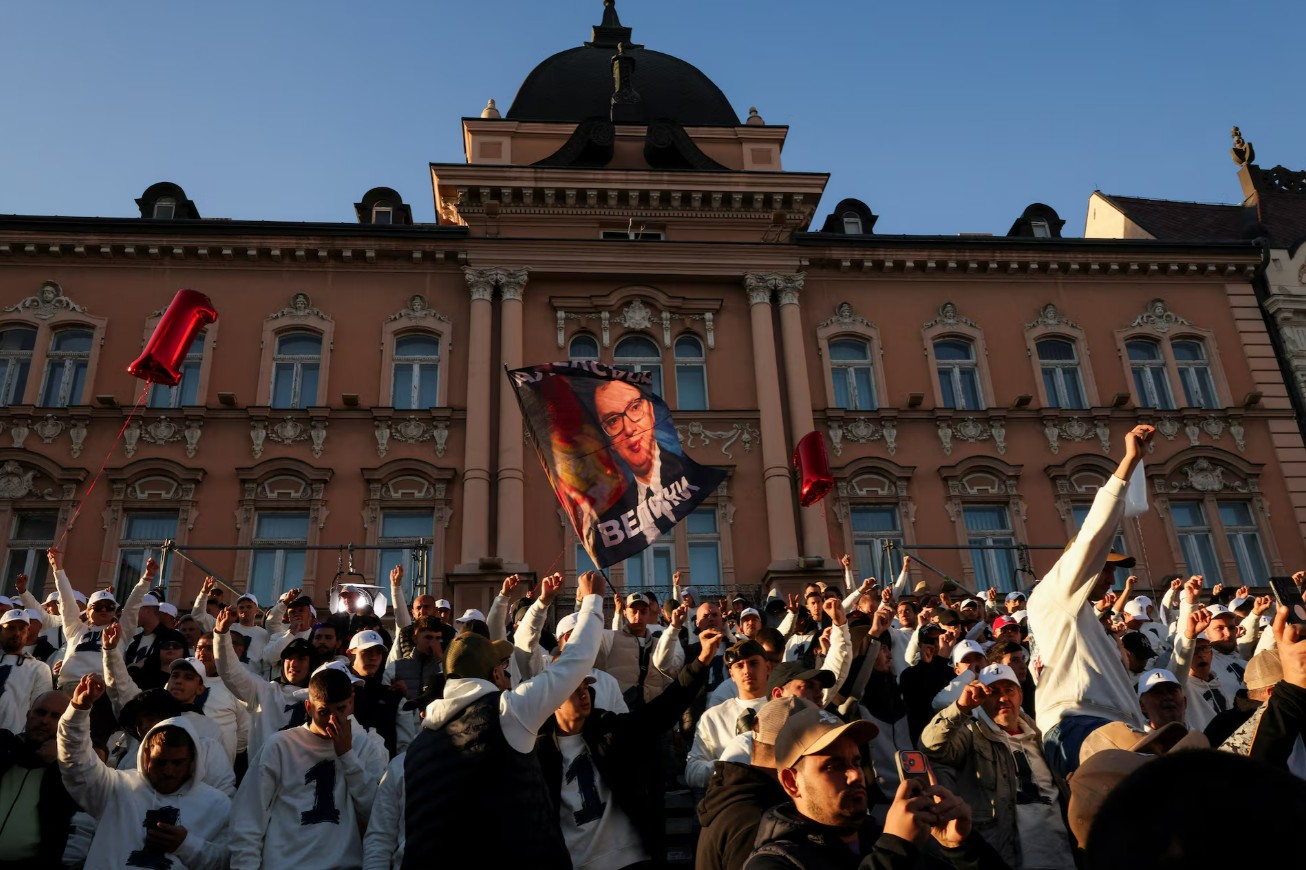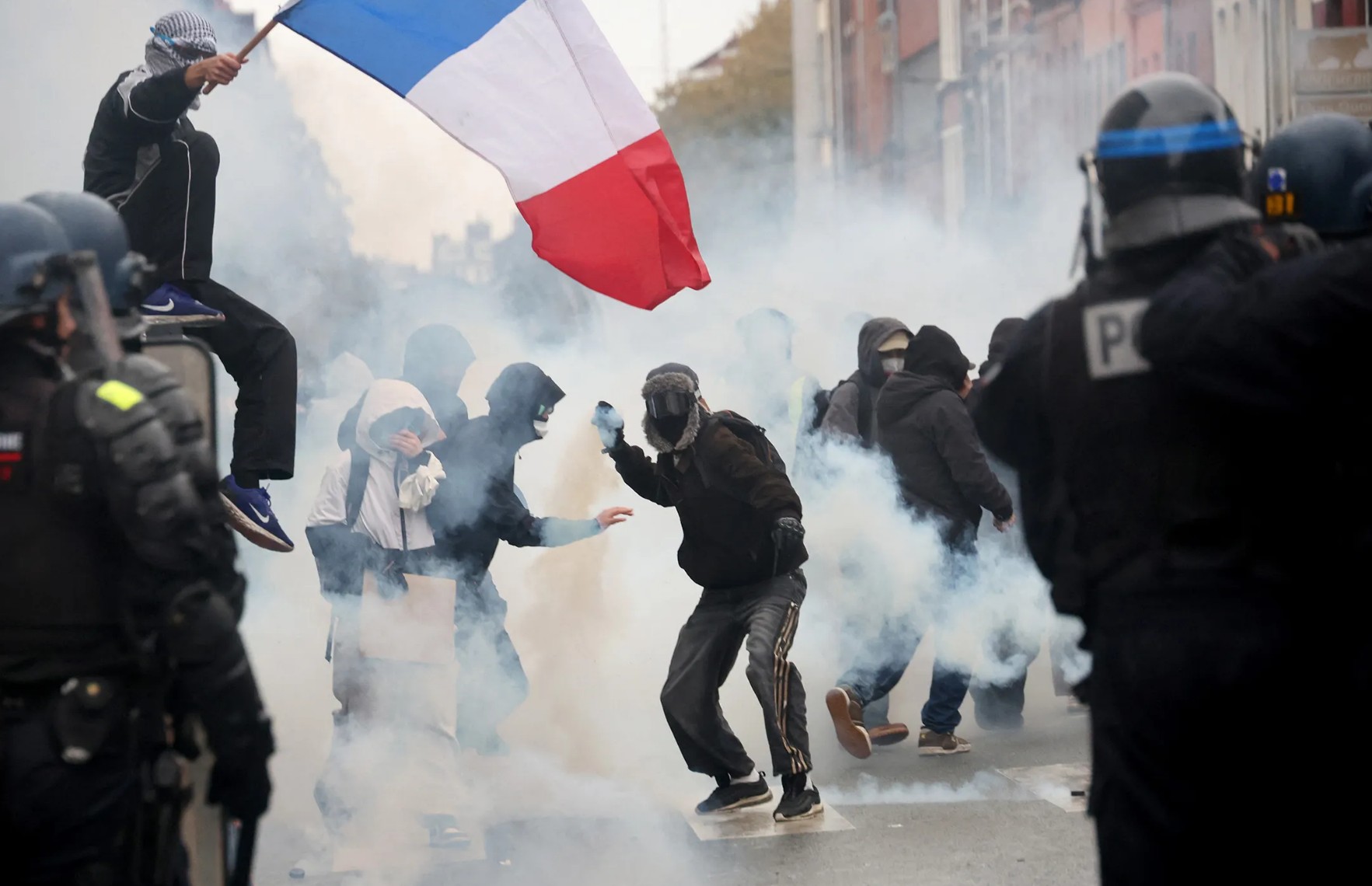
PARIS (Realist). French President Emmanuel Macron bet on a massive police presence to avoid a repeat of the violence that shook the country on October 17. He won that bet but did not come closer to resolving the deep-seated anger that fuels mass protests and shows no signs of abating. Hundreds of thousands of people took part in demonstrations over the weekend, turnout remained high despite warnings of new clashes and a ban on actions not organized by unions.
What happened
After the riots of October 17, when according to the government 2,397 people were detained and more than 500 law enforcement officers were injured, Macron banned demonstrations outside recognized unions and mobilized up to 70,000 police officers and gendarmes. Curfews were imposed in Paris and Lyon, the Louvre, Orsay, and other museums were closed, and the Art Basel Paris fair program was canceled. The authorities of Lyon, Nice, and Montpellier went further, completely banning any gatherings.
However, the protest movement went beyond the initial demands of students and schoolchildren seeking education funding. They were joined by the “Yellow Vests,” dissatisfied with fuel prices and the cost of living, as well as unions. As a result, the bans did not stop the mobilization: UNEF and the “Yellow Vests” called for new actions, and turnout remained high.
Why Macron has no leverage
The situation is fundamentally different from the “Yellow Vests” crisis of 2018–2019. Back then, Macron could quell anger with billions of euros in concessions. Now he has neither the financial nor the political room for maneuver.
First, the budget deficit has reached 5.4% of GDP, and public debt stands at €3.5 trillion, or about 120% of GDP. Debt servicing costs are rising, and French bond yields have exceeded 5% for the first time since 2002. Markets are already reacting to the unrest with widening spreads and demands for a higher risk premium.
Second, Macron lacks a majority in the National Assembly. Budget negotiations are deadlocked, and the previous budget was passed bypassing a vote — through Article 49.3, which triggered two no-confidence votes that were, however, rejected. Parliament is split into three blocs — left, centrist, and far-right — and every budget debate turns into “permanent confrontation.”
Third, Macron’s approval rating has fallen to 15% — a historic low since 2017. 82% of French people disapprove of his performance. Even former allies openly criticize the decision to dissolve parliament in 2024, calling it “the worst in the history of the Fifth Republic.”
Negotiations and their limits
On October 26, Prime Minister Sébastien Lecornu meets with organizations of high school and university students at Matignon to present “first concrete answers.” However, UNEF has already stated that negotiations will be “meaningless” if the only offer is a reference to the 2027 presidential election.
Macron himself spent more than two hours with youth organizations on Friday but has not yet proposed a package commensurate with the scale of the demands.
Macron won the tactical battle: the street did not repeat October 17, police retained control, museums were closed rather than looted. But strategically he found himself in the position of a leader who can contain violence but cannot offer a political way out. He has no money for concessions, no majority for reforms, and no public trust for dialogue.
For Marine Le Pen, this creates a “six-lane highway” to the 2027 presidential election: she does not need to spend resources on a campaign; it is enough to watch the government lose control.
For France, this means the coming months will proceed in a mode of managed crisis: bans, curfews, and negotiations that both sides consider insufficient. The question is not whether Macron can hold the street until the end of his term, but what will happen when containment stops working — and without economic and political resources, that is only a matter of time.