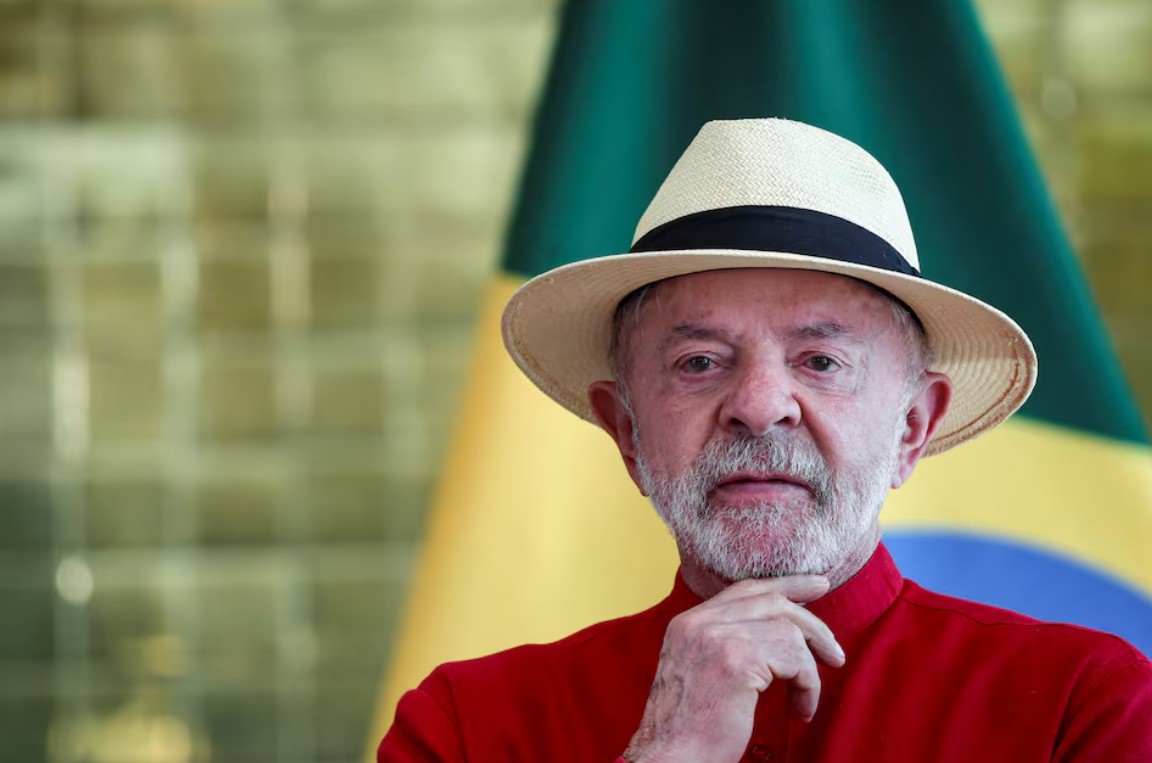
SÃO PAULO (Realist English). Incumbent Brazilian President Luiz Inácio Lula da Silva won the second round of the presidential election held on October 25. According to the Superior Electoral Court (TSE), after 99.9% of ballots were counted, Lula received 51.79% of valid votes, defeating Senator Flávio Bolsonaro, son of former President Jair Bolsonaro, who received 48.21%.
Historic comeback
Lula’s victory is unprecedented in modern Brazilian politics. In the first round on October 4, Bolsonaro unexpectedly took first place with 47.03% against Lula’s 45.16%, leading the incumbent by 2.2 million votes. However, in the runoff, Lula not only erased that deficit but also outpaced his rival by more than 4 million votes, receiving over 64 million ballots in total.
According to the BBC, this is the first time since Brazil’s return to democracy in 1985 that a candidate who finished second in the first round has won the runoff. For the 80-year-old Lula, who turns 81 on October 27, this is his fourth presidential term — he governed from 2003 to 2010 and returned to power in 2023. The inauguration is scheduled for January 5, 2027.
Turnout was the key factor
Turnout played a decisive role in the outcome. The abstention rate in the runoff fell to 18.98–19.22%, compared with 21.08% in the first round. Lula’s campaign focused on mass mobilization: street marches, social media activity, and appeals to voters who had not turned out in the first round. Analysts note that higher turnout, especially in the traditionally left-leaning northeastern states, benefited the incumbent.
Bolsonaro refuses to concede
Flávio Bolsonaro refused to recognize the election results and demanded their annulment. The pretext was a decision by Supreme Court Justice Cristiano Zanin to extend voting by two hours due to public transport disruptions in several cities.
Bolsonaro called the decision “unacceptable,” although according to the BBC, both campaigns — Lula’s and Bolsonaro’s — had requested the extension. Lawyers assess the chances of annulling the election as extremely low: annulling voting results is “a very, very, very serious measure.”
Challenges of the new term
Despite his victory, Lula is entering the most difficult period of his career. The new National Congress will be the most conservative since the 1980s: Flávio Bolsonaro’s Liberal Party strengthened as the largest faction, winning 121 of 513 seats in the Chamber of Deputies and 28 of 81 in the Senate. To advance legislation, Lula will have to rely on the “centrão” — a bloc of centrist and center-right parties that supports the government in exchange for concessions.
In addition, he faces the tasks of reducing the budget deficit, preserving social programs, and reducing political polarization. On the international stage, Lula is expected to continue his course of “strategic autonomy,” balancing cooperation with China and relations with the US.
International reaction
World leaders were quick to congratulate Lula. Mexican President Claudia Sheinbaum called the result “a victory for democracy and the Brazilian people.” The presidents of Uruguay, Paraguay, Bolivia, Panama, and the Dominican Republic also expressed support. US Senator Bernie Sanders congratulated Lula, noting his “commitment to workers’ rights and democracy.”
Lula’s victory is not just re-election but a symbol of the resilience of the leftist project in Latin America amid the rightward turn in Argentina, Bolivia, Chile, and Colombia. The Washington Post noted that Lula “kept the region’s largest democracy from shifting into the conservative camp” actively supported by Donald Trump.
However, the historic fourth term begins under conditions that Lula himself calls “the most difficult.” A hostile parliament, weak public finances, and deep social polarization limit his room for maneuver.
His ability to govern through the “centrão” and sustain social programs without increasing the deficit will be the main test of resilience — and will determine whether Brazil remains a bastion of the leftist alternative in the region or whether Lula becomes the last representative of a passing era.