WASHINGTON (Realist English). On August 24, the Trump administration formally transmitted to Congress a civil nuclear cooperation agreement with Saudi Arabia — a Section 123 Agreement under the Atomic Energy Act that could allow the kingdom to enrich uranium and process spent nuclear fuel on its own territory.
The submission, confirmed by multiple administration officials and congressional aides, formally initiates a 90‑day review period during which lawmakers can attempt to block the deal.
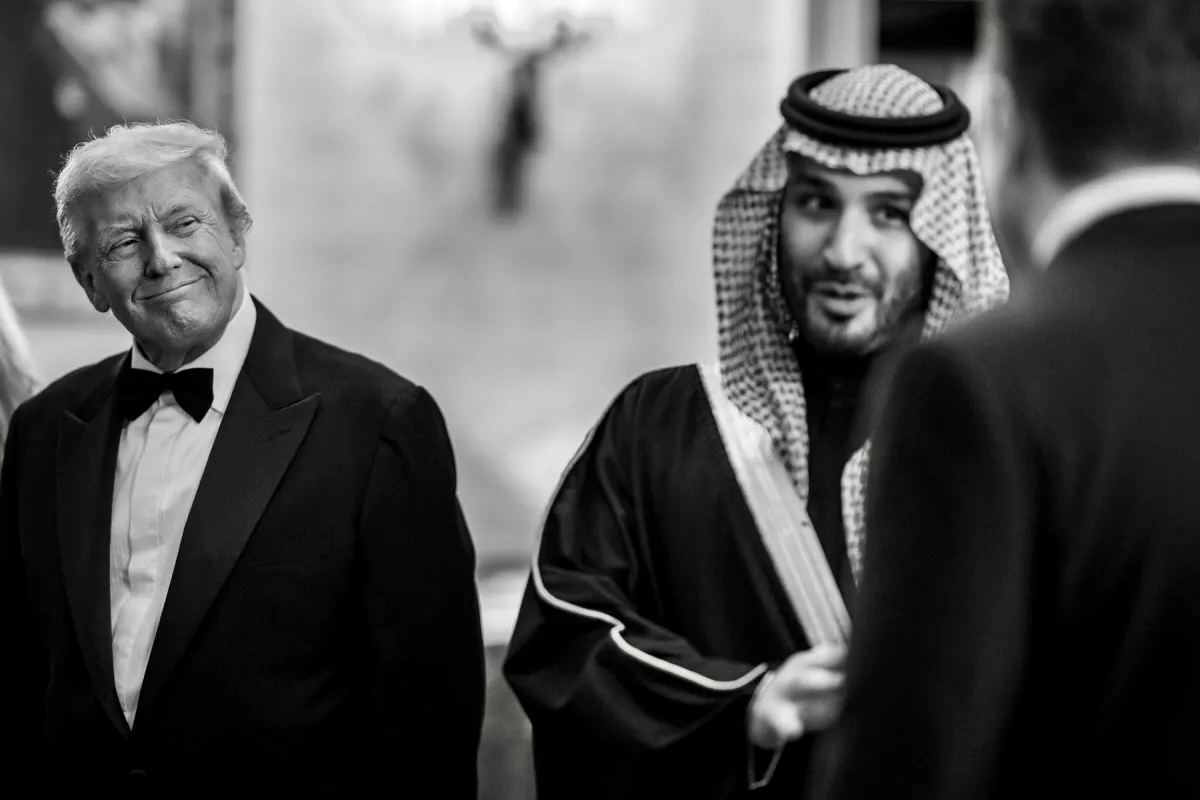
The 30‑year agreement, signed on July 22 by U.S. Energy Secretary Chris Wright and Saudi Energy Minister Prince Abdulaziz bin Salman, would give American companies a central role in developing Saudi Arabia’s civilian nuclear infrastructure while largely excluding foreign competitors.
However, the text of the agreement sent to Congress has been classified in its entirety — a move described by non‑proliferation experts as “highly unusual” and “unprecedented” for a civil nuclear deal.
What the Agreement Contains — and What It Omits
The proposed deal has drawn sharp controversy because of what it includes — and what it does not.
| Provision | Details |
| Uranium enrichment pathway | The agreement provides a legal pathway for Saudi Arabia to enrich uranium on its own soil, though Energy Secretary Wright has said such arrangements would be “many years down the road” |
| No “Gold Standard” safeguards | The pact does not include the traditional “gold standard” that would block the kingdom from enriching uranium and reprocessing spent nuclear fuel — both potential pathways to nuclear weapons |
| No Additional Protocol | The agreement omits the IAEA’s Additional Protocol, which grants the UN nuclear watchdog broad authority to carry out intrusive snap inspections at undeclared sites |
| Joint study mechanism | The deal includes a joint US‑Saudi study mechanism that could allow enrichment without adopting standard enhanced international safeguards |
| Bilateral safeguards | The administration argues that bilaterally negotiated safeguards, developed “in cooperation with the International Atomic Energy Agency,” will be sufficient to prevent weapons development |
Energy Secretary Wright downplayed the importance of the Additional Protocol, arguing that the agreement’s bilateral safeguards will be adequate. IAEA Director‑General Rafael Grossi has indicated that the agency’s Board of Governors will need to review and approve the safeguards agreement.
The Israeli Condition: Abraham Accords as the Price of Admission
The White House has insisted that the nuclear deal will only move forward if Saudi Arabia joins the Abraham Accords and normalises relations with Israel. However, the agreement itself does not include a provision mandating Saudi accession.
Energy Secretary Wright said on Wednesday that the nuclear agreement and Abraham Accords negotiations “will be worked in parallel”. A Saudi official responded cautiously, stating that “Saudi‑US relations are ever‑evolving and have continued to broaden and to deepen over the years”.
The White House has not clarified how it would prevent the signed deal from automatically taking effect after 90 days if Saudi Arabia does not normalise relations with Israel. In July, Trump had declared that “the deal is off” unless Riyadh joins the Abraham Accords.
Congressional Opposition: “The Starting Gun for a Middle East Nuclear Arms Race”
The deal has drawn immediate and fierce opposition from Democratic lawmakers and non‑proliferation advocates.
Senator Edward J. Markey (D‑Mass.), co‑chair of the bicameral Nuclear Weapons and Arms Control Working Group, urged Congress to reject the agreement, stating that it does not possess the “most stringent safeguards against the development” of nuclear weapons. “If the Trump administration wants to stop a Saudi bomb, it should require the nonproliferation Gold Standard, which would ban enrichment and reprocessing and require International Atomic Energy Agency additional protocol safeguards in Saudi Arabia,” Markey said. “But the opposite is happening”.
In a joint essay last month, Markey, Senator Jeff Merkley (D‑Ore.), and Representatives John Garamendi (D‑Calif.) and Donald S. Beyer Jr. (D‑Va.) wrote: “This deal is the starting gun for a Middle East nuclear arms race”. They argued that the agreement should require Saudi Arabia to forgo the production of weapons‑grade uranium and accept the IAEA’s most stringent inspection standards. “Congress must reject it,” they wrote.
The lawmakers also pointed to a fundamental contradiction in U.S. policy: waging war with Iran over its nuclear ambitions while simultaneously negotiating a nuclear agreement with Saudi Arabia. “That contradiction doesn’t make America stronger,” they wrote. “It makes American policy impossible to take seriously”.
The Proliferation Dilemma: Saudi Arabia’s Nuclear Ambitions
Saudi Arabia’s Crown Prince Mohammed bin Salman has long declared that if Iran develops a nuclear weapon, Saudi Arabia would do the same. In January 2025, Saudi Arabia announced it planned to enrich uranium domestically.
The deal’s omission of traditional non‑proliferation safeguards has alarmed regional states, including Israel, which fear that a Saudi enrichment capability could ignite a regional arms race. Senator Chris Murphy (D‑Conn.) warned on social media: “This agreement will set off a nuclear race in the region, further disincentivizing Iran from limiting its own program”.
A Deal That May Never Take Effect
The formal submission of the US‑Saudi nuclear agreement to Congress marks a significant milestone in Washington’s Middle East policy — but it is also a deal wrapped in contradictions.
The Trump administration is offering Saudi Arabia a pathway to uranium enrichment — the very technology at the heart of the conflict with Iran — while simultaneously demanding that Riyadh normalise relations with Israel. It is bypassing traditional non‑proliferation safeguards that have been U.S. policy for decades, while insisting that the deal will somehow prevent a Saudi nuclear weapon.
Open questions remain. Will Congress muster the votes to reject the agreement? Can the administration credibly enforce the Israeli normalisation condition if the deal automatically takes effect after 90 days? And most importantly — does this agreement represent a strategic masterstroke that locks Saudi Arabia into the U.S. orbit, or is it the starting gun for a nuclear arms race that will destabilise the Middle East for generations?
For now, the deal is in Congress’s hands. But as Senator Markey and his colleagues have warned, the clock is ticking — and the stakes could not be higher.
The Trump administration has sent the Middle East’s nuclear future to Capitol Hill. Whether Congress will stop it — or let it slip through — remains the defining question.