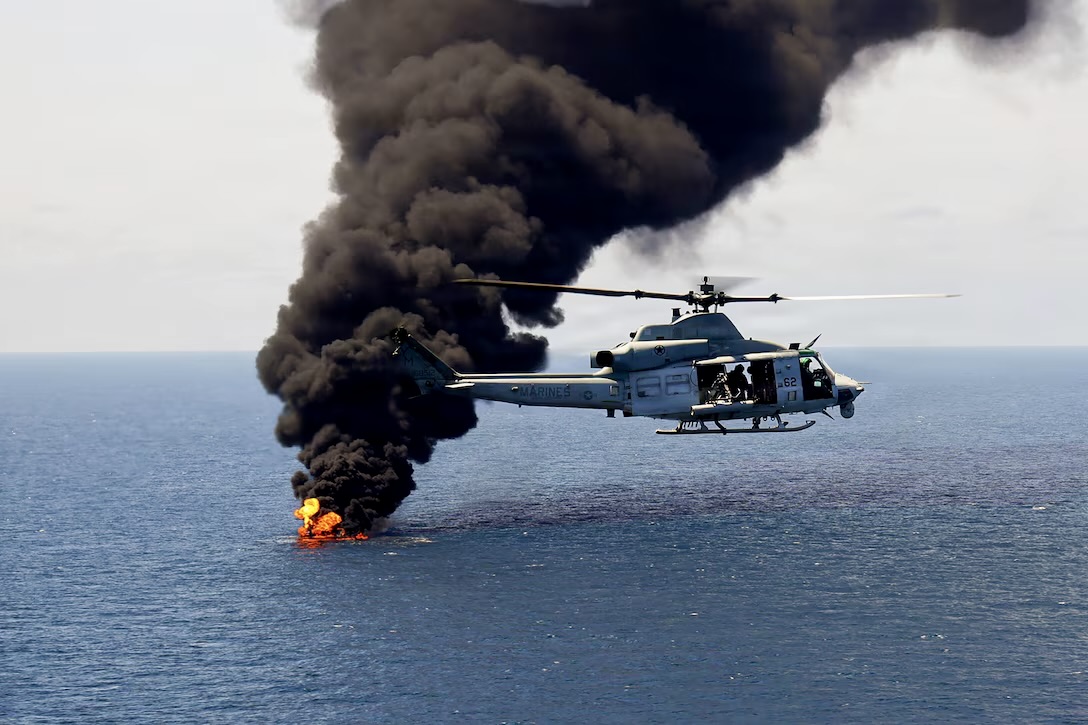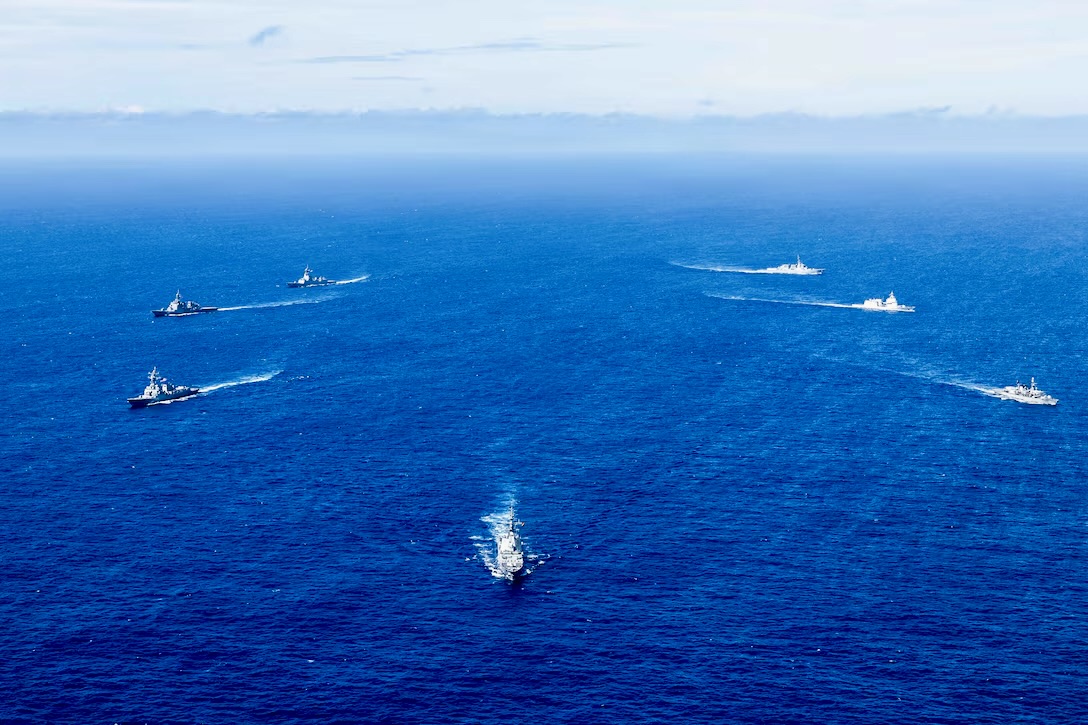
WASHINGTON (Realist English). The U.S. Navy is fundamentally rethinking how it stocks, resupplies and rotates its carrier strike groups after the USS Abraham Lincoln’s punishing 270‑day deployment laid bare critical failures in logistics, crew morale and port access.
Chief of Naval Operations Adm. Daryl Caudle told reporters in Norfolk, Virginia, on August 26 that the service is now looking at new port call locations — including Kenya, the British island of Diego Garcia in the Indian Ocean, and India itself — to avoid a repeat of the Lincoln’s ordeal.
The Lincoln, which left its home port in San Diego on November 21, 2025, expecting a standard six‑month deployment, was redirected to the Middle East as part of Operation Epic Fury — the Pentagon’s campaign against Iran. The carrier spent more than 250 consecutive days at sea without a single liberty port call, with only one brief stop in Guam in mid‑December. By August, the ship had been deployed for over 270 days.
Logistical Breakdown: From Bahrain to Diego Garcia
The root cause of the Lincoln’s isolation was the destruction of Naval Support Activity Bahrain — the Navy’s main supply hub in the Middle East — at the start of the Iran conflict. With Bahrain knocked out and regional ports from Dubai to Djibouti within range of Iranian drones and missiles, the Pentagon was forced to relocate its primary logistics hub to Diego Garcia, a British island territory some 2,200 to 3,500 kilometres from the Gulf of Oman.
The distance proved crippling. Resupply had to be prioritised, with hygiene products taking a backseat to food. Sailors and their families reported severe shortages of basic necessities — soap, toothpaste, even Starbucks coffee and Monster drinks. Photographs showed mostly empty food trays with boiled carrots, dry meat patties and slabs of processed meat. At least two sailors reportedly attempted suicide, and multiple service members tried to go overboard.
New Ports, New Risks: Kenya, Diego Garcia and India
Caudle acknowledged that the Navy is now working with Vice Adm. Curt Renshaw, commander of the Fifth Fleet, to identify port call locations less vulnerable to Iranian attack. The possibilities include:
| Location | Strategic Consideration |
| Kenya | East African port outside immediate Iranian missile range |
| Diego Garcia | British island territory, already serving as the main logistics hub |
| India | Regional power with significant naval infrastructure, though politically sensitive |
However, Caudle cautioned that all these farther‑out locations come with a “transit tax” — time off‑station and resources expended to get there and back. “I’ve got to work very carefully with the Fifth Fleet commander to go do that and make sure that there’s an understanding of the forecast and combat operations to allow something like that to be done,” he said.
The Navy is also applying lessons learned to the next deployment. Caudle said efforts are underway to prepare the carrier Theodore Roosevelt for its upcoming deployment to the region later this fall, with advance briefings for sailors and their families on what to expect.
The Thailand Stop: A Brief Respite
After more than 250 days without a port call, the Lincoln is finally scheduled to dock in Thailand in early September. The stop will be the carrier’s first full liberty port call of the entire deployment. From there, the ship is expected to return to San Diego within four to five weeks.
The deployment has drawn sharp criticism from Democratic lawmakers, including Sen. Jack Reed (D‑R.I.), the top Democrat on the Armed Services Committee, who called the mission “a record‑setting uninterrupted time at sea”. President Donald Trump, however, dismissed concerns, telling reporters on August 14 that families “weren’t concerned” and that, in his view, the deployment had “not gone on nearly long enough”.
Lessons Learned or Temporary Fix?
The Lincoln’s ordeal has exposed a fundamental vulnerability in U.S. naval strategy: the Navy’s reliance on a handful of regional ports that can be neutralised by a determined adversary. The destruction of Bahrain — a hub the Navy had taken for granted — forced a hasty and costly pivot to Diego Garcia, a distant island that cannot easily replace the lost infrastructure.
Caudle insists the Navy is now “in a good place” with resupply and that the lessons from the Lincoln will be applied to future deployments. Yet the fundamental challenges remain. The “transit tax” of operating from safer but more distant ports will strain both time and resources. And the political calculus of seeking port access in India or Kenya adds another layer of complexity to an already overstretched fleet.
Questions linger. Can the Navy secure reliable port access in India without entangling itself in New Delhi’s delicate balancing act between Washington and Moscow? Will Kenya and Diego Garcia prove adequate substitutes for the lost infrastructure in Bahrain? And most importantly — will the next carrier strike group face the same shortages, the same morale crises, the same 250‑day deployments?
For now, the Navy is promising change. But as the Lincoln’s crew heads to Thailand for a well‑earned respite, the service knows that the next war may not afford the luxury of a nine‑month learning curve.
The Abraham Lincoln survived its marathon deployment. The question is whether the Navy has learned enough to ensure the next carrier does not have to.