WASHINGTON (Realist English). American political scientist, Professor of Political Science and International Affairs at George Washington University, and author of the book America’s Middle East: The Ruination of a Region, Marc Lynch, in his article for Foreign Affairs, takes stock of three decades of American domination in the Middle East. His verdict is damning: “The American Middle East is over.”
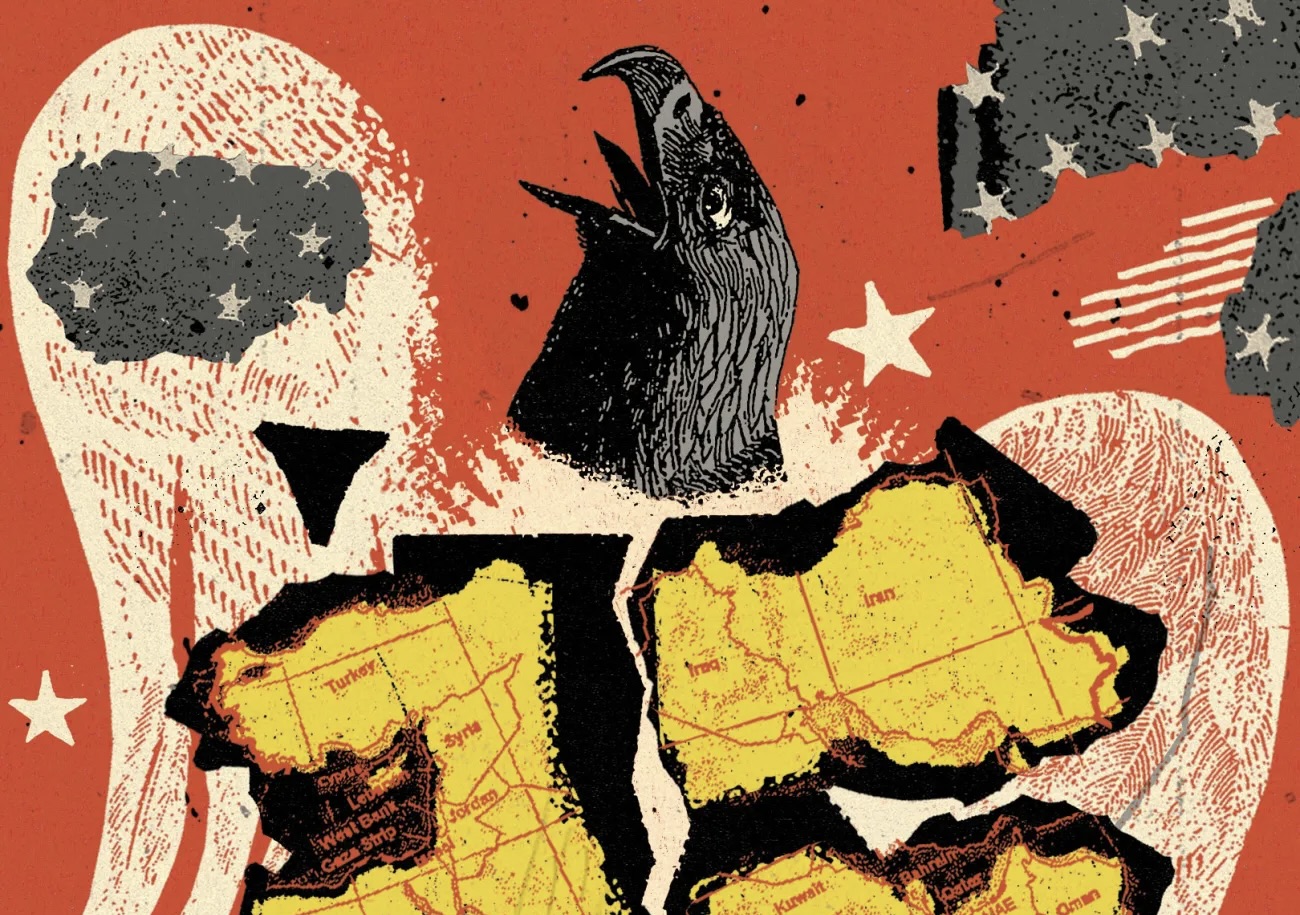
The regional order established after the 1991 Gulf War has become one of the casualties of the US-Israeli war with Iran. And no matter how hard proponents of the status quo try, “the old order is already giving way to the new.”
‘The last gasp’ of a failed strategy
The title of Lynch’s article – “Iran and the Last Gasp of a Failed Order” – sets the tone for the entire analysis. The author argues that the war launched by the Trump administration was not a deviation from previous strategy but its logical culmination. Washington spent decades building a system centred on the protection of Israel and the containment of Iran, Iraq and, later, Tehran’s proxy forces.
The attempt to eliminate the Iranian threat with one powerful blow failed. The US and Israel were unable to overthrow the regime in Tehran. And this, according to Lynch, “proved the bankruptcy of decades of sanctions and violence.”
As before the 2003 invasion of Iraq, the architects of the war overestimated the power of military force, underestimated the ability of adversaries to adapt, and assumed that allies would automatically support them.
The cornerstone crumbles: security guarantees in question
At the centre of Lynch’s argument is the erosion of trust between Washington and its Gulf allies. US military presence in the region was justified for decades by Washington’s ability to deter attacks, protect allies and ensure freedom of navigation through strategic waterways, primarily the Strait of Hormuz.
The war with Iran has put these guarantees under unprecedented strain. Washington’s failure to protect allies from Iranian attacks or keep the Strait of Hormuz open “fatally undermined the security foundation that justified the network of US military bases in the region.”
The Gulf states opposed the war. They were irritated that the US and Israel launched military operations at a time when Oman was acting as a mediator in talks with Tehran. As a result, they found themselves under the threat of Iranian retaliation, without having any influence over the decision to start the conflict.
The Palestinian deadlock and Israeli policy
Lynch also points to another factor that undermined the American order: Israel’s hardline policies and its rejection of a settlement with the Palestinians “effectively ended years of US efforts to unite Israel and Arab allies in a sustainable partnership.”
What’s next? Instability instead of order
Lynch warns: American dominance will not disappear overnight – just as British and French influence did not fade in a single day after the 1956 Suez Crisis. However, accumulated doubts about US capabilities and intentions have reached a critical point.
In the coming years, the region can expect further instability. Both Israel and Iran have an interest in preserving an environment in which they can expand their influence through military means, while the US has little capacity to restrain either side.
If the Iranian government does not collapse – which seems unlikely – a strengthened Tehran will continue to increase pressure.
Neither a new round of hostilities nor a change of president in the US will be able to fully repair the rupture. The war with Iran, like Israel’s war in Gaza, has already altered the calculations of Washington’s allies and adversaries alike.