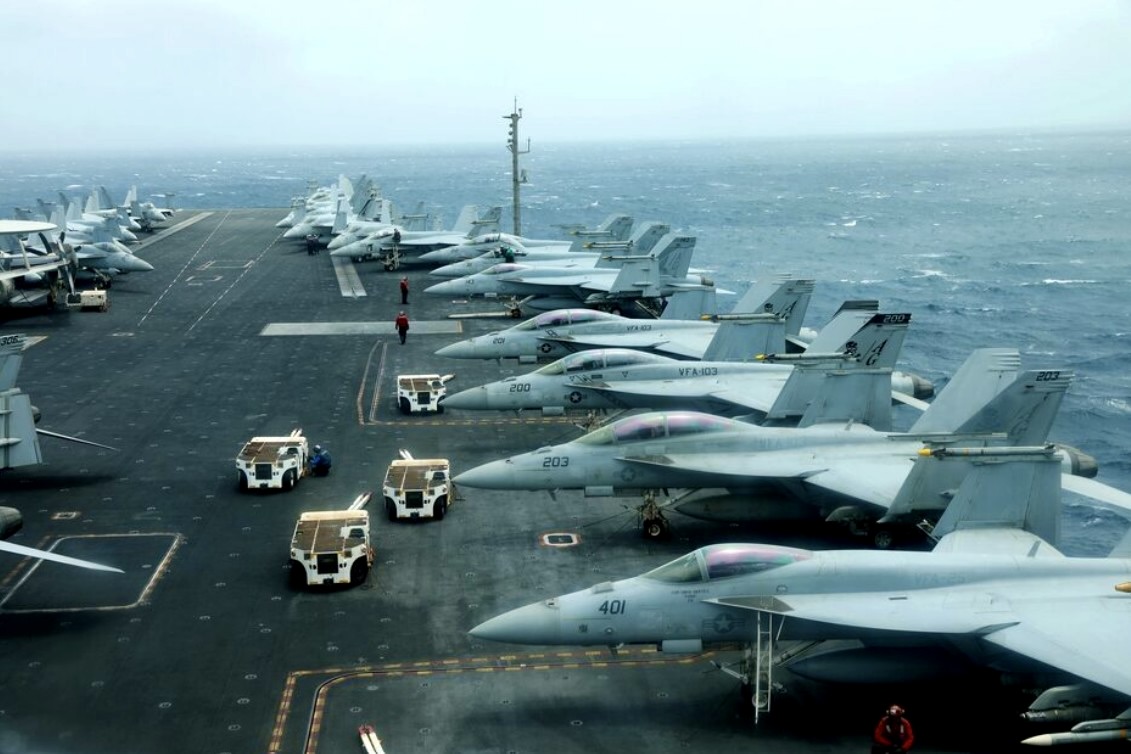
WASHINGTON (Realist English). On September 1, US forces conducted the largest operation in the Strait of Hormuz since the start of the war: escorting 40 commercial vessels carrying 18 million barrels of oil — about 90% of pre‑war daily traffic — while simultaneously striking nearly 60 Iranian military targets.
The operation marked the culmination of a strategic shift by Washington, which, after seven months of conflict, has moved its focus from Iran’s nuclear programme to control over the strategic strait and the economic strangulation of the regime.
“Mowing the Grass” in the Strait of Hormuz
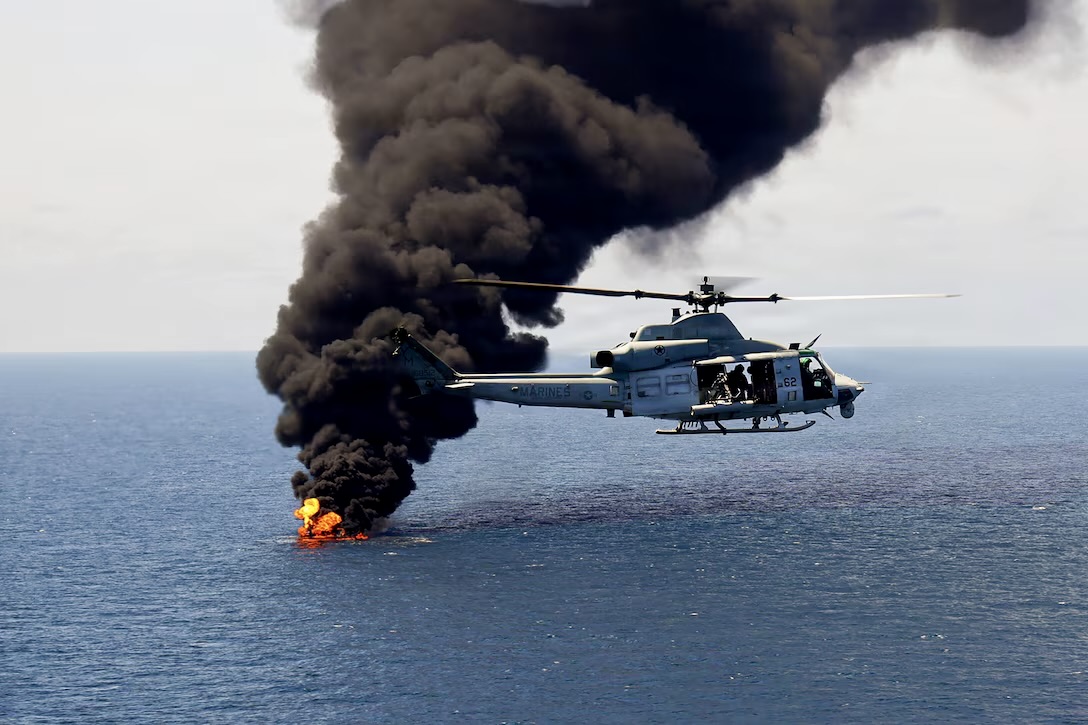
On the morning of September 1, US Central Command (CENTCOM) launched a multi‑layered operation involving air, naval and space forces.
Under the cover of strikes on Iranian positions, 40 commercial vessels carrying 18 million barrels of oil were escorted through the strait — a wartime record.
Simultaneously with the escort, US forces struck nearly 60 Iranian military targets in the strait area, including:
- Air defence systems — anti‑aircraft installations
- Radar systems — detection and tracking assets
- Naval assets — IRGC vessels and patrol boats
- Mine‑laying equipment — devices for mining the strait
- Communications nodes — command and control facilities
During the operation, US forces also repelled “waves” of Iranian drone attacks and neutralised an anti‑ship cruise missile. Many of the 40 vessels turned off their transponders to reduce detection risk.
From Nuclear Programme to Control Over the Strait
The operation was the first practical implementation of Washington’s new strategy. According to two US officials familiar with the operation who spoke to CNN, the Trump administration ordered CENTCOM to focus all efforts on the strait and preventing oil exports from Iranian ports, sidelining operations to eliminate elements of Iran’s nuclear programme.
Trump himself, according to sources, recently indicated that he is prepared to leave Iran’s stockpiles of highly enriched uranium — which were not completely destroyed in strikes on three nuclear sites last year — “buried” and monitored by satellite, despite having previously called their destruction a top priority.
The new strategy is part of the Trump administration’s “maximum pressure” campaign aimed at increasing economic pressure on Iran’s leadership. The naval blockade, according to a second official, has completely halted Iranian oil exports since July.
“Mowing the Grass”: A Strategy of Constant Deterrence
US military officials acknowledge that even a successful operation does not mean the conflict will end soon. According to the second official, Iran has demonstrated an ability to rebuild its capabilities, requiring “constant maintenance.”
He compared the strikes to “mowing the grass” or playing “whack‑a‑mole” — a strategy aimed at systematically undermining Iran’s ability to use the strait as a lever of pressure.
Nevertheless, energy companies remain wary of sending ships through the strait even under military escort. According to shipping industry data, chartering a tanker for a passage through the strait can cost over $500,000 per day. Energy prices remain high, causing turbulence in global bond markets.
Casualties and Diplomatic Background
Iranian media reported that a US strike on the town of Kuhestak hit a building where a wedding was taking place: four people were killed and at least 68 wounded. US military officials stated they “never target civilians.”
On the diplomatic front, Egypt and Qatar have called on Washington and Tehran to return to negotiations, while Pakistan stated it is continuing its mediation efforts. US Treasury Secretary Scott Bessent, in turn, warned all countries continuing business with Iran: “My message to everyone — stay away.”
| Aspect | Details |
| Date of operation | September 1, 2026 |
| Ships escorted | 40 commercial vessels |
| Oil volume | 18 million barrels (~90% of pre‑war traffic) |
| Targets struck | Nearly 60 IRGC facilities (air defence, radar, vessels, mines, communications) |
| Strategic shift | From nuclear programme to strait control and economic blockade |
| Iranian casualties | 4 killed (including a child), 68 wounded in Kuhestak |
The Strait of Hormuz as the Main Battleground
The September 1, 2026, operation marked a turning point in the seven‑month US‑Iran conflict.
By conducting the largest escort and the heaviest strikes on Iranian targets in the strait since the war began, Washington demonstrated a shift in priorities: control over the strategic waterway and economic strangulation of the regime have become more important than the nuclear programme.
Before the war, about 20 million barrels of oil — one‑fifth of global consumption — passed through the Strait of Hormuz daily. The current operation, securing 90% of pre‑war daily traffic, showed that the strait has not been completely closed — but also that military protection has become necessary for energy shipments to pass through the route.
However, as US officials acknowledge, the operation itself does not bring the war closer to an end.
Iran retains the ability to rebuild its forces, and energy companies remain wary of the risks. The question is how many more such “record days” will be needed before the conflict in the Strait of Hormuz ceases to be the main threat to the global economy.