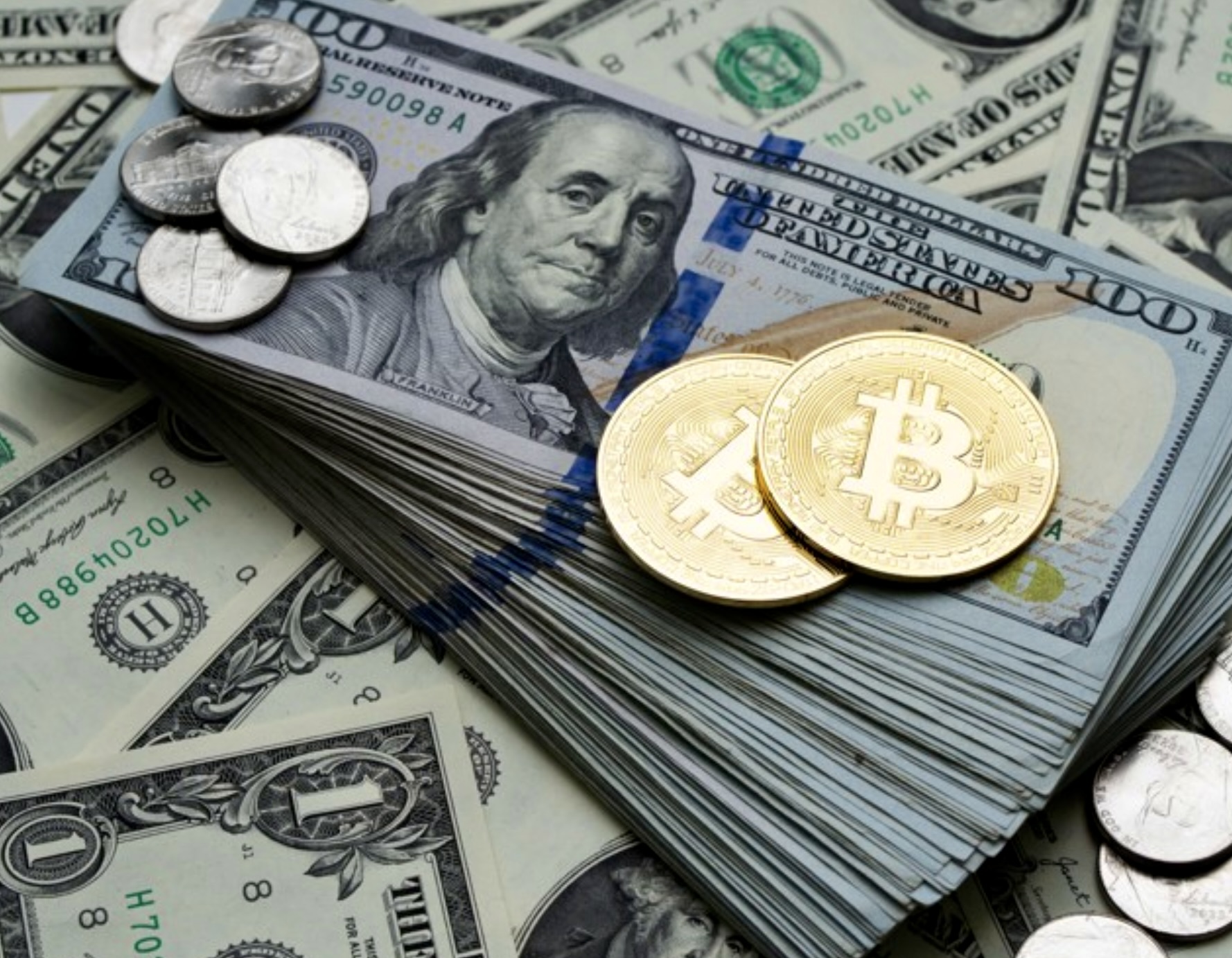
NEW YORK (Realist English). The US dollar remains the world’s primary reserve currency, but its position is weakening. For the first time in decades, more central banks worldwide plan to reduce their dollar holdings than to increase them.
The dollar’s share of global reserves has fallen to its lowest level in 26 years. But the key question troubling financiers and policymakers today is a different one: can financial innovation — from central bank digital currencies to stablecoins and decentralised payment systems — finally topple the dollar from its throne?
The answer, according to numerous analytical reports, is far from straightforward.
The Statistics of Decline: Numbers That Cannot Be Ignored
According to the International Monetary Fund (IMF), the dollar’s share of global foreign exchange reserves fell to 56.32% in the second quarter of 2026. At the turn of the century, it stood at around 70%. Experts note that a significant portion of this decline is due to currency fluctuations rather than deliberate central bank actions. Nevertheless, the trend is clear: the dollar is losing its share.
| Indicator | Value |
| Dollar’s share of global reserves (Q2 2026) | 56.32% |
| Decline since the turn of the century | ~14 p.p. |
| Central banks planning to reduce dollar holdings | More than those planning to increase (for the first time) |
| 79% of central banks see a shift to a multipolar world |
A survey conducted by the Official Monetary and Financial Institutions Forum (OMFIF) among 90 central banks, pension and sovereign funds managing $10 trillion in assets found that 79% of respondents believe the global monetary system is moving toward a “multipolar” world.
De‑Dollarisation BRICS‑Style: Local Currencies Instead of the Dollar
BRICS countries are actively promoting the use of national currencies in mutual trade. According to a Pranan Consulting report, about 65% of cross‑border transactions within the alliance are now conducted in local currencies. Only 35% are still settled in dollars.
The most notable success stories are China and Russia, which since 2022 have intensively used the yuan and the rouble in bilateral trade, including energy and raw materials. India uses a combination of the rupee, rouble and dirham, while Iran is actively transitioning to the yuan.
However, experts caution against jumping to conclusions. “De‑dollarisation in BRICS is not an immediate attempt to displace the dollar, but a strategy of practical, gradual transition,” notes one analytical report. The goal is not to create a single bloc currency, but to expand bilateral settlements in national currencies.
The Petro‑Yuan and Geopolitics: The Iran War as a Catalyst
The energy sector plays a special role in de‑dollarisation. Deutsche Bank warns that the war in Iran could become a catalyst for the erosion of the petrodollar and the emergence of the “petro‑yuan.” Iran, according to reports, is already allowing ships to pass through the Strait of Hormuz on condition that oil is paid for in yuan.
Russia already settles part of its oil and gas exports in yuan. China, for its part, is aggressively promoting the internationalisation of the yuan, signing agreements that allow transactions to be conducted without the dollar.
However, as the Stratfor analytical centre notes, even an independent BRICS payment system will not be able to undermine the global dominance of the dollar in the foreseeable future.
Stability vs. Innovation: Why the Dollar Remains Unrivalled
Despite all the talk of de‑dollarisation, experts agree on one point: there is currently no alternative to the dollar. As the Brookings Institution notes, “the barrier to meaningful erosion of reserve currency status is very high, likely due to the absence of viable alternatives to the US dollar.” A Federal Reserve study found no appreciable abandonment of dollar reserves since 2022.
The IMF report emphasises: US markets are huge, dollar instruments are extremely liquid, and US Treasury bonds remain one of the most reliable and easily tradable assets in the world. It is these fundamental advantages that make the dollar indispensable for central banks, which need stability rather than high returns.
Digital Currencies: Will They Strengthen or Undermine the Dollar?
The paradox of financial innovation is that it may not weaken but rather strengthen the dollar’s dominance. The Bank for International Settlements (BIS) warns in its 2026 annual report that dollar‑pegged stablecoins could promote “dollarisation” of emerging markets. Households in countries with unstable national currencies are increasingly using dollar‑denominated tokens as a store of value.
The stablecoin market, according to BIS data, reached approximately $320 billion by the end of May 2026, with more than 99% of all fiat‑backed stablecoins pegged to the US dollar. This means that the dollar is effectively expanding its reach beyond the traditional banking system.
“The dollar is not dying — it is dematerialising,” analysts conclude. The reserve currency status of the future will be determined not by IMF decisions, but by liquidity pools on decentralised exchanges.
At the same time, multilateral central bank digital currency (CBDC) projects such as mBridge could eventually allow cross‑border settlements in local currencies, reducing dependence on dollar‑based infrastructure. However, as experts note, it is unlikely that CBDCs will displace the dollar in the foreseeable future, given the trust in the US economy and markets.
The “Technodollar”: A New Future or Another Mirage?
Economist Nouriel Roubini, known as “Dr. Doom,” has declared the “death of the petrodollar” and endorsed the creation of a new tokenised reserve asset — the “technodollar” — linked to US productive assets: technology, artificial intelligence, defence, and semiconductors.
In his view, stablecoins do not protect investors from inflation and the depreciation of fiat currencies. The next reserve asset should be tied to technology and the real economy, not to the dollar itself. Atlas Capital has already launched USAFi — a tokenised reserve asset registered in Dubai.
Hegemony Without a Hegemon
The dollar is losing ground, but for now it remains unchallenged. Digital innovations — from stablecoins to CBDCs and “technodollars” — are more likely to transform than to abolish its dominance. As one analytical review colourfully put it, “the dollar is not a dying lion, but ice turning into water.”
Yet open questions remain. Can China turn the “petro‑yuan” from a theoretical concept into a real alternative to the petrodollar? Will the mass adoption of stablecoins lead to a “digital run” on US Treasuries if confidence in American debt falters? And most importantly — is Washington ready for its own currency to become a victim of its own success in the digital sphere?
For now, the dollar remains “king,” but its crown no longer sits as firmly on its head. The question is not whether it will have a successor, but what kind of successor it will be.