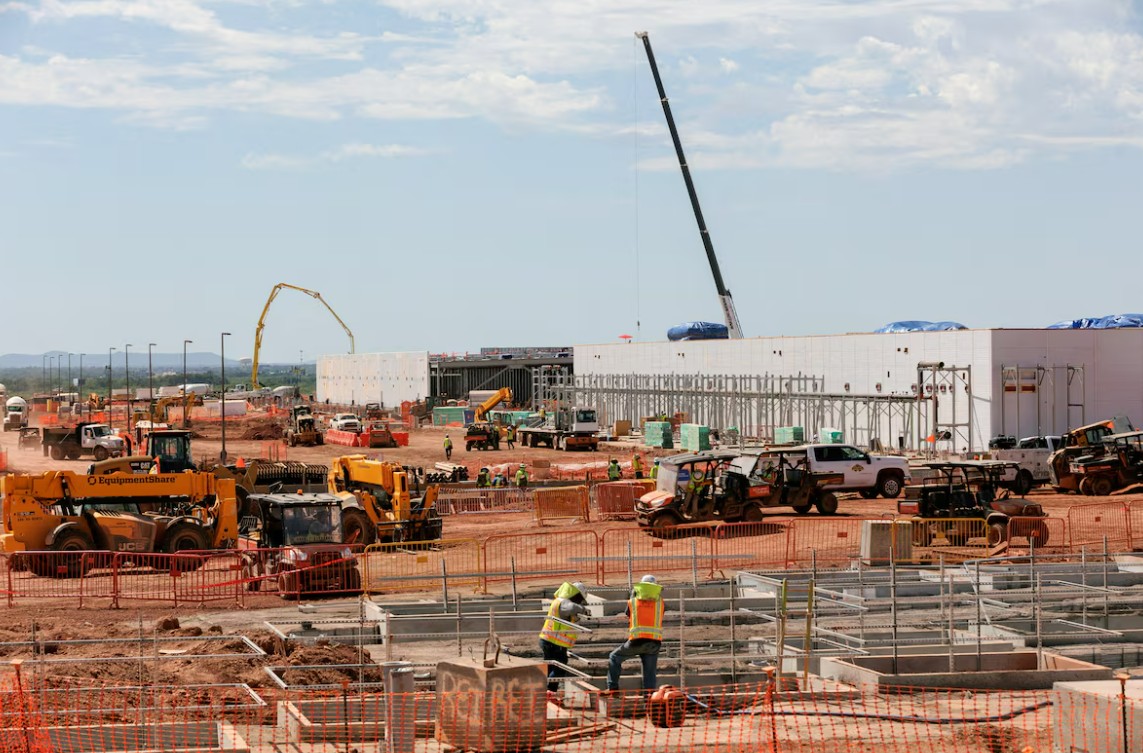
SAN FRANCISCO (Realist English). On 5 November, OpenAI presented a package of policies developed since August to convince local communities that data centers will benefit them. The move was a response to an electoral signal: in the midterm elections on 3 November, Democrats won in Texas, Georgia and Ohio with promises to pause permits for new data centers and tighten construction rules. Out of 41 local referendums related to data centers, 40 voted against them.
What exactly OpenAI is proposing
The campaign, which the company calls “compute campus policy,” includes several specific commitments:
- Abandoning non-disclosure agreements (NDAs) with government officials when discussing future sites. Proprietary information will still remain confidential.
- Resident access to construction plans and assessments of their potential impact on traffic, noise and lighting.
- Emphasis on long-term jobs. According to Chris Lehane, Director of Global Affairs, equipment in data centers requires updating every three to five years, which will ensure permanent employment. One of OpenAI’s facilities in southern Ohio is expected to create 2,500 long-term jobs with an average annual salary of $80,000.
- Positioning data centers as “not those black boxes in a field” that brought almost no economic benefit to communities, but as infrastructure integrated into the local economy.
In addition, OpenAI is considering renaming data centers to “AI Compute Campuses” — a move the company believes will help change the perception of the facilities and “spark a conversation” about their real role.
Scale of opposition
Public opinion polls explain why OpenAI launched such a campaign. According to NBC News, 76% of voters would oppose the construction of a new data center in their community, and 56% called AI and data centers a “critical or major factor” in their vote in the congressional elections. A Gallup poll conducted in July showed that 70% of Americans oppose opening such facilities near their homes — both Democrats and Republicans. A Pew Research study, in turn, found that 54% consider data centers mostly harmful to the environment — up from 39% in early 2026.
Opposition has already led to real consequences: according to Data Center Watch, in the second half of 2026 at least 45 data center projects were disrupted due to local opposition. In Ohio, 15 municipalities adopted bans or restrictions, and in Texas, the new Democratic governor Gina Hinojosa promised to pause data center development until legislative guarantees are adopted. Goldman Sachs analysts warn that Democratic victories could lead to “short-term moratoriums” affecting about 45% of planned data center capacity expansion in the US.
What this means for the industry
OpenAI is not the only company adjusting its approach. Amazon, Google and Microsoft have also begun offering communities concrete benefits: Amazon allocated $1 billion for community investment in data centers over five years, Microsoft launched the “Datacenter Community Pledge,” and Meta reportedly paid bonuses to teachers in Louisiana after building a large facility. However, as Axios notes, jobs alone are not enough, since they are often temporary; companies are forced to offer more tangible payments and guarantees.
OpenAI’s campaign is not just a rebranding but an attempt to reshape the social contract around AI infrastructure. The electoral signal of 3 November showed that tech companies can no longer count on the tacit consent of communities: voters demand transparency, compensation for costs and real participation in decision-making. Abandoning NDAs and disclosing construction plans are steps in the right direction, but they do not eliminate fundamental concerns about water and electricity consumption, noise and impact on utility rates.
The key question is whether these promises will be backed by legally binding agreements or remain a PR move. If companies fail to fulfill their commitments, distrust of AI infrastructure could become as persistent as distrust of the models themselves, jeopardizing not only the pace of construction but also the social legitimacy of the entire industry.