BEIJING (Realist English). China’s Xinhua news agency reported on Saturday, 31 October, a significant increase in confirmed reserves of a number of strategic minerals following a nationwide reassessment of deposits. Data published by the Ministry of Natural Resources of the PRC records an expansion of the resource base for 13 types of mineral raw materials.
Scale of the increase
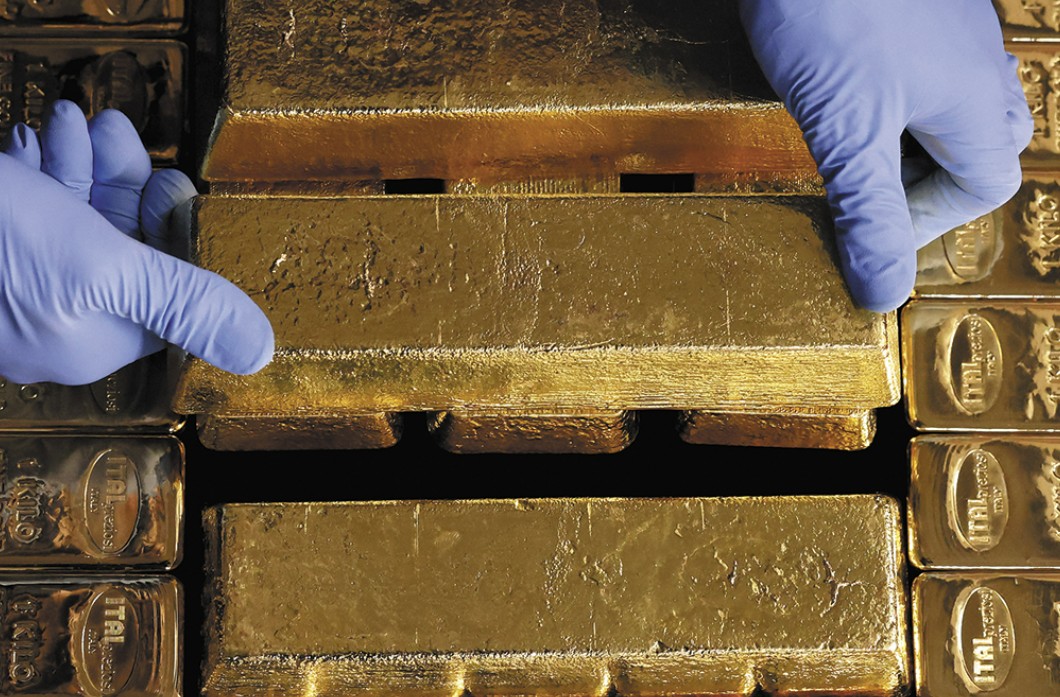
According to the published data, remaining rhenium reserves in China grew by more than 200%. The increase in gold reserves is equivalent to the discovery of 50 large deposits, and nickel — 30 large deposits. In addition, resources of gallium, indium, tantalum and vanadium increased by an amount equivalent to more than 10 large deposits for each of these metals.
How the reassessment was conducted
The work took about a year and covered 17 strategic types of mineral raw materials at more than 1,800 operating mines and major mining sites. The project involved over 100 organisations and almost 2,000 survey specialists in 27 provinces, autonomous regions and municipalities of China. The reassessment included associated resources, low-grade deposits and deposits previously considered difficult to extract.
As explained by Qiao Chunlei, deputy director of the Department for Protection and Supervision of Mineral Resources at the Ministry of Natural Resources, the results of the reassessment “contribute to achieving the goals of a new round of breakthrough in geological exploration under the 14th Five-Year Plan and lay an important resource foundation for raising the level of China’s mineral security.”
Significance for industry
Rhenium and zirconium (the raw material for which is zircon) are metals critical to high-tech industries. Rhenium is used in heat-resistant superalloys for jet engine components. Zirconium is used in nuclear reactor fuel rod cladding and high-temperature aerospace alloys.
Separately, the discovery of China’s first ancient alluvial-lacustrine zircon placer deposit in Baicheng (Xinjiang Uygur Autonomous Region) is reported. This discovery is estimated to significantly increase domestic supplies of zircon and reduce the country’s dependence on imports of this mineral, which remains high.
The announced increase in reserves is the result of a revision of estimates within a nationwide audit, rather than the discovery of fundamentally new deposits in the classical sense. Nevertheless, for China it means an expansion of the available resource base in a number of critically important areas — from aerospace to nuclear energy.
In conditions where access to strategic raw materials is becoming an instrument of geopolitical pressure, an increase in own confirmed reserves reduces vulnerability to external restrictions. The key question remains the economic profitability of extracting these resources: part of the increase comes from low-grade and difficult-to-extract deposits, and how quickly they will be brought into circulation depends on technology and investment.