NEW YORK (Realist English). On 2 November, the US dollar and other major currencies were in a “wait-and-see mode”: investors shifted their attention to the midterm congressional elections to be held on 3 November, which could change the balance of power in the US legislature. The dollar index (DXY) stood at 101.94 by the Asian trading morning, down 0.2% from the previous session.
Dollar: elections, the Fed and structural risks
The key factor for the currency market this week will be not only the elections themselves but also their outcome. According to Standard Chartered, the most “bearish” scenario for the dollar is a full Democratic victory in both chambers of Congress, while Republicans retaining control of at least one chamber would be a “hawkish” surprise. The base market forecast is a divided Congress, which is historically moderately negative for the dollar.
However, analysts note that even in the case of “divided government,” the dollar could receive support from two factors: its persistent interest rate advantage and capital inflows linked to artificial intelligence. Additional support for the US currency comes from geopolitical tensions around Iran, which sustain demand for safe-haven assets.
Among other currencies, the euro remains under pressure after Fitch revised its outlook on France from “stable” to “negative.” The EUR/USD pair traded near $1.1159 — a 17-month low. The pound sterling is holding around $1.3387 ahead of the Bank of England meeting, where a 25 basis point rate hike to 4.00% is expected — the first since August 2023.
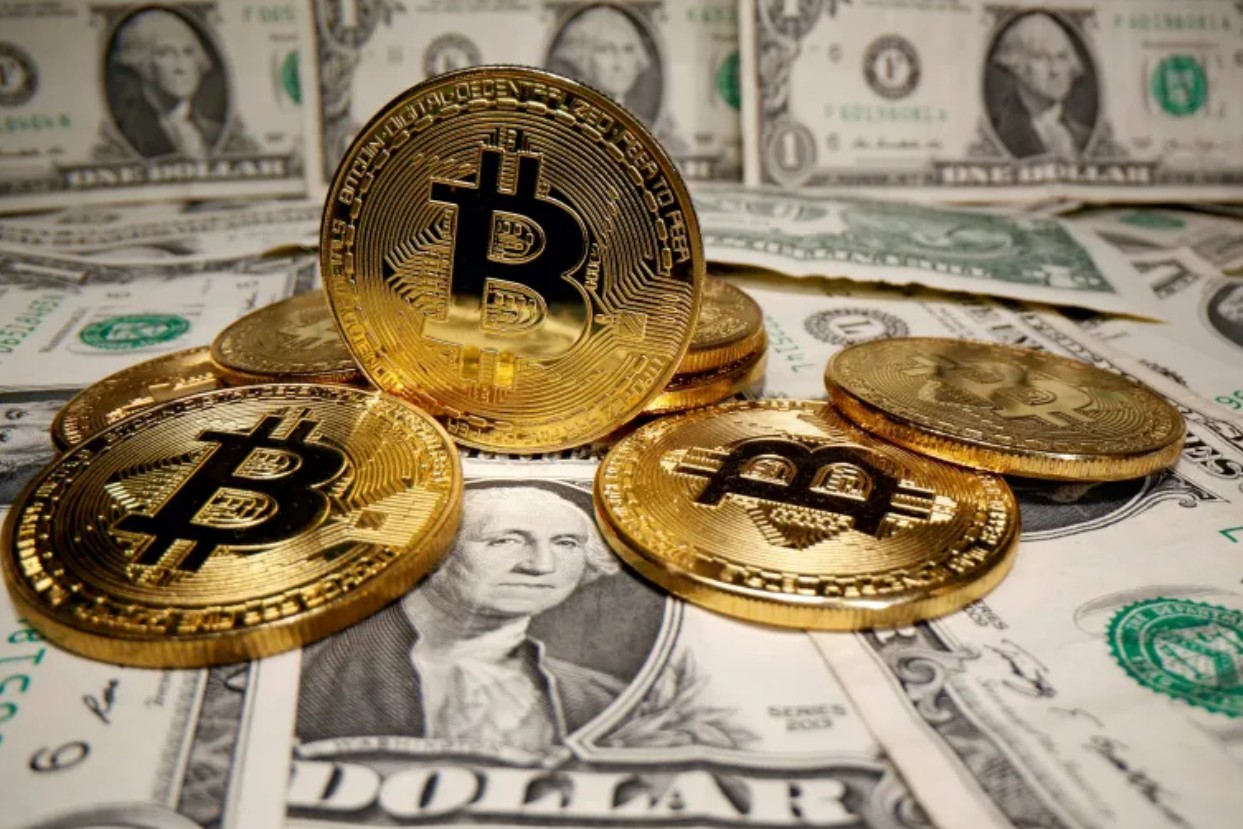
Bitcoin: fallout from the largest hack in history
The cryptocurrency market remains tense. Bitcoin and Ethereum are suffering losses after a record hack of the Binance exchange, in which an estimated $6.3 billion in crypto assets was stolen. The FBI links the attack to North Korea. According to Elliptic, the attacker likely used a compromised DevOps engineer’s laptop to access a service container and authorize fund withdrawals.
The immediate market reaction was sharply negative: bitcoin fell to $76,400 — its lowest since 18 September — and Ethereum to $2,170. Futures market liquidations reached $1.57 billion, amplifying the initial drop through forced closure of leveraged positions. By the morning of 2 November, bitcoin had recovered to $77,975, up 0.22%, but remains below the key resistance level of $81,000.
Outflows from Binance reached $3.64 billion, or 2.1% of the exchange’s assets, after operations resumed on Sunday. Binance stated that it had covered 95% of the stolen assets and that deposit volumes remain “substantial.” Nevertheless, estimates suggest the attacker still controls significant funds, including 42,000 ETH and 18,270 BTC, as well as about $2.4 billion in assets that stablecoin issuers cannot freeze.
Hidden pressure: sentiment before the hack
It is important to note that pressure on the crypto market began even before the Binance incident. The CoinMarketCap Fear and Greed Index fell from 43 to 36, moving from the “neutral” zone into “fear.” Bitcoin is trading about 38% below its all-time high of $126,080, and around 4 million BTC acquired in the $85,000–$118,000 range are at a loss.
Nevertheless, analysts note that the market as a whole has shown greater resilience than in 2018: total crypto market capitalization has grown from $400 billion to $2.6 trillion, and spot bitcoin ETFs have accumulated about 1.3 million BTC (roughly 6% of supply), providing an influx of institutional capital and softening the shock.
The current situation in the currency and cryptocurrency markets reflects two parallel processes. The dollar, on the one hand, retains structural support from interest rates and capital inflows into the AI sector, but on the other, uncertainty surrounding the elections and the risk of “divided government” limit its upside potential.
Bitcoin, meanwhile, faces a crisis of confidence in infrastructure: even with an impressive recovery after the hack, the fundamental question — about the reliability of custodial solutions and the ability of exchanges to guarantee the safety of assets — remains open. The key for the crypto market will be not only how quickly Binance restores trust but also how spot ETFs behave: if institutional capital inflows continue, the market may stabilize; if outflows begin, pressure will resume with renewed force.