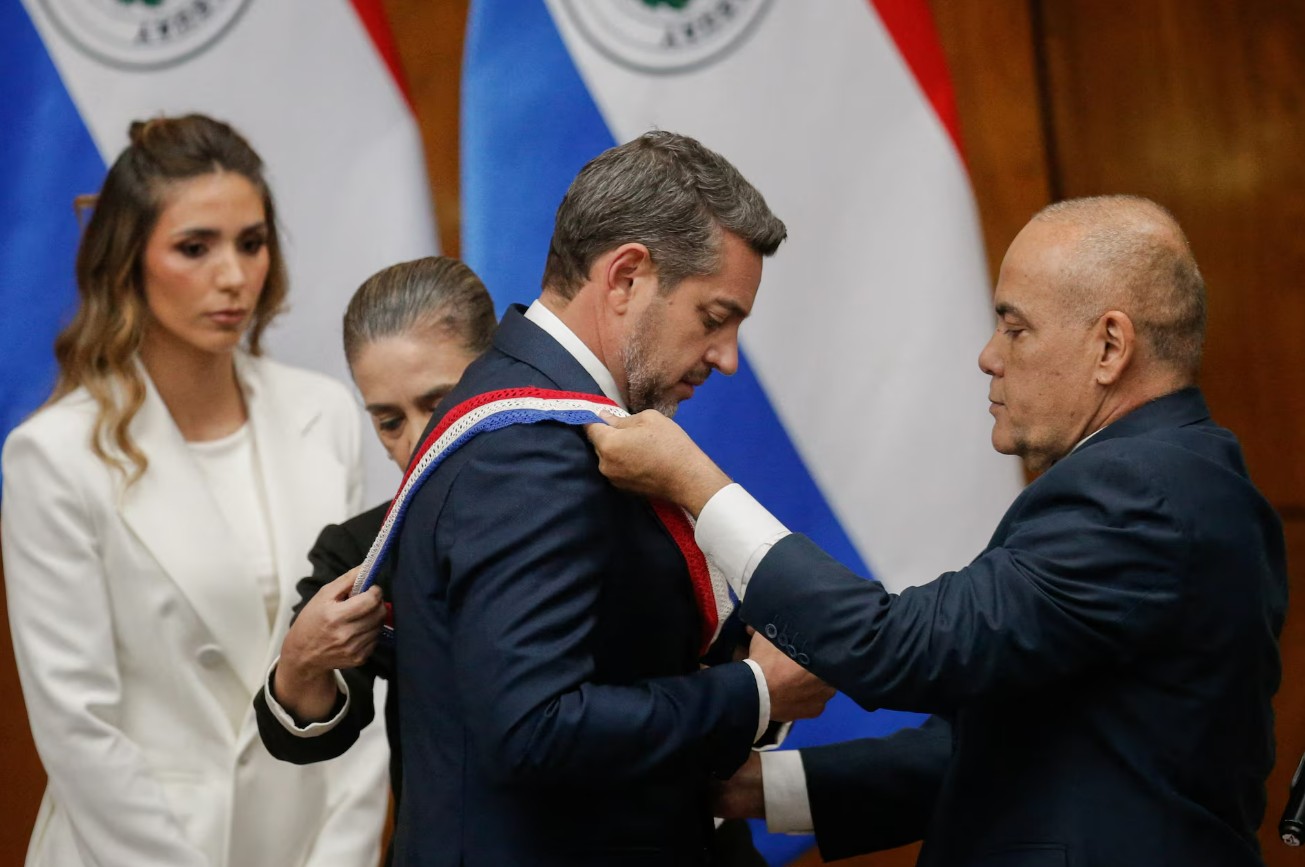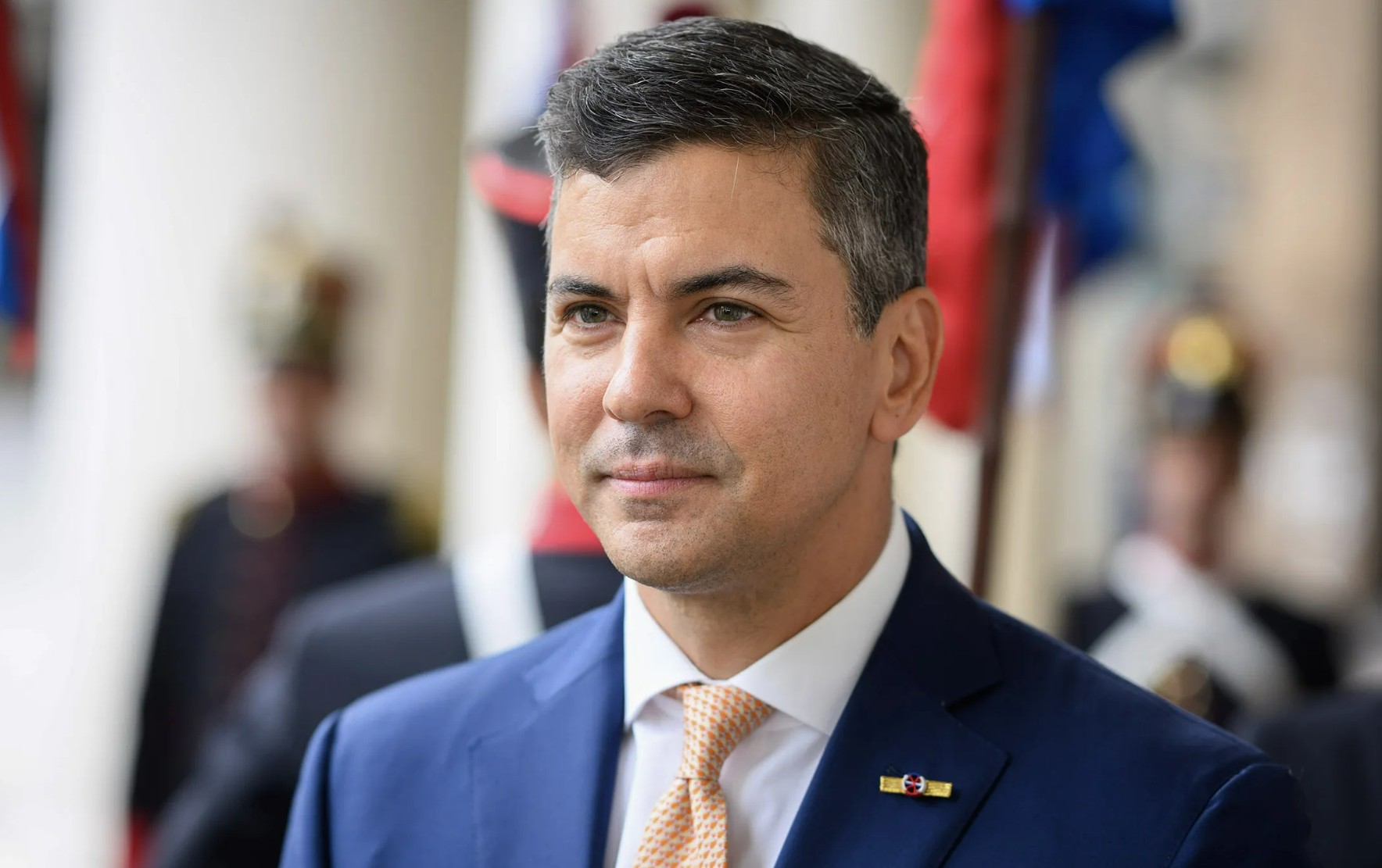
ASUNCIÓN (Realist English). On 6 November, Paraguayan authorities placed ousted President Santiago Peña under house arrest. The decision came shortly after the Senate unanimously — all 44 senators present — voted for impeachment amid a massive banking crisis that left nearly half of the country’s 6 million people without access to their savings. Peña had offered to resign, but lawmakers chose impeachment, stripping him of political immunity.
Charges and public reaction
Peña faces charges of breach of trust, influence peddling and using public office for personal gain. The most serious charges carry up to 10 years in prison.
Prosecutors also ordered the arrest of Carlos Carvallo, who headed the financial company that later became Ueno Bank before Peña appointed him Central Bank chief in 2023. Peña denies all charges.
On Friday evening, police cordoned off one of Peña’s homes in Asunción, where crowds gathered with flags, vowing to keep vigil until morning to ensure he did not escape. Earlier, when the verdict was announced, a roar of approval rose from the plaza outside Congress: depositors, retirees and students in national soccer jerseys waved flags, sang and chanted “Never again dictatorship!”
Ueno Bank collapse: frozen accounts and protests
Regulators seized Ueno Bank three days before the impeachment, on Tuesday, sending shockwaves through the financial system and triggering the country’s worst political crisis in more than a decade.
The digital bank, which aggressively courted poor and unbanked people with generous supermarket rebates, became the first bank for more than 1 million Paraguayans. Even players on the national soccer team, which Ueno sponsored during its sensational World Cup victory over Germany, said they could not access their money.
The collapse affected more than depositors. A ride-hailing app that relied on Ueno shut down, leaving 3,000 drivers without work. The state power company said $21 million in loans from the Inter-American Development Bank and Taiwan, earmarked for public works, was trapped in the bank. Paraguay’s bonds posted some of the worst losses in emerging markets this week, and the guaraní weakened against the dollar.
On Thursday, some depositors began recovering their money — starting with those holding up to 10 million guaraníes (about $1,500). Deposits are insured up to about $35,000, which the central bank says covers 97% of Ueno’s customers. The regulator calls the collapse an isolated case and insists the broader financial system is safe.
Political background: Cartes and Peña
Peña’s fall, from a feted Washington ally meeting with US Treasury Secretary Scott Bessent in late October to a prisoner in his own home by Friday, came at dizzying speed. Impeachment denied him the lifetime non-voting Senate seat that the constitution grants former presidents and that would have afforded him broad immunity from prosecution.
Peña, a former International Monetary Fund economist, owed his career to Horacio Cartes — a tobacco magnate who heads the Colorado Party and made him finance minister and twice backed him for president.
Once in office, however, Peña sought to escape his mentor’s shadow by quietly building his own power base, anchored by Ueno Bank, flush with public funds. “It’s like a Shakespearean drama. He tried to displace his mentor, his political patron, but he did so on very fragile grounds,” Miguel Carter, director of the Paraguayan research center DEMOS, told France 24.
Cartes struck back. In September, senators loyal to him began publicly questioning the central bank about Ueno’s risky lending to related companies. When the bank collapsed, Cartes publicly called for the ouster of his erstwhile protégé.
“Cartes put the nail in the coffin. Peña had no political base to rely on, and he was left high and dry,” said Andrew Nickson, a Paraguay expert at the University of Birmingham.
The Ueno Bank collapse exposed the deep entanglement of political power and banking in Paraguay, where state deposits and regulatory leniency were used to strengthen personal political positions. Peña’s fall is not simply the consequence of a financial scandal but the result of his attempt to break free from Cartes’ control, which backfired against him.
For new President Pedro Alliana, who is himself under investigation in connection with the bank, the main task is to restore depositors’ trust and repair the reputation of the financial system.
However, without institutional reforms capable of breaking the link between power and banking supervision, the Ueno crisis may become not an exception but a model. The key question is whether Paraguay can restore political stability or whether the country is entering a period of turbulence that will undo decades of relative calm.