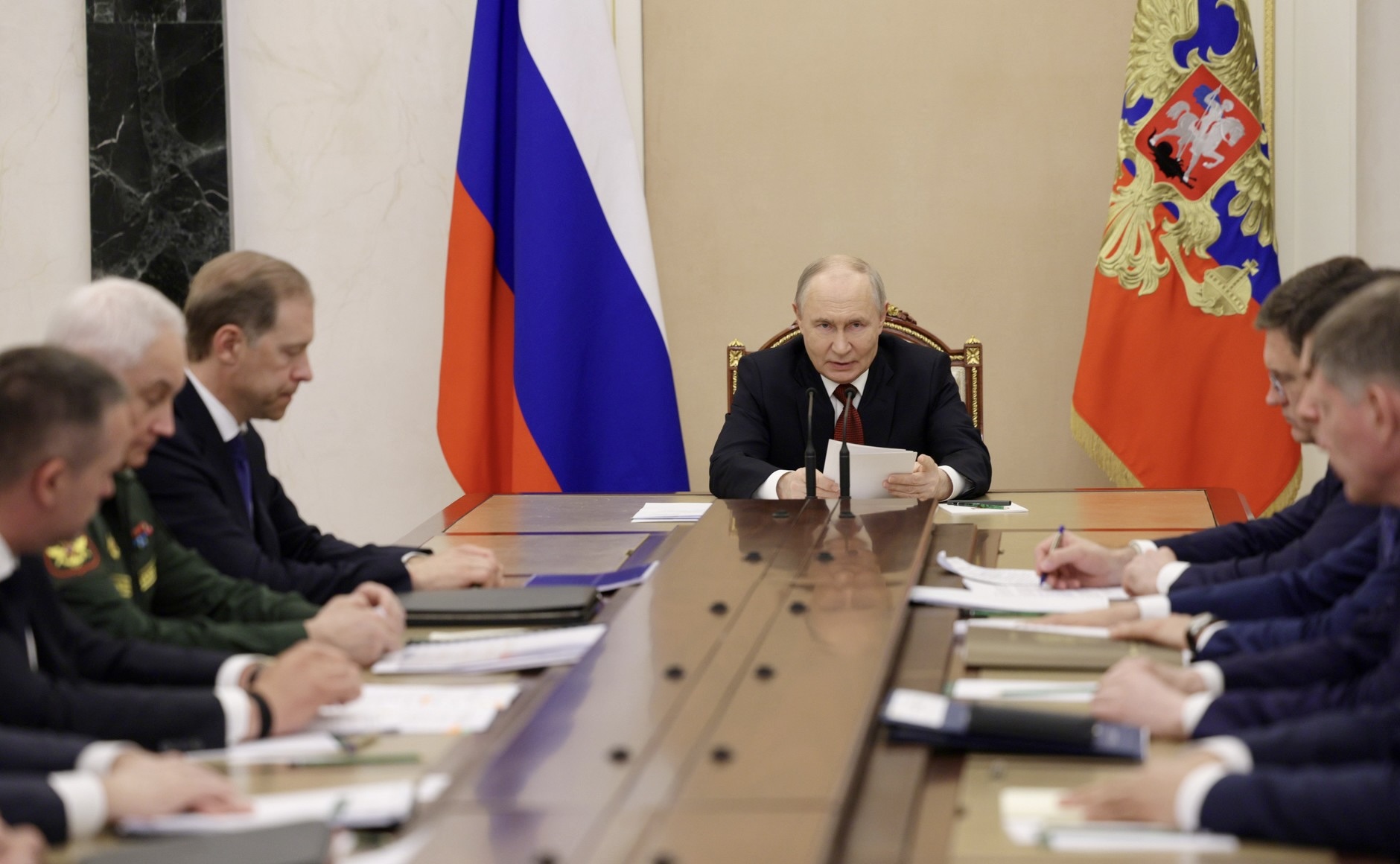
MOSCOW (Realist English). On the evening of June 28, President Vladimir Putin held a meeting at the Kremlin on issues related to fuel supply to Russia’s regions.
The meeting was attended by government members and heads of leading energy companies: Lukoil head Vagit Alekperov, Surgutneftegaz head Vladimir Bogdanov, Gazprom Neft head Alexander Dyukov, Gazprom head Alexei Miller, Rosneft head Igor Sechin and Transneft head Nikolai Tokarev.
Acknowledging Problems: Queues and Shortages
Opening the meeting, Putin acknowledged that despite the measures taken, “problems for both motorists and businesses persist: there are queues at petrol stations, unfortunately, and the right grade of petrol cannot always be found.”
The president also noted the difficulties faced by agricultural producers during the summer period and called for “making every effort to ensure that seasonal fuel supply schedules are strictly observed for agricultural enterprises.”
Reserves and Production: Situation Under Control?
According to Energy Ministry data cited by Putin, “petrol reserves stand at 1.7 million tonnes, which is practically in line with the level for the same period last year.” The decline is only 4%.
The president stated that “already in July, according to forecasts, production of the main types of fuel should exceed June levels.” Currently, the capacities of the largest oil refineries are being used to the maximum, the potential of medium and small enterprises is being utilised, and the duration of current repairs has been reduced.
Export Ban: Petrol Already, Diesel Under Consideration
In the interests of domestic consumers, a full ban on the export of petrol and aviation kerosene has been temporarily introduced. In addition, the president said that “the need to introduce a full ban on the export of diesel fuel is being considered.”
At the same time, Deputy Prime Minister Alexander Novak stated at the meeting that there is currently no need to impose a ban on diesel exports. According to Novak, the Energy Ministry assessed the market situation as stable at a recent meeting.
Systemic Measures
“I consider it necessary to take systemic measures that correspond to the scale of current challenges to stabilise the fuel market,” Putin said. This includes both increasing supply volumes and the need to “maintain economically justified fuel prices.”
As Novak reported, from July 1 to September 30, the mandatory standard for petrol sales on the exchange will be temporarily reduced from 15% to 10%. This measure should help balance supply and demand and reduce price volatility.
The government is also considering the possibility of extending the zero duty on petrol within the EAEU from July 1.
Despite optimistic statements about reserves and production forecasts, the president effectively acknowledged the existence of a fuel crisis in the country.
Queues at petrol stations and shortages of certain grades persist, and to stabilise the situation the government is forced to resort to emergency measures, including export bans and changes to exchange standards.
The question of a ban on diesel exports remains open.