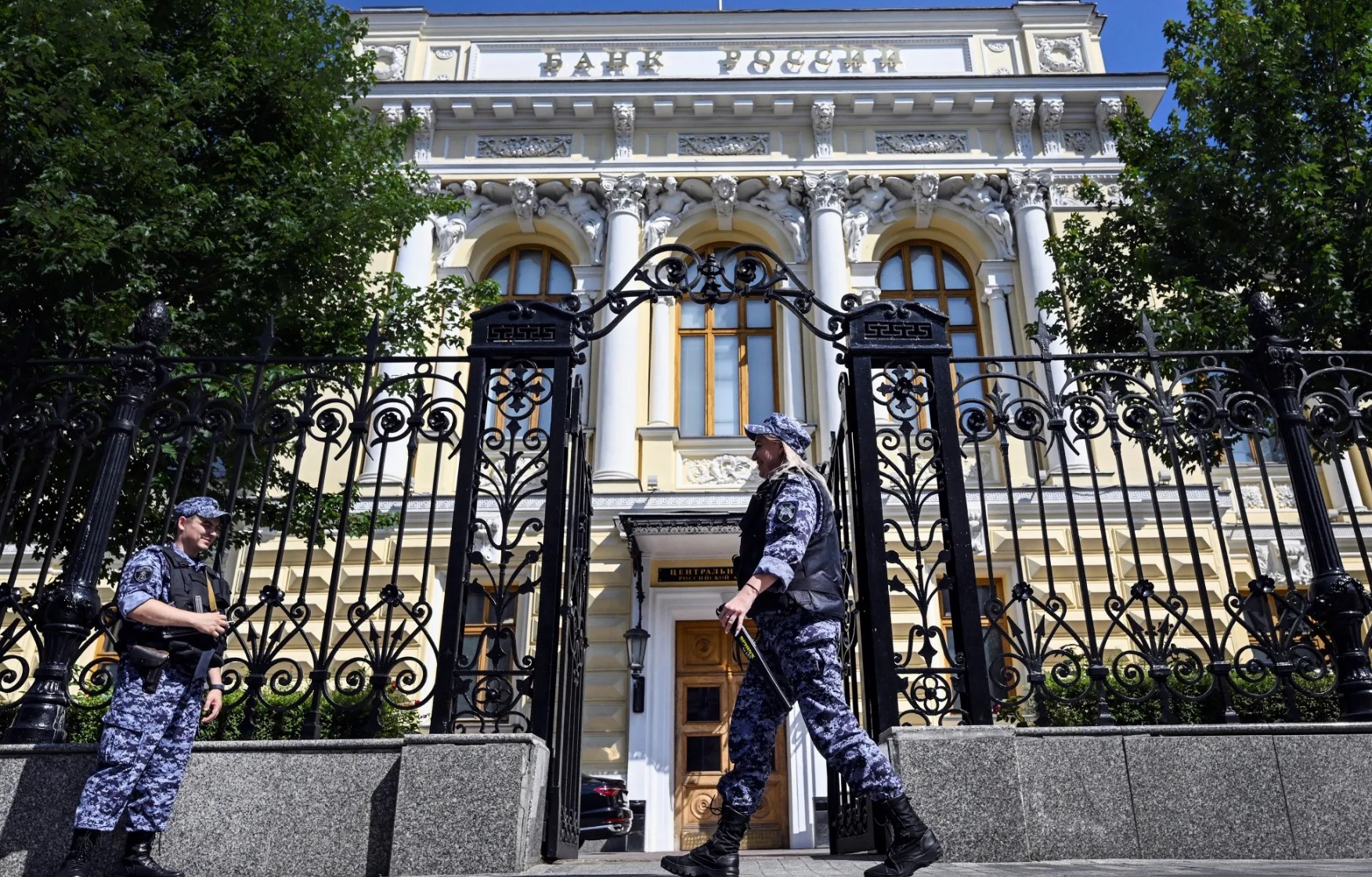
MOSCOW (Realist English). The first days of September 2026 have been marked by a series of Bank of Russia publications that lay bare contradictory trends in the Russian economy: currency restrictions extended for another six months, lending accelerating across all segments, and consumer activity growing but unevenly, with early signs of cooling.
Currency Restrictions: Another Six Months of the “Currency Curtain”
On September 1, the Bank of Russia announced the extension, until March 9, 2027, of restrictions on the withdrawal of foreign cash. The measures, introduced in March 2022 after the US and EU countries banned the import of dollar and euro banknotes into Russia, have been extended for another six months.
For individuals who opened foreign‑currency accounts or deposits before March 9, 2022, the withdrawal limit remains: no more than $10,000 or the equivalent in euros. Any amount above the limit can only be received in roubles. Non‑resident legal entities are not permitted to withdraw dollars, euros, pounds sterling or Japanese yen in cash until March 2027.
As the regulator explained, the restrictions remain in place “due to the current sanctions that prevent domestic financial institutions from purchasing Western currencies in cash.”
Expert Opinions
Nikolai Novichkov, Deputy Chairman of the State Duma Committee on Civil Society Development, noted that the currency restrictions currently in place in Russia are justified under conditions of ongoing instability. According to him, at the start of the special military operation the sanctions shock triggered sharp turbulence, and while the situation is far from ideal, it has now stabilised.
Svetlana Zubkova, Associate Professor of Banking and Monetary Regulation at the Financial University, explained that the restrictions are aimed at minimising risks to the banking system.
“Until a stable currency turnover is organised, the Bank of Russia cannot allow the risks that banks would face if the foreign‑currency deposits that still remain were withdrawn,” she said.
According to her, foreign‑currency deposits currently account for less than 5% of all retail funds raised, but even the simultaneous withdrawal of that amount could create risks for the banking system due to restrictions on delivering cash currency into the country.
Lending: Acceleration Across All Segments
On September 2, the Bank of Russia presented data on lending in the second quarter of 2026 — the dynamics proved significantly stronger than at the beginning of the year.
Key indicators:
| Segment | Q2 2026 | Q1 2026 |
| Corporate lending (including bonds) | +3.7% | +0.7% |
| Consumer loan portfolio | +2.8% (to 12.9 trn roubles) | +0.3% |
| Mortgage debt | +1.7% | +1.4% |
Source: Bank of Russia
Corporate lending growth was driven mainly by rouble‑denominated loans, a significant portion of which went to industrial and construction companies. The 2026 forecast remains in the 7–11% range.
Consumer lending accelerated against the backdrop of seasonal spending on holidays. Unsecured consumer loan originations rose by 14%, to 3.1 trillion roubles. The mortgage portfolio grew at a moderate pace — +1.7% — while the share of subsidised mortgages continued to decline, falling to about 60% from 68% in the first quarter. The Central Bank expects mortgage portfolio growth of 6–10% for the full year.
The banking sector remains highly profitable: in the second quarter, banks earned 1.1 trillion roubles in net profit. The profit forecast for 2026 has been raised to 3.9-4.4 trillion roubles.
Experts note that the growth in corporate lending indicates continued investment demand from the real economy, though the pace may be constrained by the high key rate. Analysts also highlight the continued decline in the share of subsidised mortgages, pointing to a gradual normalisation of the mortgage market structure.
Consumer Activity: Moderate Growth with Early Cracks
On September 2, the Central Bank published its “Regional Economy” report, which recorded continued moderate growth in consumer activity across most macro‑regions.
In July, sales of passenger cars, household appliances, furniture and related home‑improvement goods increased. Output in several industrial sectors rose: car production in the Central and Volga‑Vyatka macro‑regions exceeded early‑year levels, while coal mining increased in Siberia.
However, the report also flagged worrying signals:
- Tourist flows within Russia declined
- Growth in demand for paid services slowed
- Cargo trans‑shipment fell in Far Eastern, North‑Western and Southern ports
- In the Urals, oil and gas production continued to decline in July–August
Analysts note that overall, in the first six months of 2026, Russian consumer activity grew by 4.8% compared with the same period in 2025. However, shifting consumer habits and regional disparities indicate that growth remains fragile.
A Regulator’s Pause Amid Divergent Trends
The Bank of Russia’s publications in the first days of September 2026 paint a picture of an economy frozen in uncertainty. Currency restrictions have been extended until spring 2027 — a regime introduced as a temporary measure is becoming the new norm. Lending is accelerating, but banks are profiting from high margins rather than genuine growth. Consumer activity is rising, but tourist flows are falling and Urals production is contracting.
Open questions remain. Will accelerated lending become a driver of economic growth, or merely postpone an inevitable correction? Can consumer activity compensate for the decline in oil and gas production? And how much longer can the Russian economy function under a “currency curtain” that cuts it off from global financial flows?
For now, the Central Bank extends restrictions, banks boost profits and consumers spend on holidays — but behind these numbers looms the key question: what will happen on March 9, 2027?