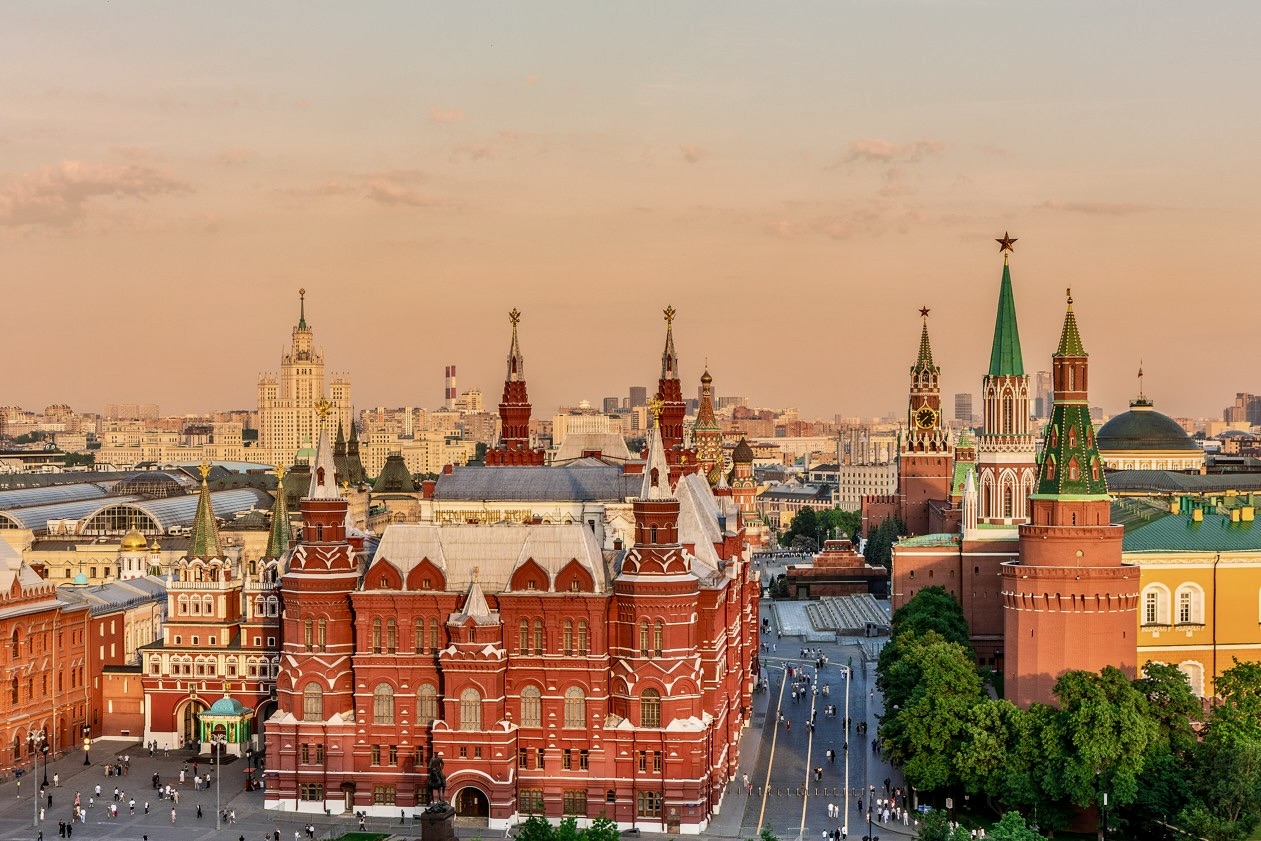
MOSCOW (Realist English). On September 5, Russia’s capital marks its 879th birthday. Nearly nine centuries of history — from the first chronicle mention in 1147 to its status as one of the world’s largest megacities — have encompassed “many glorious and heroic deeds,” as Moscow Mayor Sergei Sobyanin noted in his congratulations.
The tradition of celebrating City Day, however, did not emerge in ancient times but only in the 19th century — and since then has experienced both neglect and revival.
Where Moscow Came From: 1147 as a Starting Point
The first chronicle mention of Moscow is taken as the starting point of the city’s history. The Ipatiev Chronicle records: “On the Friday of the Praise of the Holy Mother of God, Prince Yuri Dolgoruky received in a town called Moscow his friends and allies, led by the Novgorod‑Seversky prince Svyatoslav Olgovich.”
For a long time, historians debated the exact date of Moscow’s founding: documents cited 1140, 1147 and 1156. However, in 1846, historian Ivan Zabelin, later the founder of the Historical Museum, calculated from Easter calendars that it was precisely on April 4, 1147, that Prince Svyatoslav Olgovich came “to Moscow” to meet Yuri Dolgoruky. Since then, 1147 has been the official date of the city’s birth.
The First City Day: An Imperial Ban and One Attempt
The first festivities dedicated to Moscow’s founding were organised in 1847, when the city’s 700th anniversary was celebrated. The initiators were Moscow patriots led by Mikhail Pogodin, publisher of the journal “Moskvityanin,” and the ideologue of Slavophilism, Konstantin Aksakov.
However, the celebration almost did not happen. The organisers planned three days of festivities, but Emperor Nicholas I deemed the Slavophiles’ idea unsubstantial and significantly cut the programme to one day. The celebration took place on January 13, 1847, but then was not observed for almost a hundred years.
1947: The 800th Anniversary and a New Tradition
The second birth of the holiday came in 1947, when Moscow prepared to celebrate its 800th anniversary. The festivities were scheduled for September 7, combining it with the anniversary of the Battle of Borodino. It was then that the tradition of celebrating City Day in September became established.
Since then, the holiday has become annual. In 1997, when Moscow turned 850, the celebrations were particularly grand: a carnival procession from Tverskaya Square to Novy Arbat, large‑scale concerts and folk festivities.
The current date of the holiday is not fixed to a specific day: according to the law of the city of Moscow, City Day is celebrated on the first or second Saturday of September — a rule that has been in place since 2016.
| Milestone | Date | Event |
| First mention | 1147 | Prince Yuri Dolgoruky receives guests “in Moscow” |
| 700th anniversary | 1847 | First City Day (January 13), curtailed by Nicholas I |
| 800th anniversary | 1947 | Festivities on September 7, tradition moved to autumn |
| 850th anniversary | 1997 | Grand celebration with a carnival procession |
| 879th anniversary | September 5–6, 2026 | Modern format: two days, hundreds of events |
Moscow Today: 879 Years and Two Days of Celebration
In 2026, City Day is celebrated on September 5 and 6 — the first weekend of autumn. Moscow has turned 879.
The city has been decorated with more than 3,500 flags and decorative structures. The main symbol of the festive decoration is the word “Moscow” and the number 879.
Flag structures adorned Tverskaya Street, Poklonnaya Hill, as well as Bolshoy Kamenny, Bolshoy Moskvoretsky, Krymsky, Borodinsky and other bridges. In Zaryadye Park, and on Lubyanka and Pushkin Squares, “Torch” structures with media facades broadcasting festive greetings were installed. On September 5 and 6, the architectural and artistic lighting of buildings operates in festive mode.
The festive programme covers dozens of venues across the capital. The main district venues include Tsaritsyno, Kolomenskoye, Izmailovsky Park, Novo‑Peredelkino, Zelenograd and Filimonkovsky District. Events are also taking place at VDNKh, Luzhniki, Zaryadye Park, museums and cultural spaces. In total, over 80 events are planned at VDNKh alone.
Central events of the programme:
- “Walking Day” Festival — participants complete a three‑kilometre route from Rostovskaya Embankment to Luzhniki.
- “Museum Mile” Run — a sports and culture run organised by the League of Military‑Applied Sports “League of Heroes” with the support of the city’s Department of Sport.
- Concerts at Tsaritsyno and Kolomenskoye — featuring the Moscow Jazz Orchestra of Igor Butman, the “Fonograf‑Sympho‑Jazz” Orchestra of Sergei Zhilin, and Bel Suono.
- Piano karaoke in Gorky Park, as well as an open‑air painting session with live music on Pushkinskaya Embankment.
- Parade of Historic Trams — on September 6, a column of 18 historic trams from different generations will travel through the city streets.
- “Cyber Zarnitsa” Festival with VR competitions and sports simulators.
- Night of Moscow Sports.
- Discounts of up to 50% at 25 city fairs.
- “Moscow Through Courtyards” project, dedicated to different decades of the capital’s life.
On City Day, Moscow transport hours are extended: on the night of September 5‑6, metro and MCC stations are open for entry until 2:00 a.m., and 17 tram routes will continue operating until 2:00 a.m.
Due to the heightened alert regime in effect in Moscow and the Moscow Region, a festive fireworks display is not included in the official programme of the authorities.
“Heart of Great Russia”: The Mayor’s Greeting
On the day of the 879th anniversary of the capital, Sergei Sobyanin addressed Muscovites with a video greeting.
“Dear Muscovites, I sincerely congratulate you on the birthday of Moscow. Today our city has turned 879 years old. Almost nine centuries, which have encompassed many glorious and heroic deeds. And today we continue the great traditions laid down by our fathers and grandfathers,” the mayor said.
He noted that Moscow has endured many trials, but each time it overcame hardships and grew stronger. “And it cannot be otherwise, because we are the main city of a huge country. We are the heart of great Russia,” Sobyanin emphasised, thanking Muscovites for their work for the benefit of the capital. The mayor paid special attention to participants in the special military operation and home‑front workers: “A low bow to everyone on the line of combat contact and in the rear who are bringing our victory closer.”
From 1147 to 2026: Nearly Nine Centuries of History
Moscow City Day is a holiday with a complicated fate. The first mention of Moscow in the chronicle dates to 1147, but the tradition of honouring the capital’s birthday itself emerged only in 1847.
For almost a century the holiday was not observed, and it received its second birth in 1947 — and since then has become one of the most beloved and grand city celebrations.
Today, September 5, 2026, Moscow celebrates its 879th birthday. As the mayor of the capital noted, “almost nine centuries, which have encompassed many glorious and heroic deeds,” continue — and each year City Day becomes another reminder of how a small “town called Moscow” grew into a capital known throughout the world.