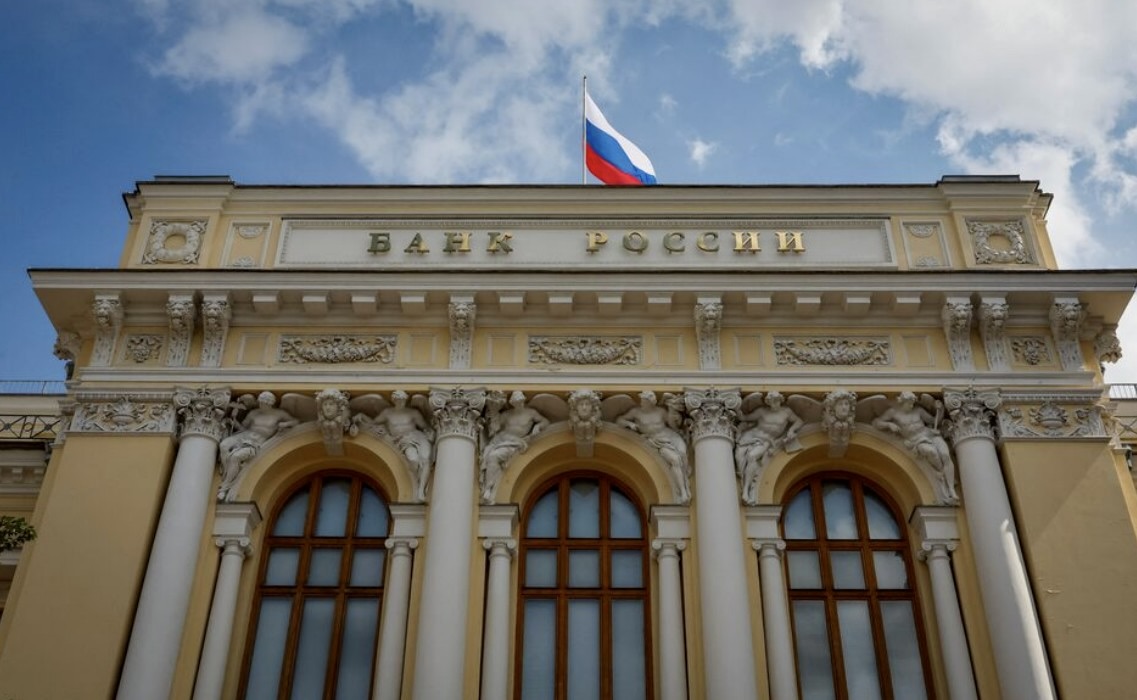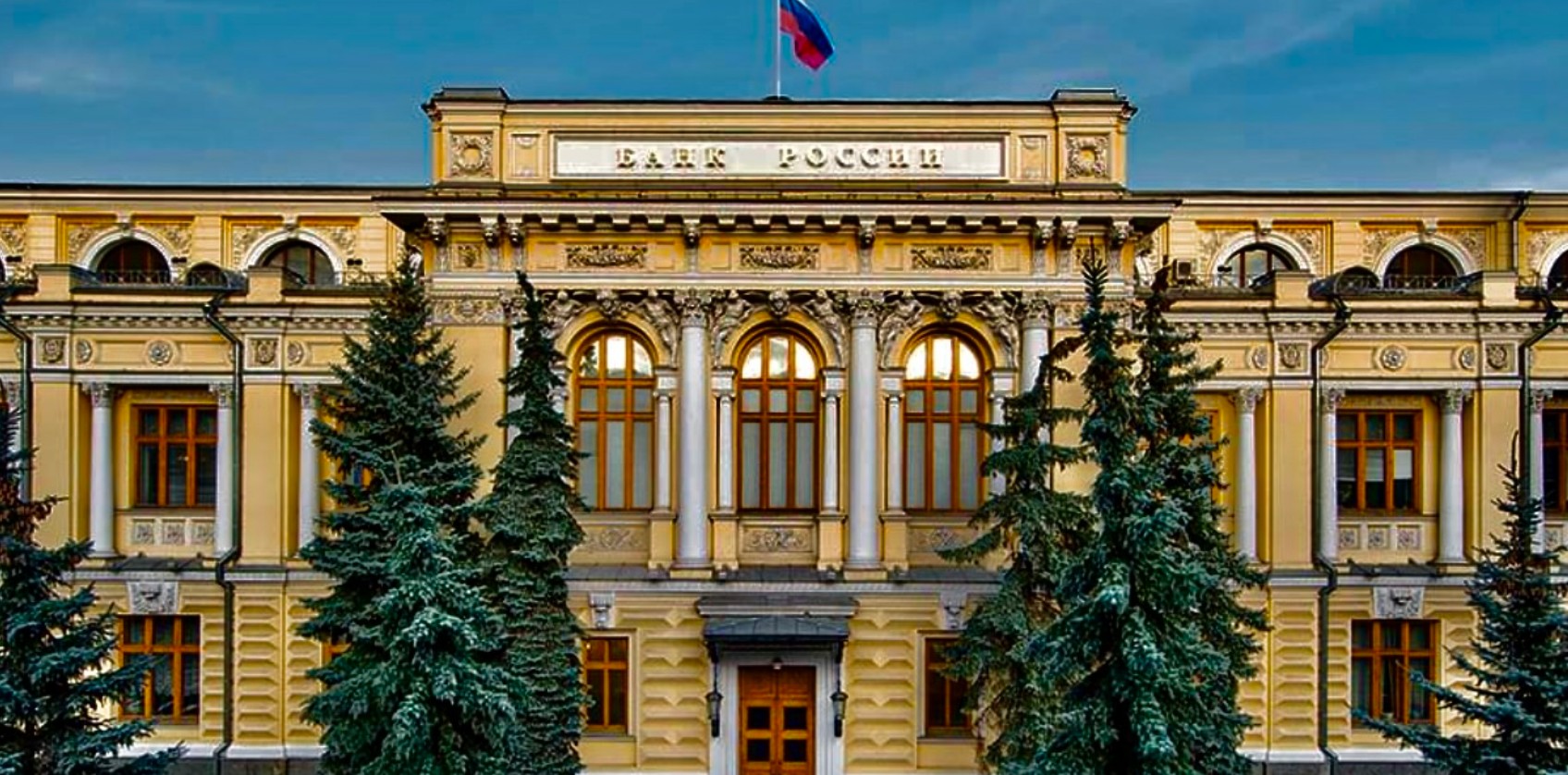
MOSCOW (Realist English). September 2026 became a turning point for Russia’s monetary policy: for the first time since April 2025, the Bank of Russia interrupted its key rate-cutting cycle, leaving it at 14% per annum, citing rising pro-inflationary risks and weakening tightness of monetary conditions.
At the same time, Urals crude rose above $110 per barrel, significantly improving budget prospects, but so far this has not translated into ruble strengthening.
Ruble Exchange Rate: Weakening Amid Sanctions Pressure
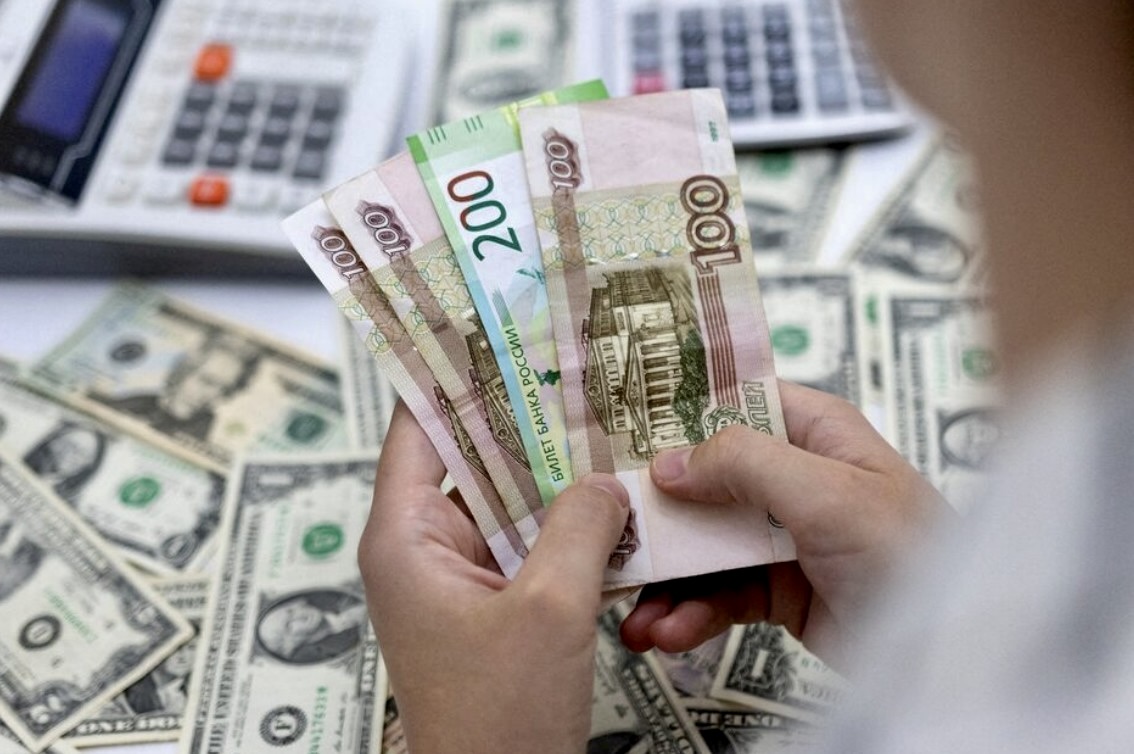
The official US dollar exchange rate set by the Central Bank from September 19 was 84.1975 rubles. By September 24 it had risen to 84.3969 rubles, and by September 25 — to 84.9057 rubles. Thus, during the week from September 19 to 25, the ruble weakened by about 0.8%.
Pressure on the Russian currency comes from a new sanctions package: on September 18, US President Donald Trump signed the Lindsey O. Graham Sanctioning Russia and Iran Act of 2026, which codifies the ban on US persons purchasing Russian sovereign debt and imposes sanctions on the Bank of Russia, Gazprombank, and VTB. In addition, the EU’s 16th sanctions package disconnected 13 Russian banks from SWIFT.
At the same time, PSB analysts note a trend toward moderate ruble strengthening: by the end of the week, the yuan/ruble pair may test the lower boundary of the 12.3–12.8 rubles per yuan range. Natalia Vaschelyuk, senior analyst at Pervaya Management Company, forecasts a range of 83–85 rubles/$1 in the coming week.
Central Bank Policy: Pause After Ten Consecutive Cuts
At its September 11 meeting, the Bank of Russia’s board of directors decided to keep the key rate at 14% per annum, interrupting a series of ten consecutive cuts. In its baseline scenario, the Central Bank expects annual inflation to be 6.0–7.0% in 2026 and to return to the 4.0% target in 2027.
Sovcombank analysts had forecast this decision, pointing to accelerating inflation, including in persistent components, elevated inflation expectations, a second wave of difficulties in the fuel market, and ruble weakening. In their assessment, seasonally adjusted inflation in July was 11.6%, and core inflation rose to 7% from 5.3% in June.
Following the September meeting, the Central Bank agreed that a pause in rate changes was justified given current macroeconomic conditions. In the baseline scenario, analysts expect a 25 b.p. cut to 13.75% at the October 23 meeting, but risks are skewed toward a higher rate.
Inflation: Slowing, But Insufficient to Return to Target
According to Rosstat, for the period from September 15 to 21, 2026, the consumer price index was 100.06%, since the start of the month — 100.13%, since the start of the year — 104.81%. Annual inflation as of September 21 slowed to 6.26% (by the Central Bank’s methodology) and to 6.22% (by the Ministry of Economic Development’s methodology).
Weekly inflation accelerated: from September 8 to 14 it was 0.02%, and from September 15 to 21 — already 0.06%. Prices for chicken eggs rose by 2.4%, for canned vegetables — by 1.0%. At the same time, fruit and vegetable products fell in price by 1.6%, including potatoes — by 3.4%, cabbage — by 3.3%, carrots — by 3.0%.
The consensus forecast of analysts in September showed an increase in inflation expectations: the forecast for average inflation in 2026 rose from 6.0% to 6.0%.
Money Supply: Growth Above Central Bank Forecast
The ruble money supply (M2) increased by 1.0% in August and as of September 1, 2026, amounted to 137.1 trillion rubles. The annual growth rate of M2 slowed to 12.8% (13.0% in July), but still exceeds the Central Bank’s forecast for 2026 of 7–12%.
Central Bank analysts in the review “What the Trends Say” noted that “the persistence of high money supply growth in July indicates the presence of significant pro-inflationary risks and points to a weakening of the tightness of monetary conditions.”
The M0 monetary aggregate as of September 1 amounted to 20.7 trillion rubles, M1 — 62.6 trillion rubles. Broad money supply (M2X) reached 151.0 trillion rubles. The main source of money supply remains the banking system’s claims on organizations and households: their contribution to the annual growth of M2X amounted to 15.1 trillion rubles.
Russian Urals crude in mid-September rose to $107–110 per barrel, and at one point — to $121 per barrel. According to Finam and LSEG estimates, the ruble price of Urals rose to 9,500–10,000 rubles per barrel, almost double the Ministry of Finance’s baseline benchmark of $59 per barrel for tax calculation.
However, by September 23, Urals had fallen to about $107 per barrel amid new US sanctions and the gradual restoration of Saudi oil supplies. The new draft Russian budget assumes an average Urals price of $50 per barrel.
Minister of Economic Development Maxim Reshetnikov stated that the average dollar exchange rate in 2026 will be 79.5 rubles, which implies a rate of 84.9 rubles in September–December.
Assessment
The Central Bank’s September pause is not a reversal, but a forced stop. The money supply is growing faster than forecast, core inflation is accelerating, and ruble weakening adds imported pressure.
Record Urals prices improve the budget picture, but sanctions against the Bank of Russia, VTB, and Gazprombank limit the financial system’s capabilities.
The key question is whether the Central Bank can keep the rate at 14% until the end of the year or will be forced to return to raising it. So far, the signals point to cautious neutrality, but risks are skewed toward tightening.