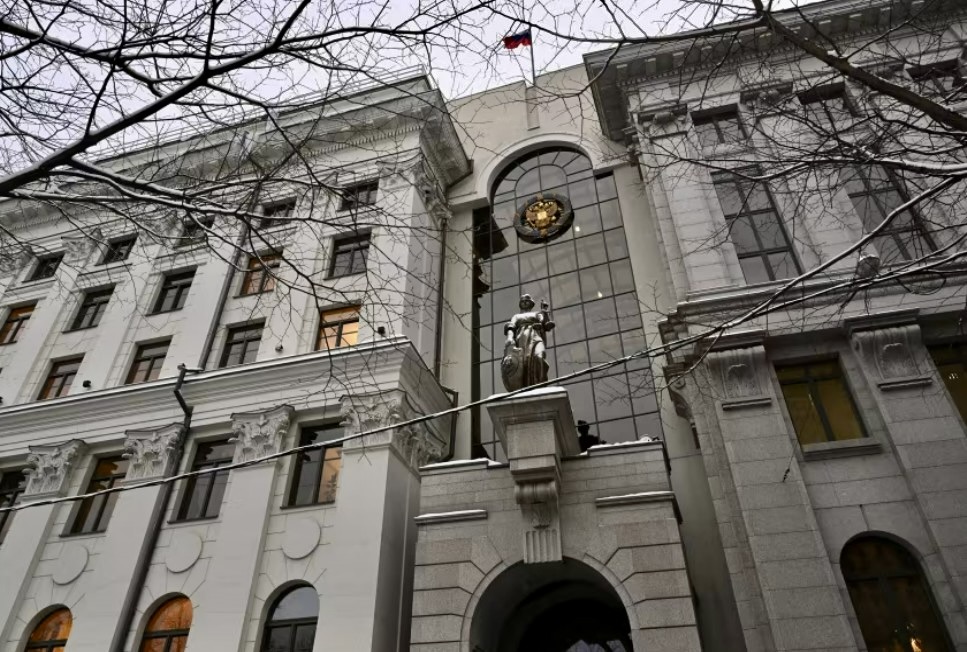
MOSCOW (Realist English). The Supreme Court of Russia has approved the Concept for the Introduction of Artificial Intelligence Technologies in Judicial Proceedings (Order No. 59-P dated September 3, 2026).
The document is aimed primarily at reducing the risks of using AI and enshrines the auxiliary role of neural networks while preserving the leading role of the judge in decision-making.
Targets by 2030
The concept sets specific benchmarks for the introduction of AI into the judicial system. By 2030, the share of judges permanently using judicial services with AI applications must exceed 95%.
The share of court hearing minutes prepared using AI must exceed 90%. The share of procedural document drafts generated with the help of AI must reach 30–50%.
In addition, the document envisages increasing the accuracy of evidence analysis and identification of contradictions to more than 90% and reducing the number of complaints and reversals of judicial acts by 15–20%. According to Supreme Court estimates, the use of AI services will reduce the time for considering simple cases by one third.
Principles of AI Use
The concept enshrines eight basic principles for the use of neural networks in judicial proceedings:
| Principle | Content |
| Protection of rights and freedoms | Prevention of violation of rights and discrimination |
| Auxiliary nature | AI helps, but the judge makes the decision |
| Legality | Application exclusively within the framework of the law |
| Transparency and controllability | Algorithms are understandable, every interaction is recorded |
| Quality and reliability | Data from official sources, without errors |
| Public order and ethics | Compliance with public interests |
| Confidentiality | Protection of personal data |
| Technological independence | Priority for domestic solutions |
Stages of Introduction: From Registration to Enforcement
AI is planned to be used at all stages of judicial proceedings:
Primary processing of documents. Automatic registration of incoming correspondence, determination of the case category, verification of document completeness, jurisdiction, calculation of the state duty. This will reduce the share of returned applications and the burden on court staff.
Intelligent analysis and classification of cases. Classification of cases by category and complexity, distribution among judges taking into account workload and specialization, automatic generation of reporting.
Support for court hearings. Minutes based on speech recognition with speaker identification, simultaneous interpretation, provision of relevant judicial practice to the judge in real time.
Work on the case. Analysis of circumstances, evidence and positions of the parties, identification of contradictions, preparation of a brief summary before the hearing, formation of a chronology of events, warning about deviation of a draft decision from emerging practice.
Pilot Project: Four Language Models
Currently, four large language models are being piloted in Russian regions; they are trained on the legal positions of the Supreme Court and practice-forming judicial decisions. As Igor Krasnov stated at the Forum of Chairmen of Supreme Courts of BRICS Countries in New Delhi (September 4–6), the goal of introducing neural networks is to achieve uniformity of judicial practice, eliminate logical contradictions, avoid judicial errors and increase the predictability of justice.
The models are hosted on isolated servers, with priority given to full confidentiality and prevention of leakage of materials. The list of pilot regions and the models being tested are not disclosed.
Mandatory Labeling of Documents Created with AI
A separate area of regulation has become the requirement for participants in proceedings to label documents created using AI. Resolution of the Plenum of the Supreme Court No. 15 dated May 21, 2026 (paragraph 4, clause 42) obligated persons who submitted to the court information about facts obtained using artificial intelligence technologies to inform the court about this.
This rule appeared after a precedent: in May 2026, the Arbitration Court of the West Siberian District fined a company 50,000 rubles for contempt of court. In a cassation appeal, the defendant cited judicial practice with case details and quotations that, as it turned out, had been generated by a neural network — some decisions did not exist, and the existing ones did not contain such quotations.
The key position of the court: the use of technologies does not relieve one of the obligation to verify and does not change the standard of good faith of a participant in proceedings. The procedural risks of parties who relied on AI and did not verify its outputs are increasing.
Center for Judicial Competencies and Ethical Principles
A Center for Judicial Competencies in the Field of Artificial Intelligence has been created at the Supreme Court, responsible for implementing the concept, identifying best practices and interacting with the academic community and the IT sector.
Supreme Court judge Denis Kunev, who previously headed the Information and Analytical Department of the Prosecutor General’s Office, was appointed its head.
The Supreme Court, in cooperation with the largest Russian AI developers, has formed ethical principles for the use of neural networks in justice. Igor Krasnov emphasized: “Artificial intelligence is a tool in the hands of a judge, an assistant, but not a subject of justice and certainly not a judge. The decision in a case, the assessment of evidence, the establishment of truth and the application of law are an act of human judgment based on law, conscience, and the principles of independence and fairness.”
Initiative for BRICS
At the Forum of Chairmen of Supreme Courts of BRICS Countries, Igor Krasnov proposed forming a permanent working group of the supreme courts of the association’s countries on the use of AI in justice, as well as developing common ethical principles.
According to him, this should be a framework document reflecting common values: the independence of the judge, the right of the parties to know the grounds for the decision taken, and the inadmissibility of delegating the final judgment to an algorithm.
In addition, Krasnov proposed organizing regular reciprocal internships and training programs for judges and court staff of BRICS states on digital competencies.