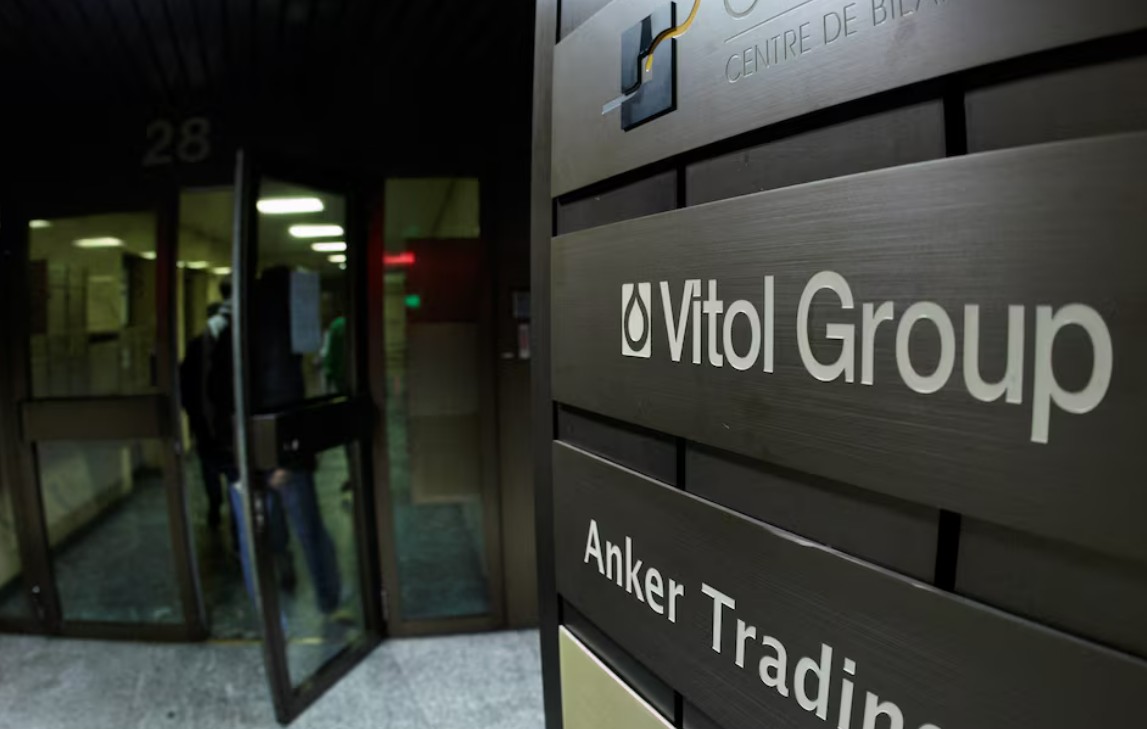
LONDON (Realist English). Yaoyao Liu, one of the world’s most renowned oil traders, will leave Vitol Group, the largest independent commodity trader, by the end of the year. The Wall Street Journal reports this, citing sources familiar with the situation.
What happened
Liu and his team incurred losses of several hundred million dollars at the start of the war with Iran, making incorrect bets on diesel and oil prices. According to sources, among the losing positions were bets that diesel would rise in price relative to aviation kerosene, and that Dubai oil would fall relative to benchmark Brent.
The logic behind these bets was based on the expectation that the Trump administration would retreat from military confrontation and avoid direct conflict. However, after US and Israeli strikes on Iran and the de facto closure of the Strait of Hormuz, prices moved in the opposite direction: in the first week of the conflict, Singapore aviation kerosene rose in price by more than 70%, and Dubai oil soared to a historic high of $169.75 per barrel.
Part of the losses was subsequently offset by adjusting positions, and according to sources, Vitol remains profitable overall for the year.
Who is Yaoyao Liu
Liu was born in China, graduated from Cambridge University with a degree in chemical engineering, published a paper on quantum chemistry, worked at Goldman Sachs, and joined Vitol in 2012. In 2022, he earned about $2 billion for the company trading energy derivatives. His team of analysts and traders in Dubai, London, and Houston functioned as an internal hedge fund, and his positions were kept secret even within the company so that competitors and colleagues could not use this information.
The Iran war radically changed the balance of power in commodity markets. While Liu’s team was losing money, competitors — Trafigura, the trading arms of BP and TotalEnergies — profited from supply disruptions. The closure of the Strait of Hormuz cut global supplies by about 10 million barrels per day, causing extreme volatility, especially in the aviation kerosene market, where storage is scarce and demand is steady.
For Vitol, this is not the only problem related to the war. Two fuel vessels chartered by the company were attacked in the Persian Gulf, and one crew member died. The company was unable to remove already purchased oil and LNG from the region and was forced to seek alternative supplies.
Liu’s departure is a rare case of a trader of such caliber publicly acknowledging defeat. His reputation was built on large, often profitable bets, and competitors tried for years to copy his strategy.
But the war with Iran showed the limit even for the most informed players: when the decision to start a conflict is made in Washington rather than in the market, no analytics and no data guarantee a correct forecast.
For Vitol, Liu’s departure means the loss of a key source of profit in the derivatives segment. The company is already restructuring its London team, planning to integrate traders into physical divisions.
This may reduce revenue volatility but simultaneously limit Vitol’s ability to profit from market dislocations — the very ones on which the company earned in 2022. The question is whether Liu’s mistake was an isolated one or a signal that the “internal hedge fund” model has stopped working in conditions where geopolitics outweighs market signals.