BRUSSELS (Realist English). The European Union plans to launch an Arctic monitoring program in 2027 as part of a broader strategy to strengthen regional ties and counter the growing ambitions of the US and Russia. Bloomberg reports this, citing a document obtained by the agency.
What the program envisages
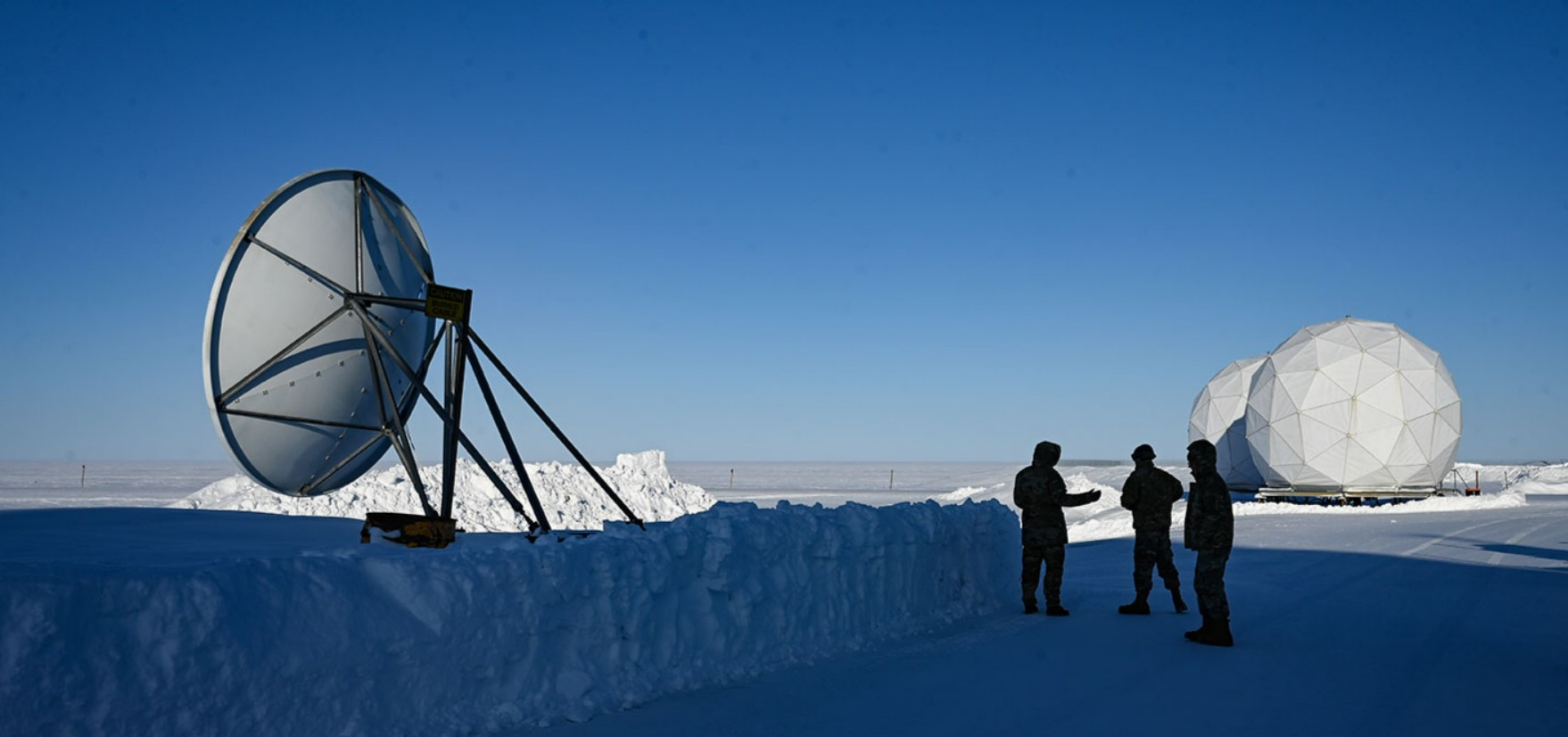
According to the draft of the EU’s new Arctic strategy, which is to be made public on October 19–25, the pilot program will expand the Copernicus and Galileo satellite systems to detect threats in the Arctic on land and at sea. This is the first concrete mechanism outlined in the document, which is expected to define Brussels’ priorities in the region for the coming years.
Summit in Rovaniemi
The EU’s plans to strengthen its presence in the Arctic took shape after the European Arctic summit held on September 13–14 in the Finnish city of Rovaniemi. Twelve countries, including Germany, France, Denmark, and Sweden, called on the European Union to “take on a more strategic and proactive role in the European Arctic.”
In the joint declaration, Russia was named a “significant and long-term threat” to Euro-Atlantic security. Participants pointed to the growth of Moscow’s hybrid activities, including sabotage against underwater cables, cyberattacks, and disinformation campaigns. Finnish Prime Minister Petteri Orpo said Russia is “playing a dangerous game” and that in the Arctic, as in the Baltic, there is a threat of sabotage of underwater infrastructure.
Double containment
The peculiarity of the situation is that the EU has to balance between two challenges. On the one hand — Russia, which has the longest Arctic border and the largest icebreaker fleet. On the other — the US: President Donald Trump has repeatedly threatened to establish control over Greenland, an autonomous territory of Denmark, which has caused a diplomatic crisis among Western allies.
Danish Prime Minister Mette Frederiksen confirmed that consultations with the US on Greenland are ongoing and expressed hope for reaching an agreement. However, European leaders made clear they have not forgotten Trump’s threats. European Council President António Costa emphasized: “What happens here is not a regional story. It is a European question.”
Economic dimension
Beyond security, the strategy covers economic interests. The summit’s joint declaration mentions critical raw materials, space technology, shipping, interconnectivity, and tourism. German Chancellor Friedrich Merz said the Arctic offers “enormous opportunities” in rare earth metals, energy, and maritime transport.
A separate issue is the icebreaker fleet. EU High Representative for Foreign Affairs Kaja Kallas said the bloc needs “icebreakers or vessels capable of sailing in such difficult conditions.” Finland is considered one of the countries with the greatest expertise in building such vessels; the US and Canada have already placed an order in Finland for 11 icebreakers worth more than €6 billion.
The EU’s Arctic strategy is an attempt to turn a region that has long remained on the periphery of European politics into a full-fledged direction. The satellite monitoring program is the first step: it gives Brussels its own monitoring tool, independent of NATO and national intelligence services.
However, implementation will face the same problems as other EU defense initiatives: coordination among 27 countries, finding financing, and competing for priorities in the multiannual budget for 2028–2034.
In addition, the strategy cannot ignore a fundamental contradiction: Europe seeks to contain Russia in the Arctic but at the same time depends on the US for security — even when Washington itself creates tension around Greenland. Until this contradiction is resolved, the EU’s Arctic ambitions will remain largely declarative.