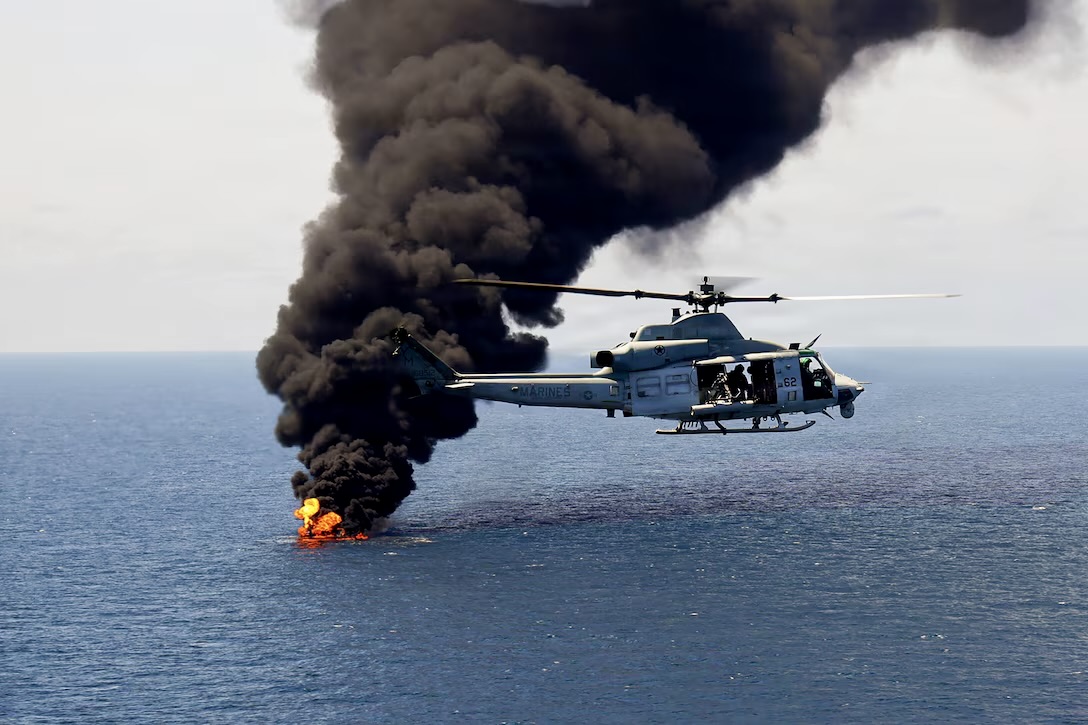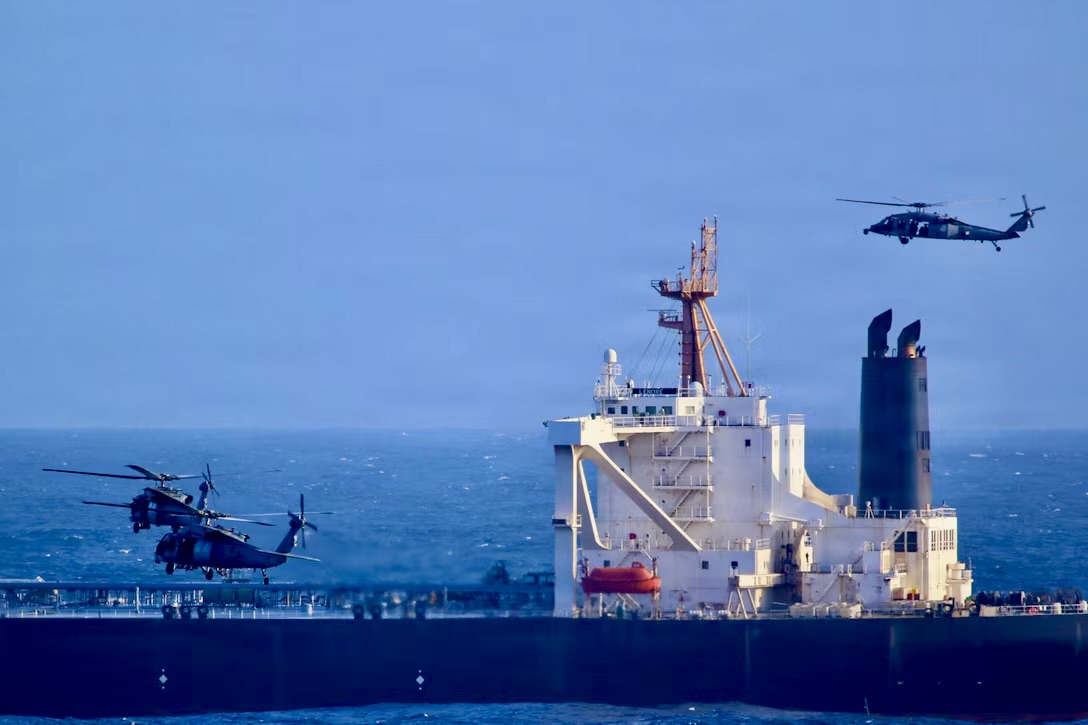
TEHRAN (Realist English). On June 5 and 6, the United States and Iran exchanged massive strikes.
US Central Command (CENTCOM) reported that US forces intercepted four Iranian kamikaze drones over the Strait of Hormuz that posed an “immediate threat to regional maritime traffic.” In response, US aircraft struck Iranian coastal surveillance radar sites in Goruk and on the strategically important Qeshm Island.
At the same time, Iran launched seven ballistic missiles at US bases in Kuwait and Bahrain. According to CENTCOM, six missiles were intercepted and the seventh missed its target. Reports that the headquarters of the US Fifth Fleet in Bahrain had been hit were called “false” by the Pentagon.
New Interceptions and Strikes on Radars
On June 7, CENTCOM announced it had intercepted and destroyed two Iranian drones that posed a threat to international shipping in the Strait of Hormuz. These actions were a response to the ongoing Iranian blockade of the strategic waterway. US military officials confirmed they remain on high alert and are ready to repel any further threats in the region.
The Islamic Revolutionary Guard Corps (IRGC), for its part, claimed it had attacked “enemy bases” in the Persian Gulf in response to US strikes on Sirik and Qeshm Island.
Reaction from Allies and Mediators
Kuwait, where air raid sirens sounded five times overnight, confirmed that its air defenses had intercepted missiles and drones. Kuwait’s Foreign Ministry called the actions “an outrageous act of aggression.” Air raid alerts were also declared in Bahrain, and residents were told to take shelter.
Against this backdrop, Pakistan’s Interior Minister Mohsin Naqvi arrived in Tehran on June 6 on another peace mission to deliver a new message to Iran’s Supreme Leader Ayatollah Mojtaba Khamenei.
Main Stumbling Blocks
The escalation is taking place amid prolonged and unsuccessful attempts to extend the ceasefire and conclude a long‑term agreement. Despite Donald Trump’s public optimism — he stated on his Truth Social platform that “negotiations are moving at a rapid pace” — the sides remain far from a compromise.
Frozen Assets: A “Test of Trust”
Tehran has firmly linked progress to the unfreezing of its overseas assets. Supreme Leader’s military adviser Mohsen Rezaei said in a CNN interview that negotiations are at an impasse and that $24 billion constitute a “test of trust”: $12 billion should be paid immediately after an interim agreement is signed, and the rest within two months. According to expert estimates, the total amount of frozen Iranian assets worldwide is about $100 billion.
In response, the Trump administration is reportedly considering using these funds to compensate US allies in the Gulf for damage caused by Iranian attacks.
Nuclear Dossier and the Strait of Hormuz
Key disagreements persist over the nuclear program and the status of the Strait of Hormuz. Trump has demanded that Iran put its nuclear concessions in writing, rejecting Tehran’s verbal assurances. Iran, for its part, has proposed freezing uranium enrichment for up to five years, while the US insists on a 20‑year moratorium.
A White House meeting to work out a “final solution” ended without concrete results. Trump demanded several more rounds of changes to the draft agreement. At the same time, the US president stated: “The only guarantee I need is that they don’t have nuclear weapons.”
The Lebanese Front — The Main Irritant
The situation in Lebanon remains a serious obstacle. On June 1, Tehran, through the Tasnim agency, announced the suspension of dialogue with mediators in protest against Israel’s ongoing operations in Lebanon. Iran demands an “immediate halt” to Israeli operations in Gaza and Lebanon, as well as the withdrawal of troops from occupied territories in northern Lebanon.
Tehran has stated that the ceasefire in Lebanon was one of the preliminary conditions of the April truce, and that a violation on one front is a violation on all fronts.
Who Is Not Ready to Compromise
US Position
The Trump administration continues to rely on “maximum pressure.” Trump has publicly stated that his priorities include preventing Iran from developing nuclear weapons and reopening the Strait of Hormuz.
At the same time, the president acknowledged that Iran retains significant military potential: in an interview with NBC News, he estimated that Iran’s remaining missile arsenal amounts to 21–22% of its original volume.
Trump also confirmed that the military operation against Iran was launched after Tehran rejected his demands in Geneva talks.
Iranian Position
Iran insists on an inseparable link between any settlement with the US and a ceasefire in Lebanon. Parliament Speaker Mohammad Baqer Ghalibaf said in a video address: “We will not approve any agreement until we are sure that the rights of the Iranian people are respected.”
Foreign Minister Abbas Araghchi added, “Until a clear conclusion is reached, everything being said now is speculation.”
Conclusions as of June 7
The situation around the US‑Iran standoff remains extremely tense. Mutual strikes are becoming increasingly regular, with Kuwait and Bahrain turning into recurring targets for Iranian retaliation.
The negotiation process is effectively frozen because of mutual demands: Washington seeks hard guarantees on the nuclear program and full control over the Strait of Hormuz, while Tehran ties progress to the unfreezing of assets and an end to the Israeli campaign in Lebanon.
Each new attack raises the risk of a complete collapse of the ceasefire and a return to full‑scale hostilities. The Pakistani mediator continues his attempts to salvage diplomacy, but the current exchange of threats and mutual shelling makes the prospect of a swift peace increasingly illusory.