WASHINGTON (Realist English). On July 11, Senator Lindsey Graham, the Republican from South Carolina, passed away at the age of 71. He was one of the most prominent and controversial figures in American politics over the past decades.
According to his press office, death occurred on the evening of July 11 following a “brief and sudden illness.”
NBC News reported that emergency services responded to a call regarding “cardiac arrest” at Graham’s home in Washington.
Graham was known for his long career in Congress, which spanned more than three decades. His Senate service was marked by a sharp evolution in his political views: from a critic of Donald Trump during the 2016 presidential campaign to one of the president’s most influential and loyal allies.
From Rural South Carolina to the Heights of Power
Lindsey O. Graham was born on July 9, 1955, in Central, South Carolina. His parents owned a small restaurant and pool hall. Tragedy struck Graham at an early age: by 22, he had lost both parents and became the legal guardian of his younger sister.
He was the first in his family to earn a college degree, graduating from the University of South Carolina with degrees in psychology and law.
Military career. In 1982, Graham joined the US Air Force as a military lawyer. In 1995, he joined the Air Force Reserve and retired in 2015 with the rank of colonel, having served a total of 33 years.
Political career. Graham’s political path began in 1994 when he was elected to the US House of Representatives from South Carolina’s 3rd district. In 2002, he was elected to the Senate and re‑elected in 2008, 2014 and 2020. He served as Chairman of the Senate Judiciary Committee (2019–2021) and later as Chairman of the Budget Committee. In 2015, Graham made an unsuccessful bid for the Republican presidential nomination.
Political Positions and Legacy
Throughout his career, Graham established himself as one of the most vocal “hawks” on national security and foreign policy. He consistently advocated for strengthening US military power and taking a hard line against Russia, Iran and China. Graham was one of the key authors of anti‑Russia sanctions bills.
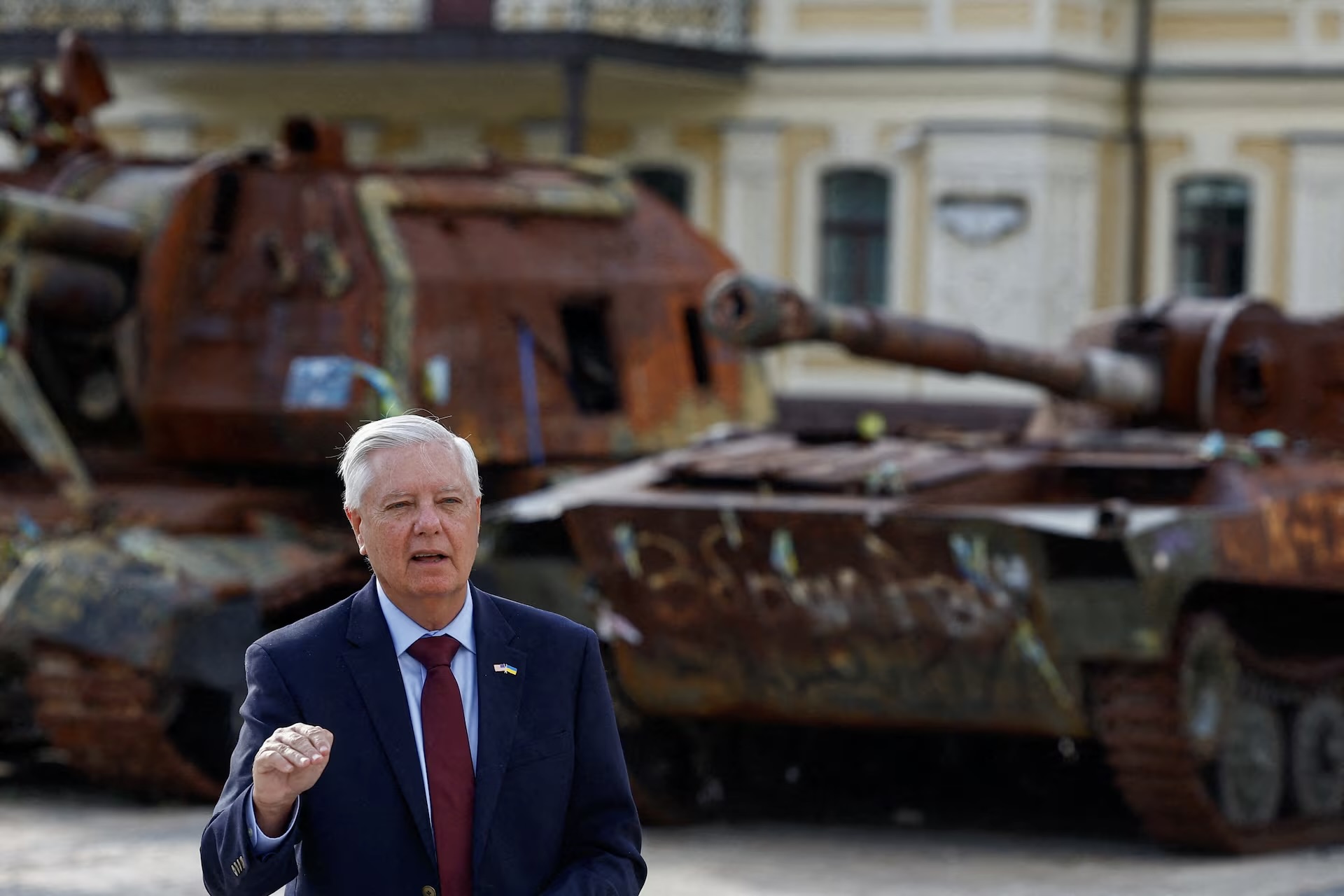
A particularly notable part of his political biography was his support for Israel, for which he earned a reputation as one of the most committed allies of the Jewish state in Washington. He also actively supported Ukraine — just a day before his death, on July 10, Graham met with President Volodymyr Zelensky in Kyiv.
Reaction and Consequences
Graham’s death leaves a vacancy in the Senate, which will be filled according to South Carolina law. His death also deprives the Republican Party’s hawkish wing of one of its most influential voices.
A statement from his office said: “Senator Graham’s family appreciates prayers at this time and asks for privacy during this incredibly difficult period.”