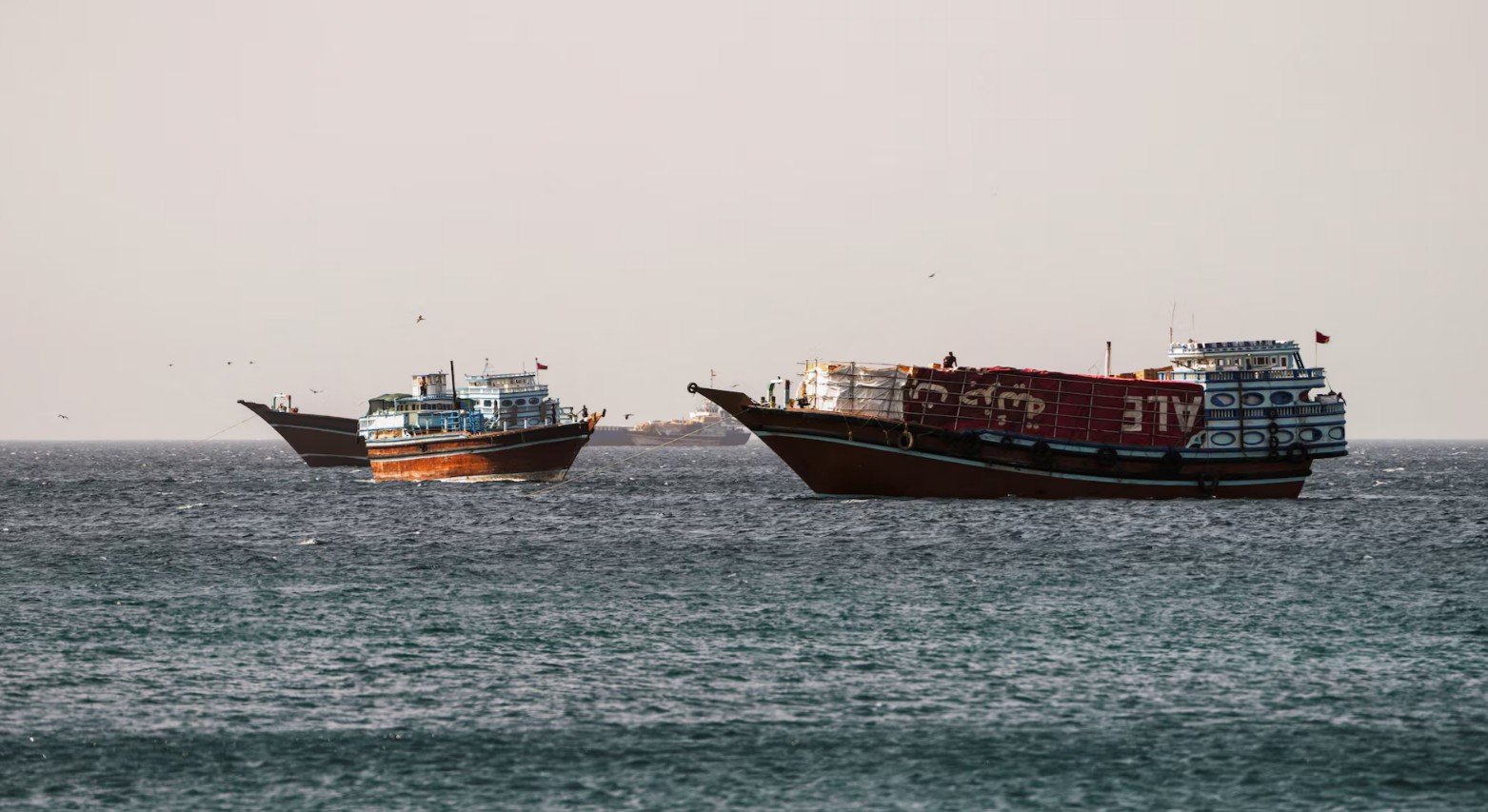
DUBAI (Realist English). On 19–20 September, only 12 vessels passed through the Strait of Hormuz, according to Kpler. On 20 September, four vessels were recorded: two product tankers and two empty bulk and gas carriers. On 19 September, five vessels left the Gulf with agricultural products, liquefied petroleum gas, and fertilisers, while an empty large-tonnage gas carrier entered the Gulf.
Scale of the Traffic Collapse
The contrast with the pre-war level is colossal: before the start of the US-Israeli war with Iran on 28 February, about 125 large commercial vessels passed through Hormuz daily. According to the UK Maritime Trade Operations (UKMTO), shipping intensity remains 90% below the pre-war level.
A week earlier, 35 vessels passed through the strait, which was already considered a low figure. The current 12 vessels over two days is a new minimum.
“Shadow” Exports with Transponders Switched Off
Despite the visible lull, Middle Eastern producers continue to export oil. Many tankers sail with transponders switched off, making them invisible to tracking systems. According to Lloyd’s List Intelligence, in mid-September analysts tracked 17 ship-to-ship transfer operations near the strait, with some operators conducting them during the day rather than under cover of darkness.
Saudi Arabia has increased oil exports through the strait after attacks disrupted the operation of its East–West pipeline: according to Kpler, Saudi oil exports in September recovered to more than 4 million barrels per day. In the week from 13 September, 13 tankers carrying approximately 34 million barrels of oil passed through the strait.
Attacks on Vessels Continue
Shipping security remains critical. On 18 September, the Islamic Revolutionary Guard Corps claimed an attack on the tanker Trend, sailing under the flag of Togo, which was attempting to pass via an “illegal” route. A fire broke out on board, and the vessel was stopped. The IRGC threatened that vessels passing without permission would be “destroyed.”
This is already the fourth attack on shipping in the strait in 11 days and the first in September to result in injuries. Two crew members received minor injuries. Since 28 February, when Iran began attacking commercial shipping, 14 sailors and one port worker have died.
Causes of the Crisis
Iran established de facto control over the Strait of Hormuz after the start of the war with the US and Israel on 28 February. Tehran requires vessels to obtain permission and pay fees for passage. In response, the US organised a naval blockade of Iranian ports. The parties regularly issue contradictory statements about control over the strait.
In parallel, the Houthis in Yemen have seized control of the Bab-el-Mandeb Strait — the southern entrance to the Red Sea. As Chatham House researcher Farea Al-Muslimi noted, Iran now controls both strategic chokepoints of the Middle East.
Economic Consequences
Brent crude oil prices remain above $100 per barrel, with a peak of $126 in March. Average diesel prices in the US exceeded $6 per gallon for the first time.
War risk insurance premiums have risen from 0.125% of a vessel’s hull value per transit before the war to 0.2–0.4%, and since 5 March, protection and indemnity cover has been withdrawn. More than 600 vessels, mostly tankers, were stranded in the Persian Gulf in May, with another 240 waiting outside.
Reaction of the International Community
Qatar has called on the international community to prevent the blocking of international waterways from becoming the “new normal.” Qatari Foreign Ministry spokesman Ibrahim bin Sultan Al-Hashmi stated that the world has already suffered enough from the closure of the Strait of Hormuz and cannot afford additional disruptions in Bab-el-Mandeb.