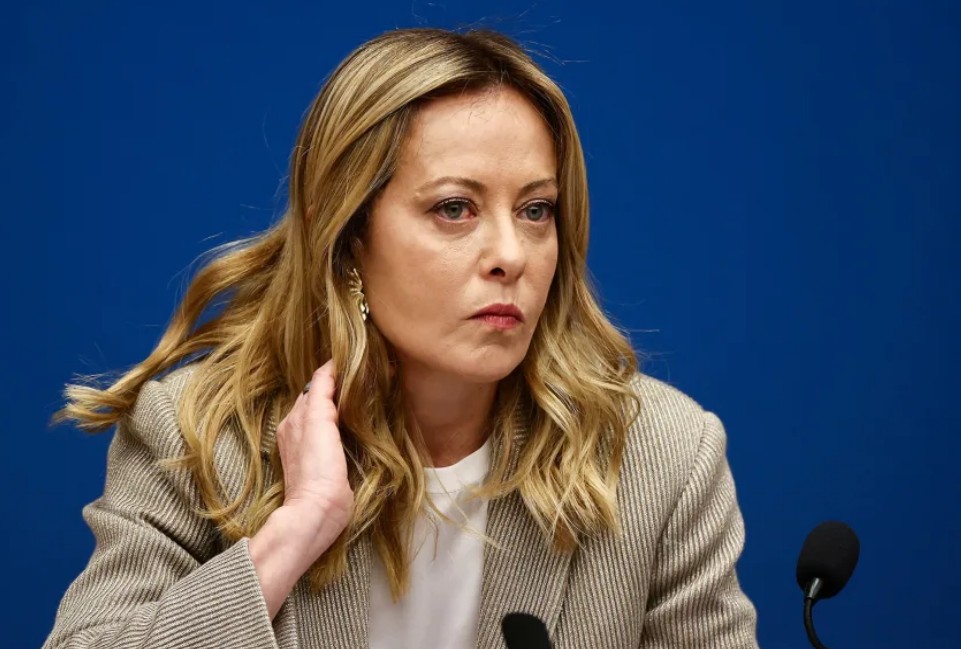
ROME (Realist English). Italian Prime Minister Giorgia Meloni, at the annual event of the youth wing of the Brothers of Italy party, announced a forthcoming tightening of school policy. According to her, the bill provides for three key provisions.
Ban on Face-Covering Clothing
Burqas and niqabs will be banned in schools. Meloni stressed: “You must go to school with your face uncovered, and in Italy no one, in the name of a real or imagined tradition, can decide that a young woman should hide herself.” At the same time, the ban does not apply to the hijab — the traditional headscarf that covers the hair but leaves the face open.
Limit on Foreign Students per Class
A maximum number of foreign students per class will be established by law. Meloni did not specify the exact figure. She justified this by integration problems: “If there is only one child in the class who does not understand Italian, he will most likely be able to learn the language and integrate quickly with the help of classmates and teachers. However, if the number of children who do not understand the language becomes large — or even a majority — that is no longer integration, that is neglect.”
Compulsory Language Learning for Parents
Parents of foreign students experiencing “serious difficulties with integration into the school system” will be obliged to learn Italian.
Italy and Migration Flows
Italy is one of the European countries most exposed to migration flows due to its central position in the Mediterranean. The integration of migrants, especially from Muslim-majority countries, remains one of the most contentious topics in Italian politics.
According to the research institute Fondazione ISMU, students who are not Italian citizens make up 11.6% of the total number of pupils — almost 12 out of every 100.
At the same time, a limit on foreign students already exists: since 2010 it has been set at 30% of the class and of the school’s total number of pupils. The limit may be raised for children with good language knowledge or lowered for poor command of Italian.
Politics and Elections
Meloni’s statement came against the backdrop of upcoming general elections and growing competition from the new far-right party “National Future” (Futuro Nazionale), which takes an even tougher anti-immigration stance and demands a ban on burqas and niqabs in schools. Analysts note that Meloni, whose party has roots in the far-right spectrum, is seeking to strengthen her position among right-wing voters.
Comparison with Europe
Bans on face-covering clothing in public places are in force in France (since 2011), Belgium (since 2011), Bulgaria, Austria (in schools — since September 2026), Denmark, the Netherlands, and Switzerland. In Austria, in particular, girls under 14 are prohibited from wearing any veil in school that “covers the head in accordance with Islamic traditions.”
What Next
After approval by the government, the bill must be approved by parliament within 60 days to enter into force. Italy already has a 1975 law prohibiting the wearing of helmets or clothing that obstructs identification without good reason; however, in 2008 the highest administrative court clarified that face-covering veils may be worn for religious or cultural reasons, provided the face is uncovered for identity verification.