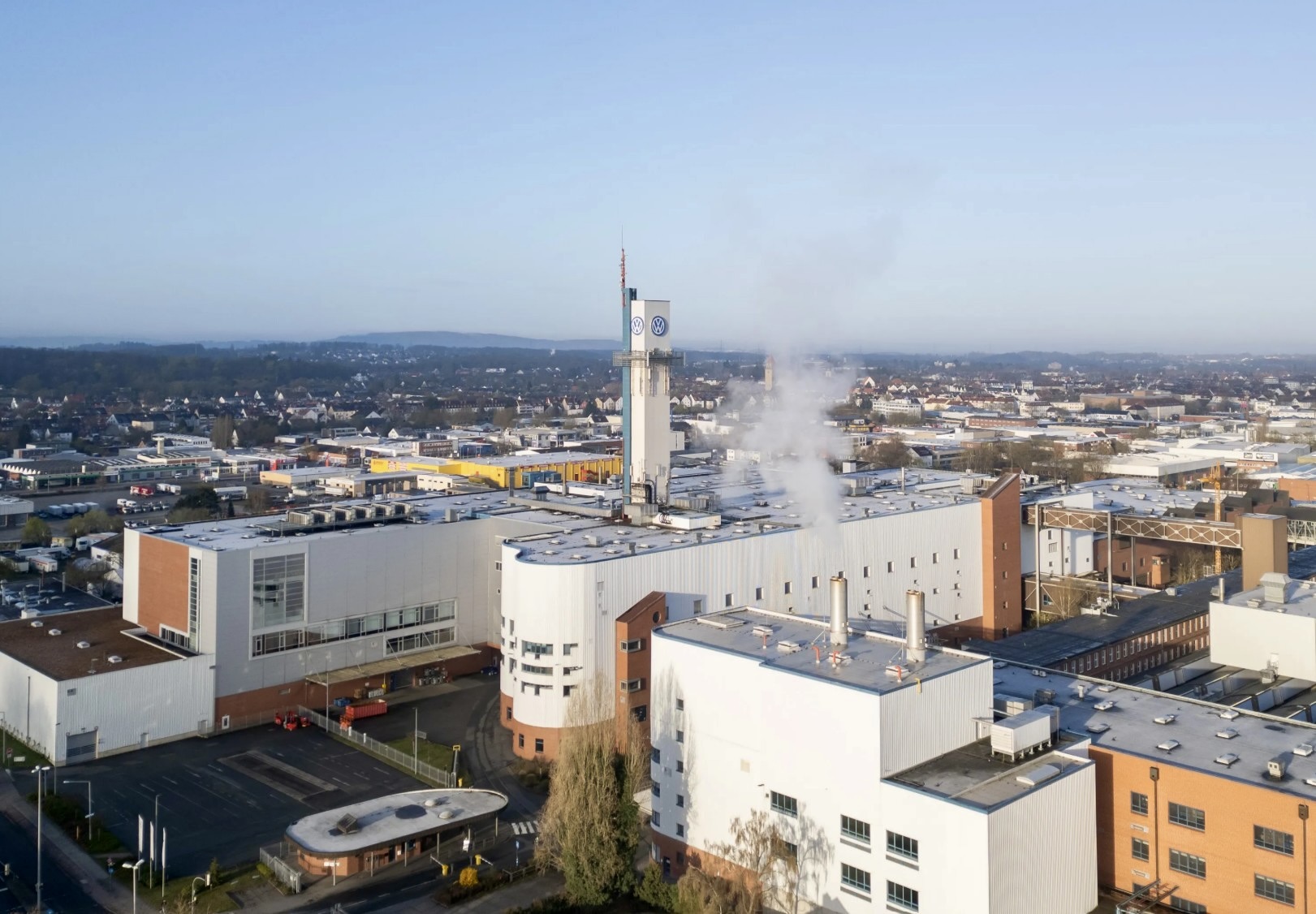
OSNABRÜCK (Realist English). Volkswagen, Europe’s largest automaker, stands on the brink of a historic transformation: the company is in talks with Israeli defence firm Rafael Advanced Defense Systems about repurposing its Osnabrück plant to produce components for the Iron Dome air defence system.
The deal, which could save 2,300 jobs, has encountered opposition from a key Volkswagen shareholder — Qatar, which is against cooperation with the Israeli state‑owned company. In response, the authorities of Lower Saxony are considering buying part of the plant to establish a joint venture with Rafael, bypassing the Qatari veto.
From Cabriolets to the Iron Dome: What’s Behind the Deal
At the centre of the talks is Volkswagen’s Osnabrück plant, which currently produces the T‑Roc cabriolet. At the end of 2024, the company decided to end passenger car production at the site by the end of 2027. Some 2,300 jobs were under threat.
A potential lifeline emerged in the form of a deal with Israeli defence contractor Rafael. Under the plan, the plant would shift to producing components for the Iron Dome — launchers, heavy trucks for transporting missiles and generators. Production could begin within 12 to 18 months with minimal investment.
| Parameter | Details |
| Plant | Volkswagen Osnabrück |
| Employees | ~2,300 |
| Current production | T‑Roc Cabrio (until end of 2027) |
| Planned production | Iron Dome components (launchers, trucks, generators) |
| Partner | Rafael Advanced Defense Systems (Israel) |
| Lower Saxony’s stake cost | At least €200 million |
The Qatari Veto: When a Shareholder Blocks a Lifeline
The main obstacle to the deal has been Qatar. The Qatar Investment Authority, which holds 10.4% of Volkswagen’s shares and controls about 17% of voting rights, has opposed the partnership with the Israeli company.
The situation carries a bitter irony: Qatar, which according to media reports has transferred billions of dollars to strengthen Hamas, is now blocking the production of systems designed to protect against attacks by that very organisation.
The authorities of Lower Saxony, which hold 20% of Volkswagen’s shares, have found a workaround: they are considering buying part of the plant and establishing a separate joint venture with Rafael, which would eliminate direct Volkswagen involvement and thus bypass the Qatari veto.
Lower Saxony’s premier, Olaf Lies, confirmed that the region is ready to invest at least €200 million in the project.
The Historical Shadow: A Return to Military Past
The deal has stirred not only economic but also profound historical controversy. During the Second World War, Volkswagen halted car production and switched to manufacturing armaments for Nazi Germany. After the war, the company “vowed” to abandon military production.
Volkswagen CEO Oliver Blume stated: “There will be no weapons production at Volkswagen,” though he did not rule out producing trucks for transporting soldiers or command vehicles. Experts note that the debate over whether Iron Dome is a weapon or a life‑saving system remains open.
Political and Legal Risks
Experts warn of serious political and legal consequences. Jürgen Mackert, professor of sociology at the University of Potsdam, called the potential deal a “catastrophe” from both historical and moral perspectives.
He noted that the German political establishment does not recognise what is happening in Gaza as genocide, so Volkswagen has no reason not to produce weapons for Israel.
Activists from the Osnabrück Peace Initiative (OFRI) have already launched a campaign against the deal, organising rallies and public events. “We stand for peaceful conflict resolution, and bringing arms companies into the city is the exact opposite,” said OFRI representative Marie‑Dominique Guillard.
German human rights groups also point to legal risks: in March 2024, Nicaragua filed a complaint with the International Court of Justice, accusing Germany of complicity in genocide in Gaza through arms supplies to Israel. Germany accounts for 30% of Israel’s major arms imports, second only to the United States.
Transformation or Historical Relapse?
Volkswagen’s talks with Rafael have become a symbol of tectonic shifts in German industry. At a time when defence spending is the only growing budget item in Germany, automakers are seeking new sources of revenue.
Analysts see the deal as a potential lifeline not only for Volkswagen but also for other German automakers grappling with Chinese competition and falling demand.
Yet geopolitical risks have proven as serious as economic ones. Qatar’s veto, the historical shadow of the Nazi past and protests from left‑wing activists have created a tangle of contradictions that Lower Saxony’s authorities are trying to unravel through a complex legal arrangement involving the purchase of the plant.
The question is whether a compromise can be found that satisfies shareholders, workers and German society alike. The answers will emerge in the coming months as the negotiations unfold — and as Europe’s largest automaker decides whether to return to a past it had long left behind.