
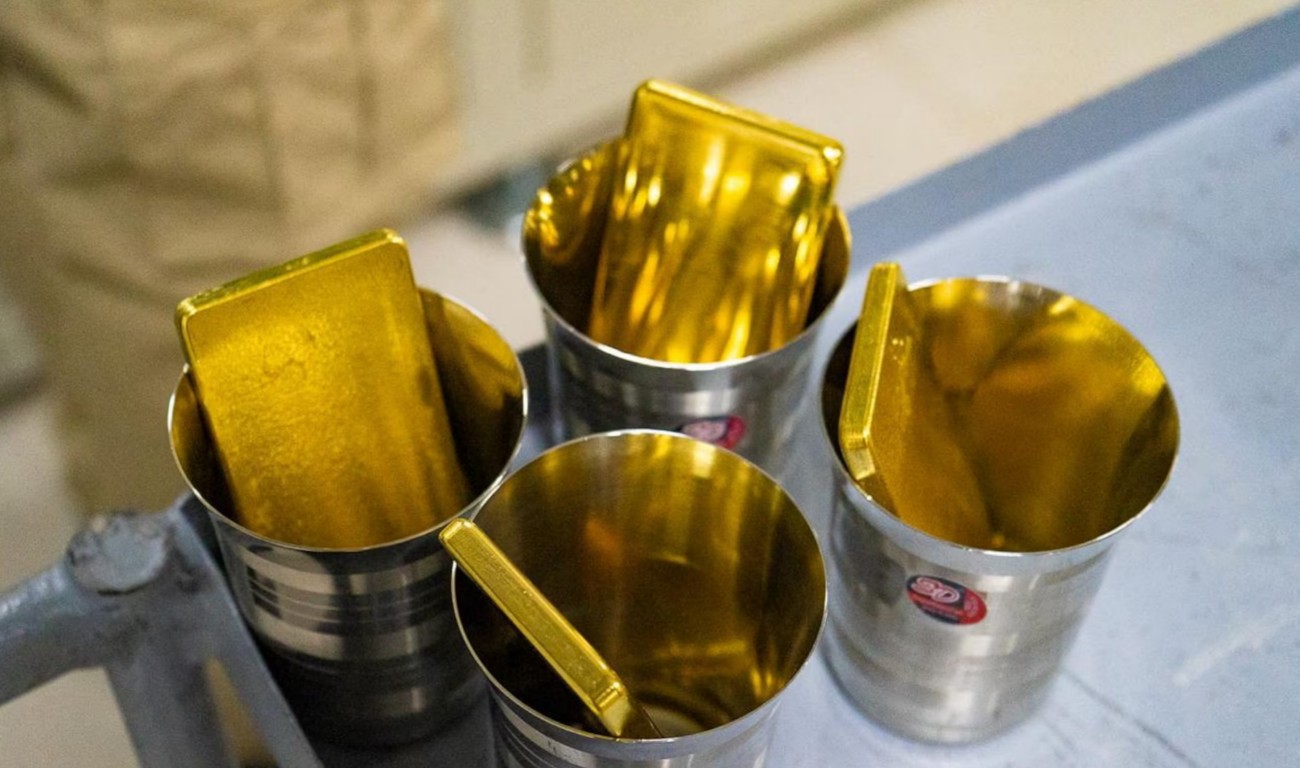
DAKAR (Realist English). Governments across West Africa are racing to refine gold within their own countries to capture more revenue from rising metal prices and reduce dependence on foreign hubs such as Dubai. However, mining executives and investors warn that the region is creating refining capacity that may significantly exceed the volumes of gold available for processing.
The imbalance between capacity and feedstock
Dean Subramanian, chief executive of Rand Refinery, told Reuters: “There is already overcapacity in gold refining across Africa and globally. The risk is that additional processing capacity competes for the same pool of available, responsibly sourced feedstock.”
Since 2024, West African countries have commissioned or begun construction on at least four large gold refineries with combined capacity of more than 1,000 metric tonnes per year. By comparison, annual gold output in West Africa is estimated at about 585 tonnes. Ghana — Africa’s largest gold producer — plans to add a 600-tonne-per-year facility in 2027 despite already having several underutilized plants. Dan Krampa, chief executive of the Ghana Gold and Silver Dealers Association, said bluntly there is no “economically compelling reason to build another refinery.”
The peculiarity of gold: limited value added at the refining stage
Unlike bauxite or iron ore, most of gold’s value is realized before refining. Four mining executives noted that this forces refiners to compete in a low-margin industry where commercial success depends more on scale, certification and access to global markets than on the value added by processing itself.
The government’s logic: strategic goals over margins
Governments argue that refinery projects should be judged by broader economic and strategic objectives rather than refining margins alone. Supporters of domestic refining argue that it helps formalize artisanal mining and gives central banks easier access to domestic gold supplies. Ghana has expanded domestic gold purchases to bolster foreign exchange reserves, and other African countries are studying the approach.
However, investors are cautious. Michael Scherb, chief executive of Appian Capital Advisory, noted: “Governments are increasingly pushing for local processing and refining — a noble goal, but many countries still lack the power, infrastructure, skills and capital needed to support this industry at scale.”
The certification challenge: LBMA access becomes a key obstacle
Another problem facing some new refineries is the lack of London Bullion Market Association (LBMA) certification, which complicates access to key markets. LBMA “Good Delivery” accreditation allows refiners to plug into the world’s largest gold bar trading network and is usually a prerequisite for sales to major banks, traders and central banks.
In Guinea, mining companies have begun stockpiling gold as they adapt to new local refining requirements. Three executives said refining, settlement and marketing terms remain unclear, raising concerns that locally refined gold could be sold at a discount.
Guinea’s mining minister, Bouna Sylla, remains optimistic, saying the country intends to build a broader domestic gold ecosystem around traceability and central bank reserves to compete with the dominant regional market of Dubai. He said the new refinery will be operated by a UAE-based refiner compliant with LBMA standards but declined to name the company.
Regional spread: not only West Africa
The wave of refinery construction is spreading across the continent. In 2026, Burkina Faso (September, initial capacity 164 tonnes per year with plans to expand to 515 tonnes), Ethiopia (October), Guinea (early November), Angola (November 20) and the Democratic Republic of Congo opened new gold refineries. Mali is building a 200-tonne-per-year plant, and Côte d’Ivoire plans to launch a facility of up to 100 tonnes per year in the first half of 2027.
Burkina Faso’s junta leader, Ibrahim Traoré, said at the refinery’s opening: “Our ambitions are no longer limited to extracting raw materials and shipping them abroad. We want to refine all metals here, we want to keep the entire value chain in the country.”
What to watch
The key contradiction of West Africa’s gold refining boom is the significant mismatch between politically driven capacity expansion and the feedstock supply, certification and market access on which commercial viability depends.
For governments, refineries carry a political promise to keep mining wealth in the country; for investors and mining companies, the lack of LBMA certification, unclear refining terms and possible discounted sales represent real financial risks.
Going forward, it is worth watching whether refineries in Ghana and Guinea can obtain LBMA certification in the near term; whether regional competition for feedstock will further compress refining fees; and to what extent “ban on unrefined gold exports” policies can tie mining companies to local refining channels.