
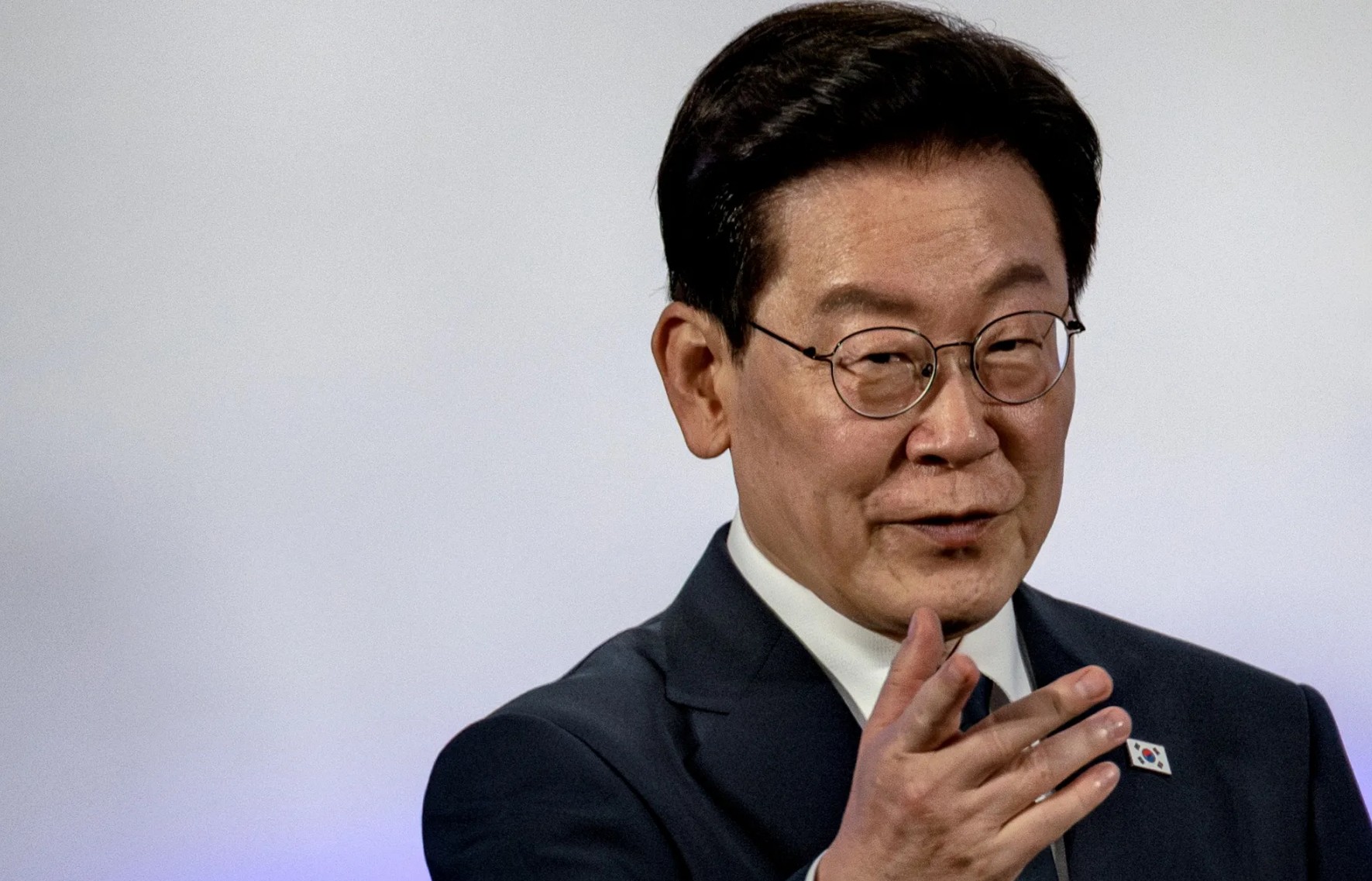
SEOUL (Realist English). On 23 November, South Korean President Lee Jae-myung announced personnel changes in key agencies responsible for foreign policy and national security. Lim Woong-soon, a career diplomat, former deputy national security adviser and former minister at the South Korean embassy in Washington, was appointed as the new foreign minister.
Kang Kum-sil, former justice minister, was nominated to head the National Intelligence Service (NIS); if confirmed, she will become the first woman to lead South Korean intelligence. Hong Ik-pyo, former senior presidential secretary for political affairs, was appointed as Minister of Unification.
Replacing the “Self-Reliance” Team
The reshuffle primarily affected representatives of the so-called “self-reliance faction,” which critics say failed to ensure smooth relations with Washington.
The predecessors of the appointees—the foreign minister and the NIS director—were perceived in the United States as figures distancing themselves from the US–South Korea alliance. The appointment of Lim Woong-soon, a US specialist, and the nomination of Kang Kum-sil, who has a reputation as a manager, signal Seoul’s attempt to build a more workable line of communication with the Trump administration.
Intelligence Leak and Canceled Visit
The formal trigger for Washington’s dissatisfaction was a March 2026 incident: former Unification Minister Chung Dong-young publicly disclosed information at a parliamentary session about the existence of a uranium enrichment facility in North Pyongan Province. The United States regarded this as a leak of shared secrets and restricted intelligence sharing with Seoul.
Additional pressure came from the cancellation of a planned trip to the US by former NIS Director Lee Jong-suk due to scheduling difficulties. South Korean Ambassador to the US Kang Kyung-wha acknowledged in October that “high-level consultations are not proceeding as actively as we would like.”
Official Position and Critics’ Questions
The Lee administration states that the reshuffle is aimed at “bringing vitality” to state affairs and that the principles of foreign policy, including a “strong alliance with the US,” remain unchanged.
However, critics point out that the team change comes amid the failure of efforts to establish dialogue with Pyongyang: in November 2026, Washington sought to arrange a meeting between Donald Trump and Kim Jong Un during the US president’s Asian tour, but the summit did not take place—Pyongyang put forward conditions unacceptable to the US, including a demand that North Korea be recognized as a nuclear power. Secretary of State Marco Rubio confirmed that Trump is “serious” about dialogue, but that the meeting “may not happen.”
Procedural Constraints
Nominations for the positions of foreign minister and NIS director require parliamentary hearings but do not involve a confirmation vote. This gives the president relative freedom of action, but does not remove the question of how well the new team can restore Washington’s trust without changing Seoul’s political line.
As observers note, the key feature of the situation is the gap between the declared commitment to the alliance and personnel decisions that only indirectly change course. For US–South Korea relations, the near-term effect will be most visible in whether intelligence sharing resumes and whether a summit takes place—and that is where it is most sensitive for the prospects of coordination on North Korea.