
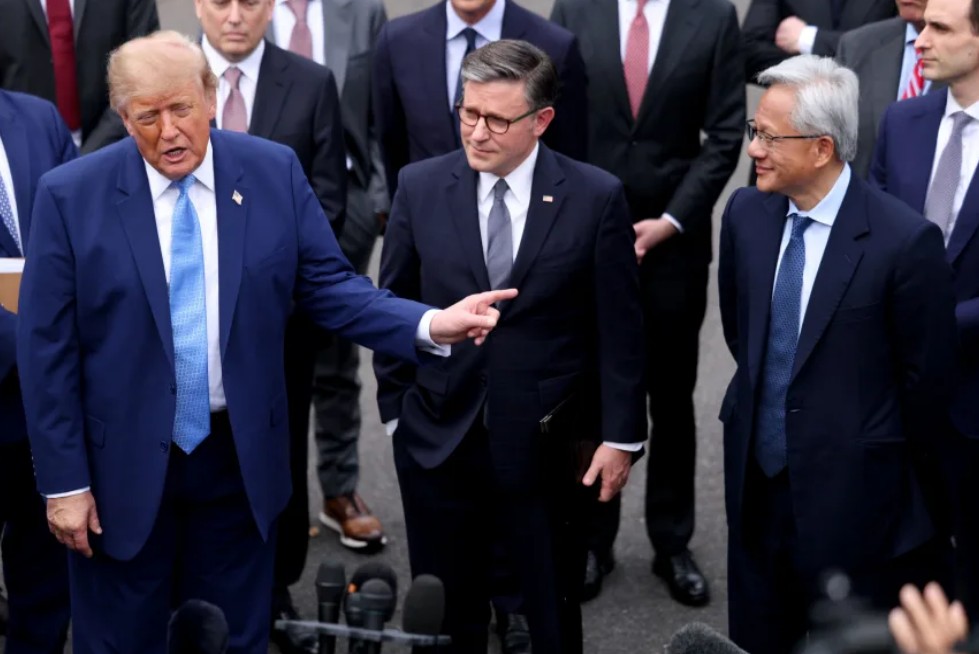
WASHINGTON (Realist English). The reinstatement of Jensen Huang as Nvidia’s chief executive was the result of an unprecedented pressure campaign organised by the White House, CNN reports, citing sources familiar with the situation. According to the TV channel, President Donald Trump, watching the deepening stock market sell-off, concluded that the decline could be stopped in only one way — by returning Huang to the helm of Nvidia.
Timeline: 11 days from resignation to reinstatement
Huang stepped down on 12 November amid a scandal over extramarital affairs, one of them with a woman whom US intelligence suspects of ties to Chinese intelligence. Chief Financial Officer Colette Kress was appointed acting CEO, and Harvey Jones became chairman of the board.
However, as early as 17 November, Jones said on a quarterly call that the board “unanimously accepted his resignation and does not intend to reinstate Jensen as CEO.” In parallel, a “Stand with Jensen” petition was gaining momentum in Silicon Valley, gathering more than 180,000 signatures, including that of Elon Musk.
The pressure mechanism: Trump, Vance and key ministers
According to CNN, Trump tasked Vice President JD Vance with leading efforts to bring Huang back, partly because of the vice president’s Silicon Valley connections. Over the following 72 hours, Vance coordinated directly with Huang and persuaded the board that the administration had found no evidence of wrongdoing threatening national security. Commerce Secretary Howard Lutnick and Treasury Secretary Scott Bessent also took part in the campaign.
Trump personally contacted the board. “I spoke to the board directly and indirectly, and I felt it very strongly,” the president said after the announcement of Huang’s return. Asked whether Huang would have got the job without his intervention, Trump replied: “The answer is no. I think my intervention was very important.”
Market reaction and official position
Nvidia announced Huang’s reinstatement on 23 November. The board voted unanimously, citing the “input of senior US government officials” who assured that the return posed no risk to national security. Nvidia shares rose by roughly 26–31% on the news.
Huang himself said he accepts responsibility “with the greatest humility” and “cannot wait to get back to work.” An investigation by an independent board committee set up to examine the circumstances of the scandal will continue, and Huang has committed to cooperating.
Interests and criticism
The decision drew criticism in Washington. Senate Democratic Minority Leader Chuck Schumer accused Trump of “putting his own economic interests and the needs of his billionaire friends above US national security.” According to the BBC, since returning to the White House Trump has bought Nvidia shares worth between $23 million and $86 million, though he also sold them during the same period. Republican Senator Pete Ricketts also criticised Huang’s reinstatement, citing his conduct and alleged ties to a Chinese agent.
As observers note, the key feature of the situation is the unprecedented direct intervention of the president in a private company’s personnel decision, which raises questions about the limits of state influence on corporate governance.
For Nvidia, the immediate effect will be most noticeable primarily during upcoming congressional hearings, where Huang will have to answer questions about chip supplies to China — and that is precisely where it is most sensitive for investor confidence in the company’s ability to comply with export restrictions.