

MOSCOW (Realist English). Over the past two days, the Russian Foreign Ministry held a series of important meetings, made tough statements on key international crises and outlined its fundamental approaches to dialogue with the West.
The key events were a meeting between Deputy Foreign Minister Mikhail Galuzin and the ambassadors of the “EU troika” in Moscow, as well as a session of the CSTO Council of Foreign Ministers in Kazan.
June 10: CSTO Council Session and Criticism of the West
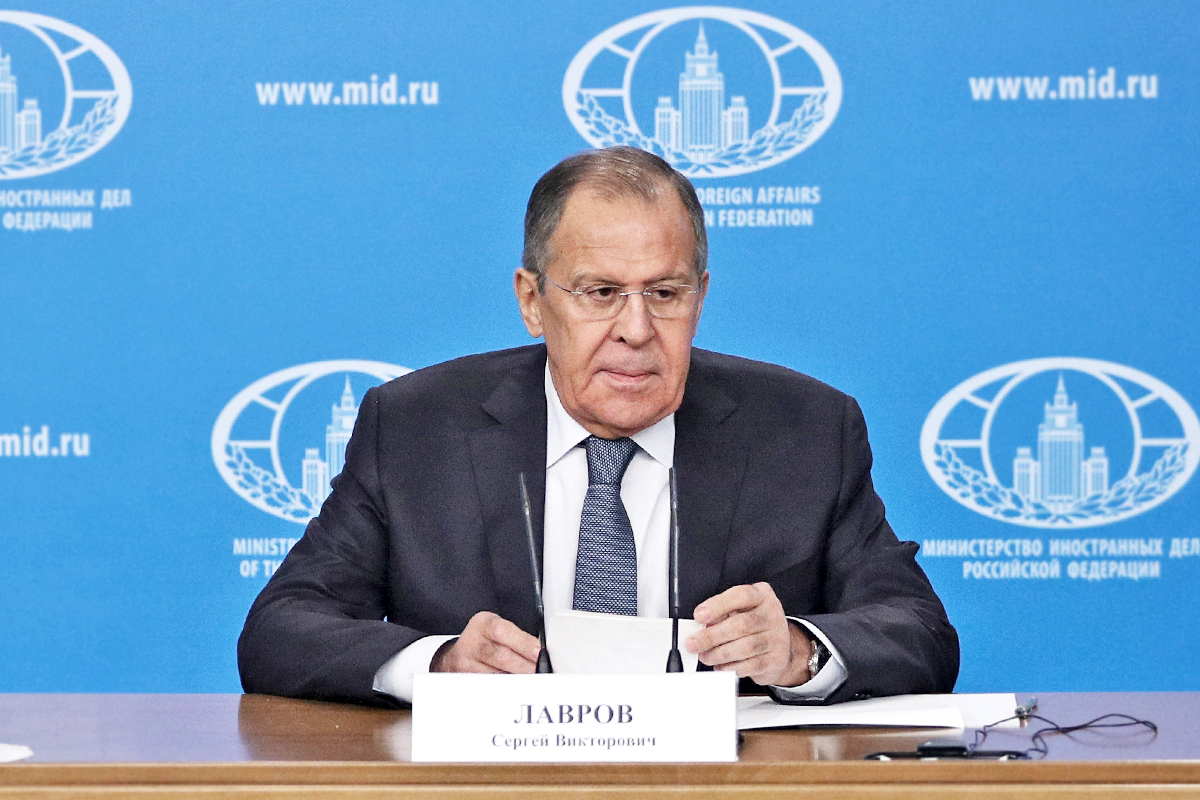
A session of the Council of Foreign Ministers of the Collective Security Treaty Organisation (CSTO) took place in Kazan. Speaking at the meeting, Russian Foreign Minister Sergey Lavrov stated that the security system in Europe has been finally destroyed by Western countries, and all key arms control treaties have been eliminated.
“Therefore, it is important for us not to allow what used to be called the common Eurasian home to turn into an arena for geopolitical confrontation,” the minister stressed.
Lavrov called for proactively mitigating risks and preventing new crises similar to the Ukrainian one. In his words, this is precisely the goal of President Vladimir Putin’s initiative to create a new architecture of equal and indivisible security in Eurasia.
“EU Troika” Ambassadors Seek Meeting at Russian Foreign Ministry
That same day, Lavrov announced that the ambassadors of the United Kingdom, France and Germany were “asking” for a meeting at the Russian Foreign Ministry, having requested an audience with Deputy Minister Mikhail Galuzin.
The Russian side expressed its readiness to hear them, but the minister did not hide his scepticism, calling the request “strange” against the backdrop of offensive statements by European leaders.
“We will meet with them and listen. The president has always said we are ready to listen,” Lavrov said, adding that a change in Europe’s position would require a “miracle”.
The minister directly linked the ambassadors’ initiative to the joint statement by the leaders of those countries and Vladimir Zelensky, adopted earlier in London. He described that document as demanding, “in essence, capitulation” from Russia, and called its presentation “rude”.
Position on the Iranian Crisis
Against the backdrop of escalating tensions between the US and Iran, Russian Foreign Ministry spokeswoman Maria Zakharova stated that any ground operation against Iran is fraught with “irreparable consequences” for regional and global security.
Moscow called on the parties to exercise restraint and reminded them of the inadmissibility of attacks on civilian infrastructure. Zakharova stressed that Russia consistently advocates resolving the crisis solely through diplomatic means.
Situation in the Mediterranean
Zakharova also commented on the European Union’s decision to allow the detention of Russian “shadow fleet” tankers in the Mediterranean. She said that Russia reserves the right to use the full arsenal of political and legal means to protect maritime security and the legitimate interests of ship owners. According to the diplomat, responsibility for any possible incidents will fall on the “instigators of escalation”, led by EU foreign policy chief Kaja Kallas.
Galuzin’s Talks with European Ambassadors
On June 11, a meeting took place in Moscow between Russian Deputy Foreign Minister Mikhail Galuzin and the ambassadors of the “EU troika” — UK Ambassador Nigel Casey, French Ambassador Nicolas de Rivière and German Ambassador Alexander Graf Lambsdorff. The meeting took place on the initiative of the Western side.
According to a Russian Foreign Ministry statement, Galuzin presented the diplomats with “objective assessments of the destructive policies of their countries’ leadership” regarding the Ukrainian crisis. The Russian side stressed that the actions of London, Paris and Berlin are aimed at “maximally stimulating the Kyiv regime to continue the war”.
Galuzin also explained Russia’s fundamental approaches to a political‑diplomatic settlement, which, in Moscow’s view, must be based on addressing the root causes of the conflict.
How the Meeting Was Assessed in Europe
The European ambassadors issued a joint statement condemning “escalation by Russia” and reaffirming their support for negotiations between Kyiv and Moscow with the participation of the US and Europe. French Ambassador Nicolas de Rivière described the conversation as a “good discussion”. Later, the “EU troika” countries called for direct negotiations between Russia and Ukraine.
Moscow’s Reaction: “Inflated Ambitions” and Zakharova’s Comment
On June 12, Maria Zakharova, commenting on the outcome of the meeting, gave European diplomats an unflattering characterisation, using a poetic metaphor. The Russian Foreign Ministry spokeswoman responded to the ambassadors’ visit with verses by Alexander Pushkin, ridiculing what Moscow sees as their “inflated ambitions”.
Other Significant Events
- G20 Summit: On June 12, Russian Foreign Ministry Ambassador‑at‑Large Marat Berdyev said that the Russian side has not yet received an official invitation from the United States for President Vladimir Putin to take part in the upcoming G20 summit.
- Assurances to Pashinyan: On June 10, on the sidelines of the CSTO Council session, Lavrov said that Russia is ready to respect the will of the Armenian people, but called for taking into account the interests of all neighbours. Moscow also called for the speedy signing of a peace treaty between Armenia and Azerbaijan.