LONDON (Realist English). On September 29, UK Prime Minister Andy Burnham will speak at the Labour Party conference in Liverpool with the most important speech since taking office, presenting his long-term vision for the UK to party members for the first time.
The speech is seen as a concentrated demonstration of Burnham’s political course over more than two months in office and as a key test of his “hope” agenda.
Expectations for the Speech: Ten-Year Plan and the Theme of “Hope”
According to the BBC, Burnham’s speech will be built around his upcoming “Ten-Year Plan for the UK,” with the main theme being “making life more affordable.” This year’s Labour conference slogan is “Hope Again.”
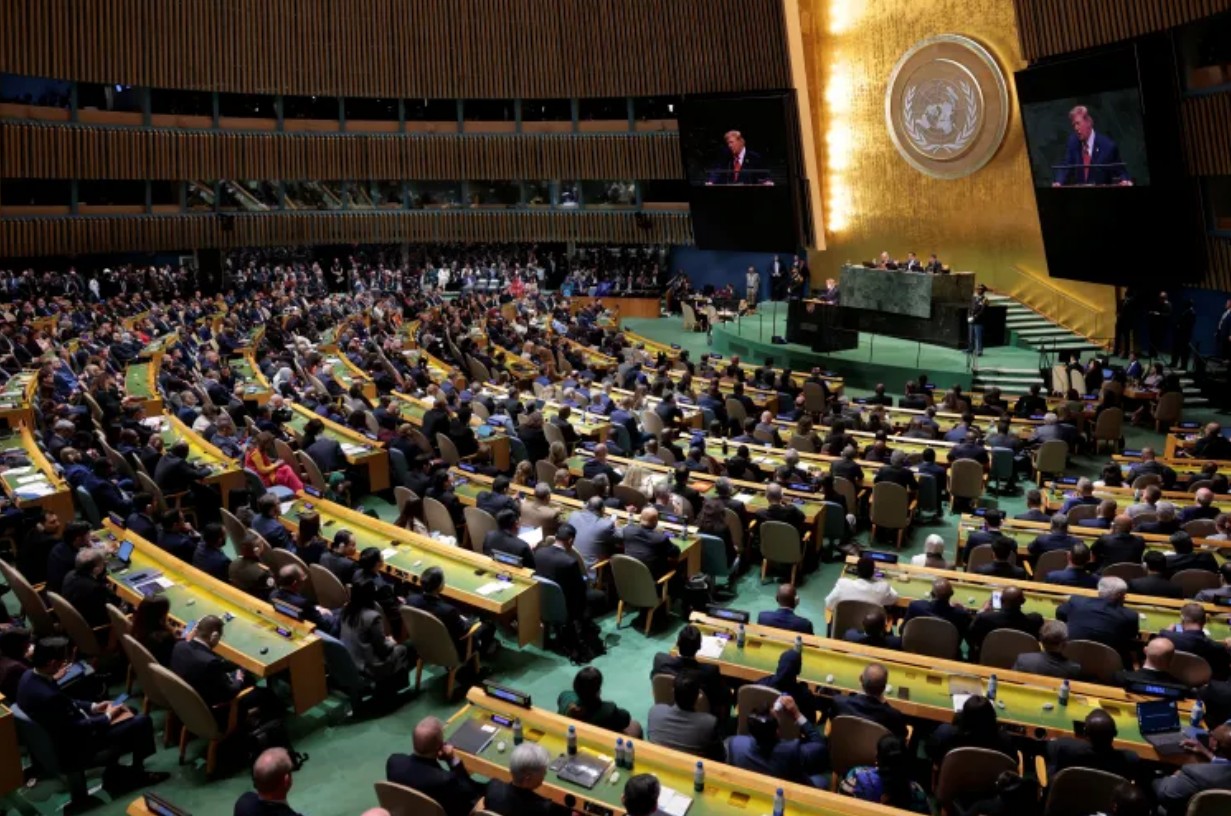
Before traveling to New York for the UN General Assembly, Burnham told journalists that his first speech as leader would give everyone a clear understanding of “what I want to do in this role” and that “people will clearly know where I want to lead this country.”
Burnham is expected to reaffirm his key theses from his time as Mayor of Greater Manchester: greater “public control” (but not necessarily state ownership) over basic services — water, energy, housing, and transport; devolution through “No 10 North”; and investment in social care reform. He may also announce the creation of a commission on electoral reform in response to calls within the Labour Party for a change to the voting system.
The Real Background: Contradictory Economic Signals
Burnham’s speech takes place in a complex macroeconomic environment. S&P Global PMI data for September shows that the UK composite PMI fell from 52.5 in August to 51.7, below market expectations of 52. This points to quarterly economic growth of about 0.1% — a marked slowdown from 0.4% in the second quarter.
S&P Global Chief Business Economist Chris Williamson noted that in September the UK saw a “troubling combination” — weak economic growth and intensifying inflationary pressure. Input costs and output prices in the services sector have risen for the second consecutive month; companies cite rising energy prices caused by the escalation of the Middle East conflict as the main source of price pressure.
The OECD, ahead of the budget publication, lowered its UK growth forecast for next year from 1.1% to 1.0%. IMF Managing Director Kristalina Georgieva warned that the level of global debt is “rising like a staircase, but not one leading to heaven,” and governments have not yet taken action to control debt servicing costs.
UK borrowing costs have reached the highest level among G7 countries, exceeding even Greece’s. Former Bank of England Deputy Governor Howard Davies notes that financial markets are increasingly doubting the UK government’s ability to control its finances, and the UK is likely to “muddle through” with high financing costs and constrained public spending, rather than face a sudden acute financial crisis.
Key Directions of Burnham’s Policy
In his first speech in the House of Commons on August 31, Burnham already outlined the main elements of his political framework.
Devolution is the central pillar of Burnham’s agenda. He announced the creation of the “No 10 North” office, promising “the largest redistribution of powers this country has ever seen,” and to extend devolution agreements to all regions of England that have not yet received powers, including Cornwall. This plan gives mayors long-demanded powers, including post-school technical education, employment support, and fiscal devolution, starting with the introduction of a tourist tax on overnight stays.
Economic intervention: Burnham clearly stated his intention to reverse the legacy of Thatcher-era privatization, calling the privatized water industry a “monument to leaks.” He promised greater public control over basic services and the promotion of “Manchesterism” — a growth model combining responsible fiscal policy, university-driven innovation, infrastructure investment, and necessary measures of state intervention.
Budget position: Burnham confirmed his commitment to the “discipline of current budget rules” but refused to rule out further tax increases. He clearly stated that he would not carry out “crude cuts” to the social benefits system, but instead intends to ease pressure on housing benefits by building more council housing.
The Chancellor’s Dilemma
The budget will be presented on October 28, and Chancellor of the Exchequer John Healey faces a difficult balance. The £24 billion budget buffer left by former Chancellor Reeves could be halved or more due to rising borrowing costs.
Aegon Asset Management Chief Investment Officer Stephen Jones gave a sharp assessment of British finances: “The essence of this financial crisis is that the government seems unable to recognize its existence.” He characterized the government as “currently unable to act, simply denying the harsh reality; while the market understands perfectly well the fragility and unsustainability of the British situation.”
A senior Labour official reported that Healey learned of his appointment as Chancellor only a few days before taking office and had no time to familiarize himself with the state of the financial accounts through the usual procedure. “I don’t think John Healey knew; I don’t think Andy knew.”
Assessment
The tension between Burnham’s “hope” agenda and British budgetary reality constitutes the key challenge of his premiership. On the one hand, the consumer confidence index rose in September to a two-year high (−13), indicating improved sentiment.
On the other hand, the PMI slowdown, high borrowing costs, and narrowing fiscal space limit the government’s ability to fulfill promises.
Devolution is the most likely area where Burnham can achieve real progress: it does not require large-scale financial injections but can bring political capital.
However, the key promise of the “ten-year plan” on affordability of life will ultimately depend on whether the Chancellor can find sufficient financial resources without violating the Labour manifesto’s tax promises. The October 28 budget will be the first real test.