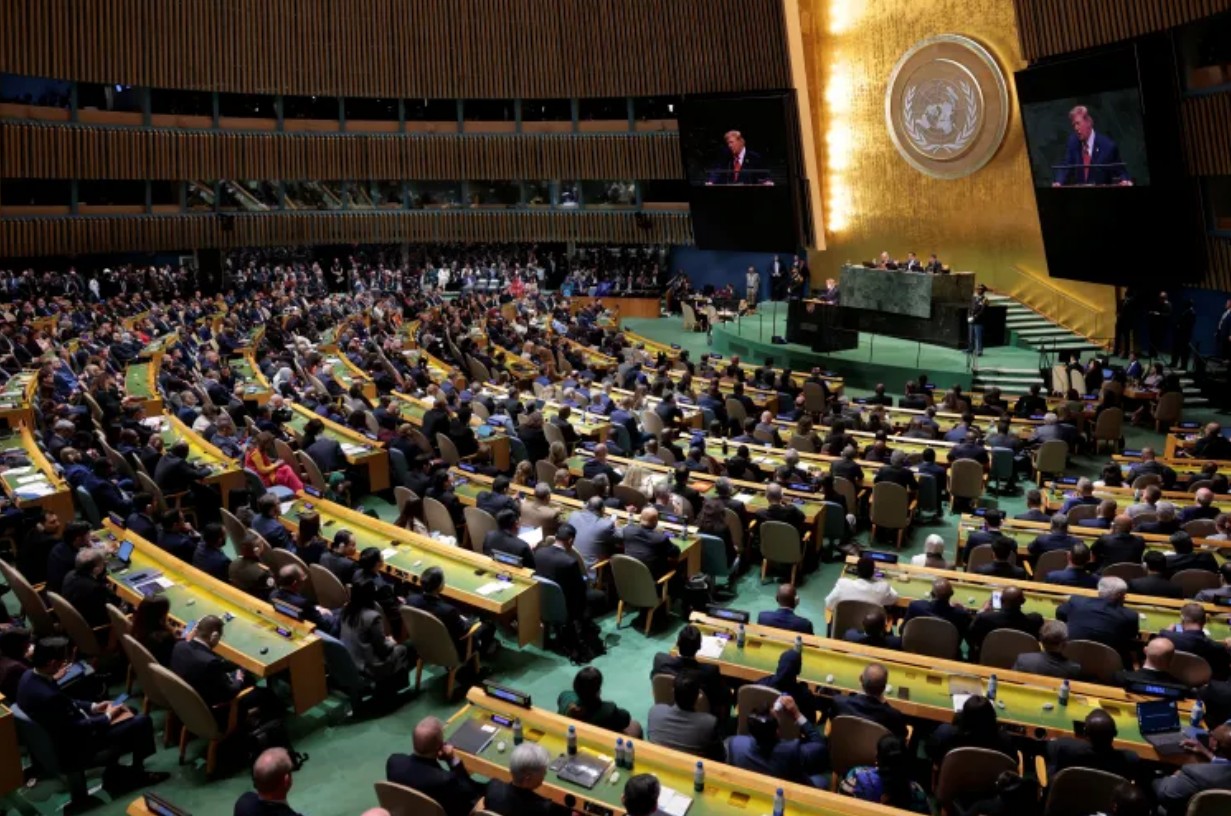
NEW YORK (Realist English). The African Union’s common position is based on the Ezulwini Consensus and the Sirte Declaration of 2005 and provides for at least two permanent seats (with the same rights as the current five permanent members, including the veto — as long as the veto exists), as well as five non-permanent seats.
Nigeria, South Africa, Egypt, Kenya, and other countries have clearly stated their claims to permanent seats. Nigerian Vice President Shettima at the 81st session of the UN General Assembly stated that the world of 2026 “cannot continue to be bound by the 1945 distribution of power.”
Three Main Obstacles
First: the extremely high threshold for amending the Charter. According to Article 108 of the UN Charter, changing the structure of the Security Council requires approval by a two-thirds majority of the General Assembly and ratification by all five permanent members. This means the existing five permanent members have a de facto veto over any reform.
Second: disagreements among the five permanent members. France clearly supports granting Africa permanent seats, including veto power; the US in 2024 stated support for two African permanent seats but does not support granting new permanent members veto power; Russia advocates preserving the veto as a guarantee of great-power balance and believes a Security Council larger than “two-plus dozen” would reduce efficiency; China supports prioritizing the solution to Africa’s underrepresentation but emphasizes that reform must proceed by consensus.
Third: Africa has not yet determined who owns the seats. The AU’s common position states that “the seats belong to Africa, not to any particular capital,” although Nigeria, South Africa, Egypt, Algeria, and Kenya are considered potential candidates. AU Commission Chairperson Yusuf emphasizes that this demand stems from “correcting a historical injustice” rather than seeking special privileges. Choosing specific countries would again provoke regional competition, so the AU’s current strategy is to secure the seats first, then allocate them.
The Broader Game
Africa’s demand is not an isolated issue. The G4 group of India, Brazil, Japan, and Germany is also seeking permanent seats and supports expanding Africa’s representation. If Africa obtains two permanent seats, demands from other regions will immediately intensify, and the reform will turn from an “African grievance” into a “restructuring of the hierarchical order of the 21st century.”
UN Secretary-General Guterres in his final address at the general debate of the UN General Assembly directly stated: “A 21st-century Security Council without permanent African representation is unjust and untenable.” But support at the principled level is not yet a Charter amendment capable of obtaining the approval of the five permanent members.
Outlook
Africa has 54 votes in the UN General Assembly — 28% of 193 members, and mathematically no reform can bypass Africa. But “mathematical strength” does not equal “institutional breakthrough.” Reform requires the consent of existing powers to change the rules of power distribution — and this paradox is the root cause of the two-decade stalemate in Security Council reform.